Sleep Is the Foundation
You tweak routines, apps, and caffeine yet still feel foggy and behind; until you fix sleep, every productivity upgrade you try sits on shaky ground.
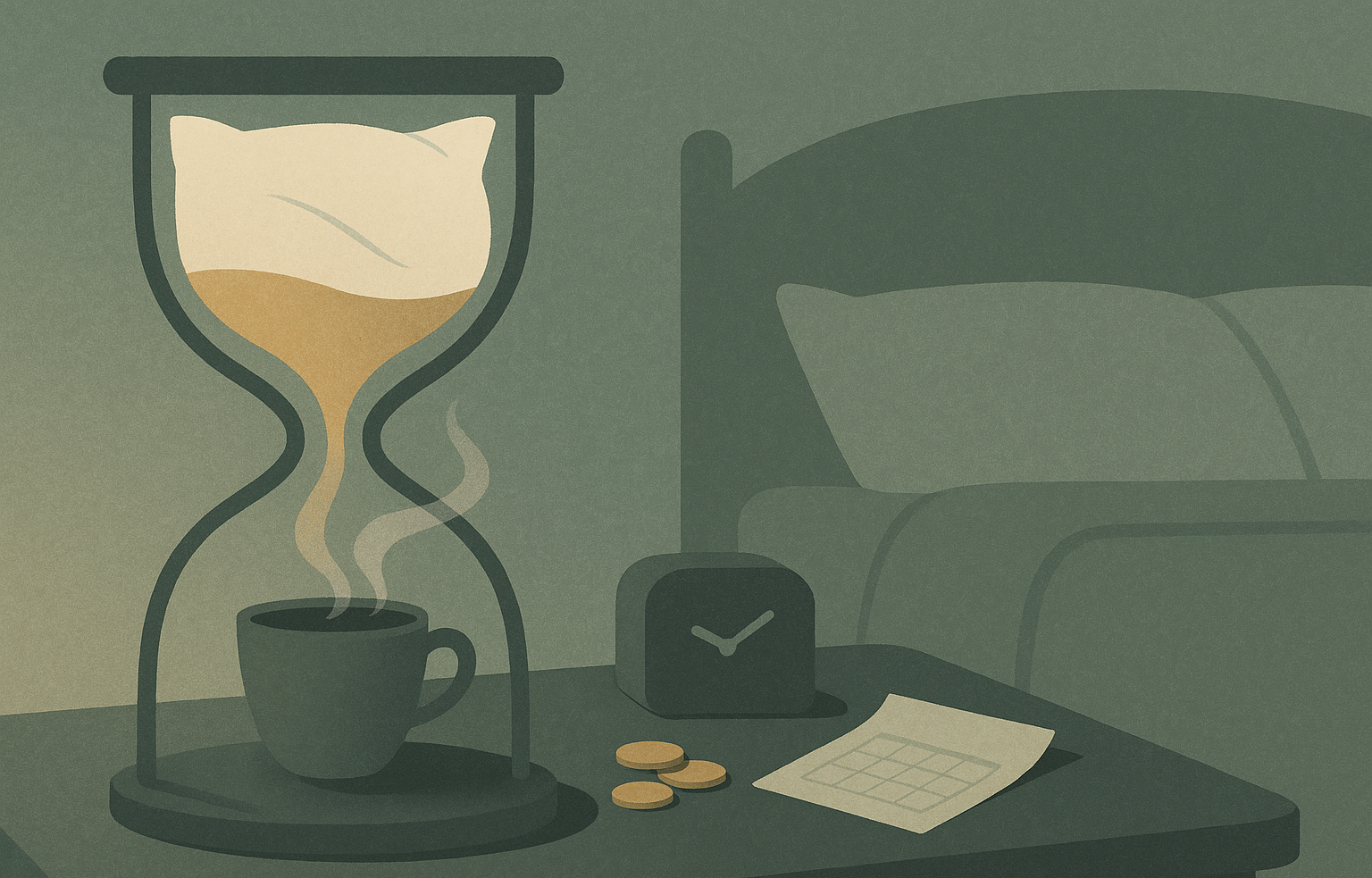
The Hidden Cost Of Borrowing From Sleep
You stay up a bit later to clear email, finish slides, or enjoy “just one more episode”. The next day feels slightly dull, so you drink more coffee and push through. By evening, you are behind again, so you repeat the bargain. You feel as if you are gaining time, but you are paying for it with interest.
You can tweak your calendar, use the Eisenhower Matrix, or perfect your to do list. If you are chronically under slept, all of that works at half power. Sleep is not another item to optimize next to nutrition, focus, and habits. It is the ground those things stand on.
Once you treat sleep as infrastructure instead of a flexible luxury, your entire self development strategy changes.
What Sleep Is Actually Doing For You
You know that sleep helps you feel rested. That is the shallowest part of its job.
Matthew Walker describes sleep as an internal health service that runs nightly maintenance. While you sleep, several things happen that you cannot fake with caffeine or willpower:
- Your brain consolidates memories. The study material, meeting details, and new skills from the day get sorted, strengthened, or cleared out. If you cut sleep, you keep showing up to work with half filed mental paperwork.
- Your emotional system resets. The amygdala, which reacts to threats, calms down. With less sleep, you feel more irritable, more anxious, and more likely to overreact to small setbacks.
- Your body repairs tissue and regulates hormones. Hunger hormones, stress hormones, and growth signals all adjust during sleep. Shortchange this, and you feel hungrier, more stressed, and less physically resilient.
Think about a day when you slept well. Focus feels smoother. Decisions come faster. You can sit with discomfort without snapping. Those are not just “good mood” days. That is your real baseline. Poor sleep quietly shrinks your baseline and convinces you that the smaller version is just who you are.
So when you try to build better habits, chase bigger goals, or practice deep work without solid sleep, you are asking a compromised system to produce high level output. It can try, but it leaks everywhere.
Why You Keep Trading Sleep For Time
If sleep is that central, why do you keep giving it away first?
1. You treat sleep as flexible time, not protected time
You move bedtime the way you move meetings. If something runs over, sleep is the slack in the system. You rarely sacrifice a morning meeting to get more sleep, yet you routinely sacrifice sleep to be ready for morning meetings.
This trains your mind to see sleep as negotiable and work as non negotiable. Over months, your calendar becomes a ceiling that pushes down on your nights.
2. You are chasing borrowed productivity
When you stay up late to “get ahead”, you get a brief sense of control. Tasks disappear from your list. Tomorrow looks clearer. What you do not feel in that moment is the hit to your future focus, memory, and emotional regulation.
You experience the gain now and the cost later, which makes the trade feel smart in the moment. It is the same structure as putting expenses on a credit card. You get the thing now and pay in interest later.
3. Evenings are your only unsupervised hours
Your day might be full of obligations: work, kids, classes, errands. Evening is the one block that feels like it belongs to you. So you stretch it. You scroll, binge, or tinker, trying to widen that sense of freedom.
This is “revenge bedtime procrastination”: you protest a day of low control by stealing time from your own night. The problem is that you are stealing it from your future self, not your obligations.
4. You believe you “do fine” on less
You probably have stories of crunch weeks where you slept little and pulled off important work. You might tell yourself you are just one of those people who can function on less sleep.
Your subjective sense of “doing fine” is a poor metric. You adapt to fog. The new lower level of attention and patience starts to feel normal. You notice when you are falling asleep at your desk. You do not notice when your complex thinking slows, you are slightly harsher with your partner, or you feel quietly less creative.
The short version: you trade sleep for time because the costs are delayed, invisible, and normalized.
Productivity Hacks On A Broken Foundation
Look at your favorite self development tools. Maybe you use habit trackers, the Two Minute Rule, weekly reviews, Pomodoro timers, or the focus advice from Deep Work. These are all useful. On poor sleep, they behave differently.
Your habits get brittle
Habits depend on cues, routines, and rewards. Charles Duhigg describes this as the habit loop. When you are exhausted, your willpower is thin and your default reward seeking ramps up. It becomes much easier to skip a workout, order junk food, or scroll instead of reading.
So you tell yourself the habit is flawed or that you “lack discipline”. Often, the habit is fine. The foundation is not.
Your focus tools lose their edge
You may set up single tasking sessions like in The Art of Single-Tasking. You block distractions, turn on Do Not Disturb, and define a clear task. If you are short on sleep, your mind still wanders, your eyes feel heavy, and your working memory drops details.
The tool is structurally sound. You are asking it to carry more weight than your brain can support that day.
Your emotional resilience thins out
Small annoyances feel bigger when you are tired. That email sounds harsher. That feedback feels more personal. You over interpret neutral events as threats.
Then you go read about resilience or stoicism and wonder why those ideas feel hard to apply. It is like practicing patience while running a fever. You can try, but your physiology is pushing against you.
A surprising pattern shows up when you start sleeping well for a while. Some problems in your life do not need a new strategy. They dissolve because the version of you facing them is no longer running at a deficit.
Building A Sleep-First Life
If sleep has been the leftover, you do not fix it by reading three more sleep tips and hoping your willpower holds. You change how you design your day around it.
Think in terms of sleep as a non negotiable appointment that you build a day around, not a leftover you fill with scraps.
1. Decide your protected sleep window
Pick a realistic sleep target. For many adults this is in the 7 to 9 hour range. Choose:
- A fixed wake time that your obligations demand.
- Count backward to set a target time when lights are out.
Now treat that window as you treat a serious morning commitment. You would not casually schedule a call over it. You protect it.
2. Work backward from bedtime, not forward from morning
Most planning starts with, “What do I need to do tomorrow?” A sleep first plan starts with, “If I need lights out by 11, what needs to happen before then?”
You might find that:
- Dinner has to start earlier.
- Some tasks must move to another day.
- Evening social media or shows need a hard stop.
This feels restrictive at first. It is actually honest. You are finally planning inside the real container of your energy.
3. Design an unexciting wind down
Your brain cannot sprint full speed, then instantly drop into deep sleep. You need a ramp.
Aim for 30 to 60 minutes of low stimulation before lights out:
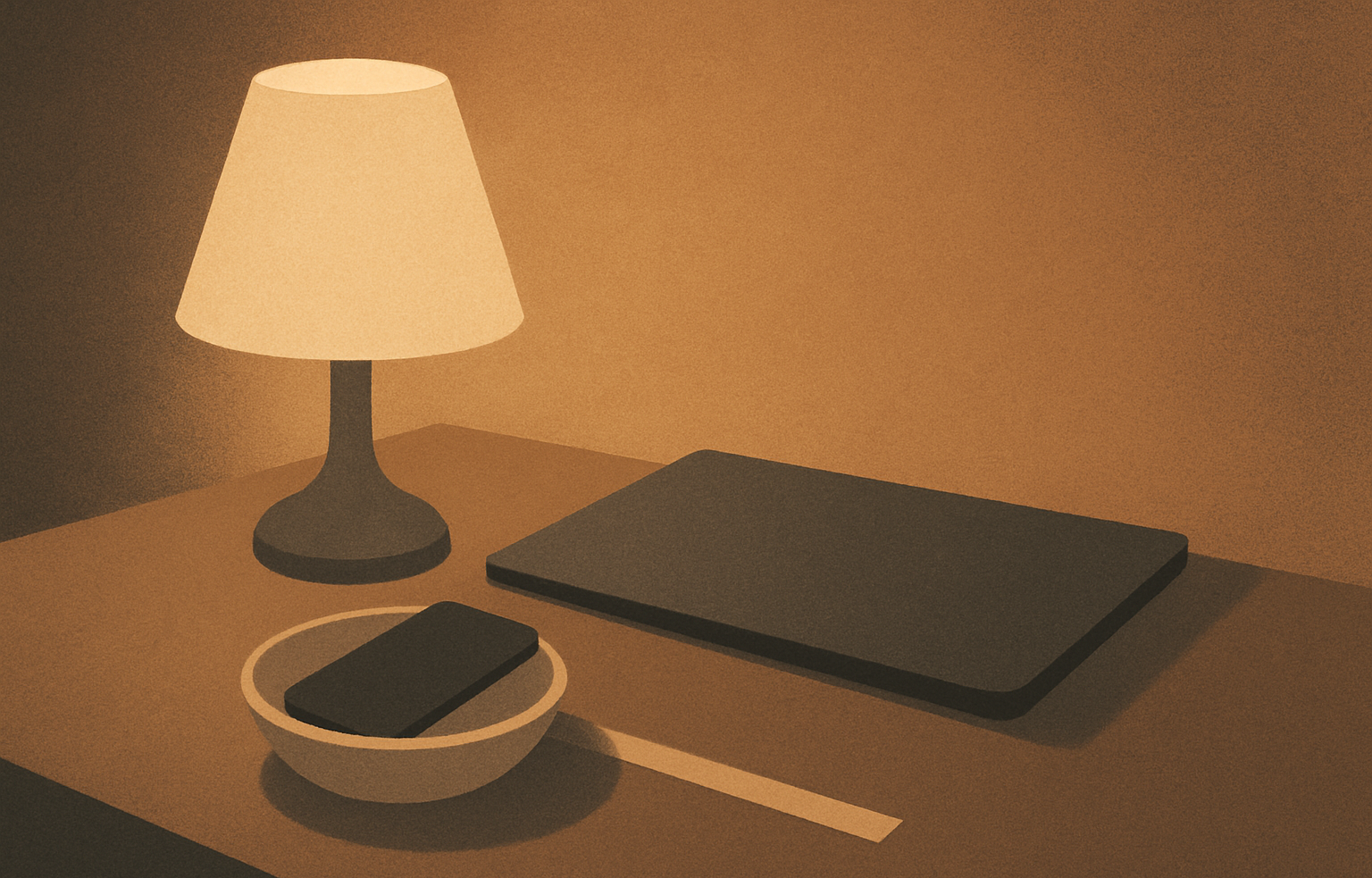
- Dim screens or put devices away.
- Do simple, repeatable actions like showering, making tea, or tidying a small space.
- Switch to low key inputs like paper reading or light stretching.
The goal is boredom, not inspiration. High stimulation, even if “good”, keeps your system revved.
4. Make mornings more predictable than perfect
A perfect morning routine does not rescue a broken night. That said, a gentle, consistent start stabilizes your sleep schedule.
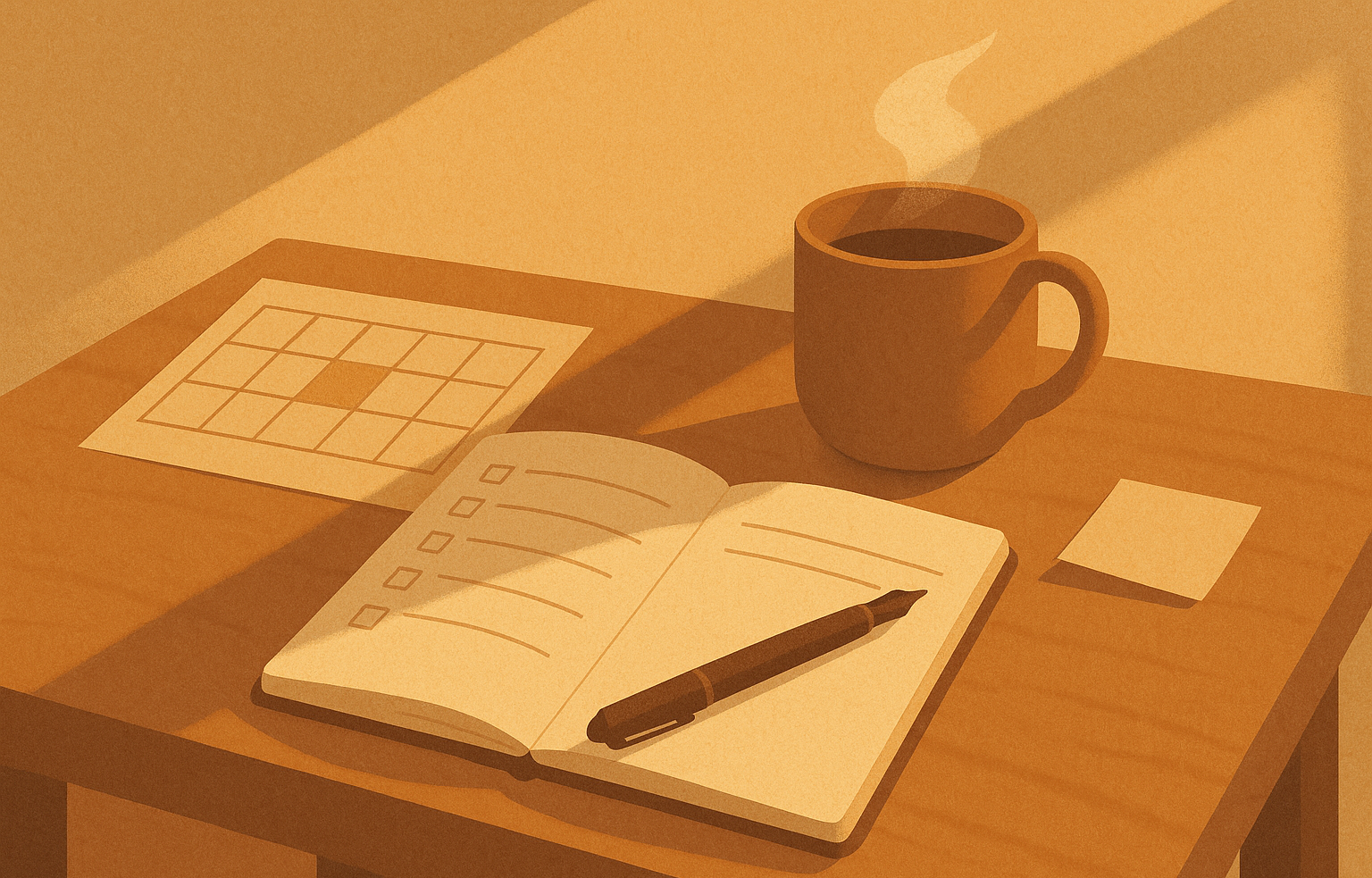
Instead of loading your morning with five “productive” tasks, pick one anchor: a short walk outside, a few minutes of journaling, or a quiet coffee without your phone. This gives your body and mind a stable cue that day has started.
Once mornings feel steadier, your nights follow.
When You Cannot Sleep More Yet
Sometimes you genuinely have constraints: a newborn, shift work, multiple jobs, or caregiving. You might read all of this and think, “Nice idea. Not my life.”
You still benefit from treating sleep as foundational, even when you cannot expand it much.
1. Upgrade quality before quantity
You might not add an hour, but you can often improve the hours you have.
- Keep your sleep and wake times as consistent as your schedule allows, even across days off.
- Darken your room, cool it slightly, and reduce abrupt noises.
- Avoid heavy meals and bright screens in the last hour when possible.
These changes are boring and unglamorous. They quietly give more depth to the same number of hours.
2. Adjust your expectations of yourself
On low sleep days, you try to perform as if nothing changed. You keep the same task list, attend the same meetings, and demand the same focus. Then you shame yourself for being slower.
A counterintuitive move is to plan lighter on known low sleep days:
- Reserve demanding cognitive work for better rested windows.
- Batch simpler, more mechanical tasks when you know you will be tired.
- Build in short breaks where you actually close your eyes or step outside, not just scroll.
Accepting that your capacity is lower is not weakness. It is strategy. You stop compounding the deficit with self blame.
3. Use willpower to defend sleep, not to perform on empty
You likely use your limited willpower to force yourself through tasks when you are exhausted. Redirect some of that effort toward small moves that protect future nights: saying no to late commitments, delegating a task, or pausing a project.
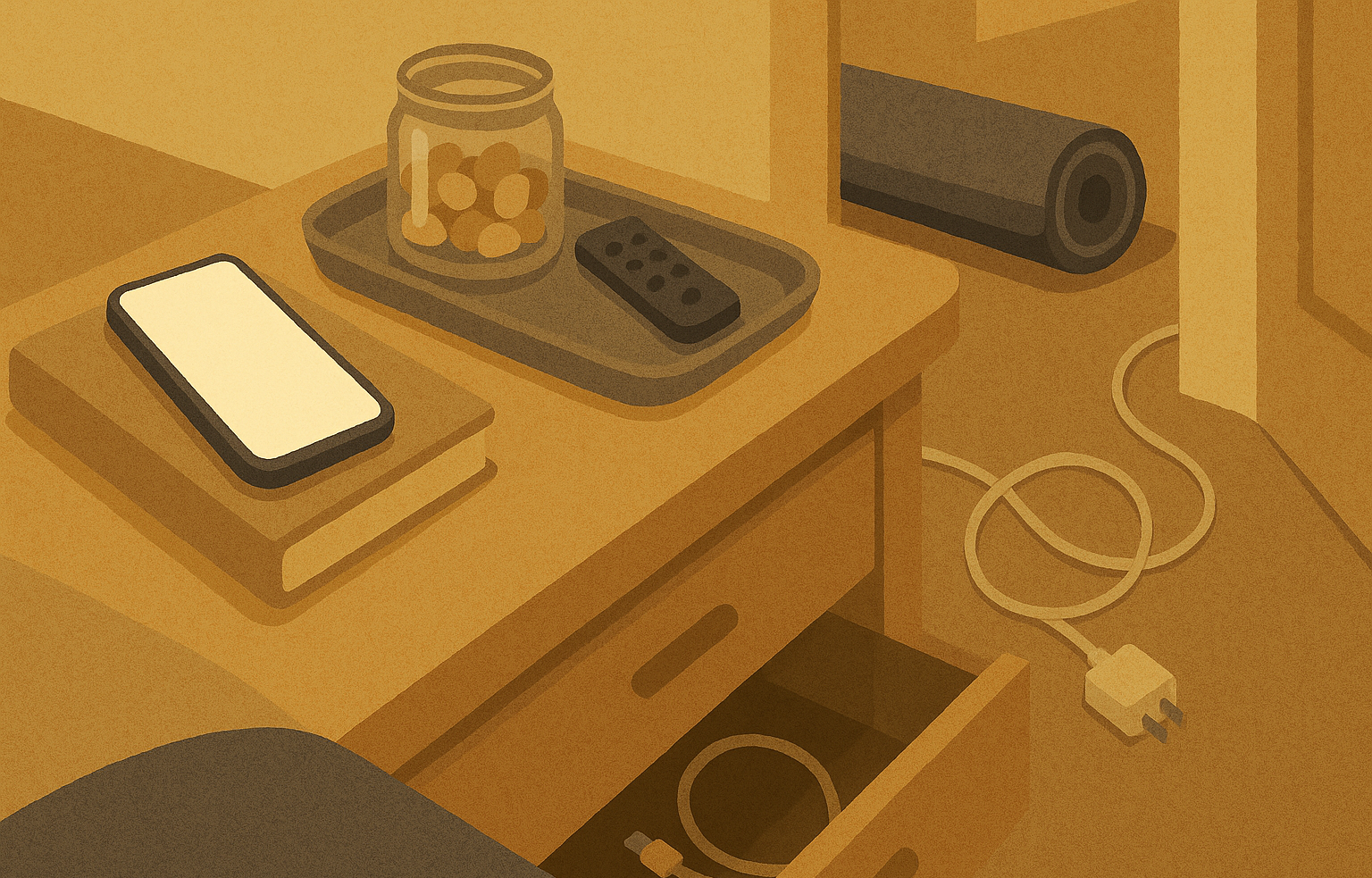
This is where ideas from James Clear help. Instead of trying to “be a disciplined person”, you change your environment so that the easier path is the one that leads toward more rest. For example, you keep your phone out of the bedroom, or you pre decide that all screens go off at a certain hour.
You are not trying to heroically perform on half a battery. You are trying to cut fewer holes in it.
What To Try Tomorrow
Pick tomorrow night and declare it a protected experiment.
Decide your target lights out time, then set an alarm for one hour before that. When the alarm goes off, treat it as seriously as a meeting reminder. Whatever you are doing, start shutting it down and move into a simple, low stimulation wind down until you are in bed at your set time.
Do this once, fully. Notice how the next morning feels compared with a usual day. You are not committing to a permanent new lifestyle yet. You are giving yourself one clear data point of how life looks when you put the foundation in place first.