Deep Work as a Daily Practice
Deep work is not a talent you are born with. It is a block on your calendar that you protect, repeat, and slowly strengthen until it feels natural.

Deep Work Is Not Who You Are, It Is What You Schedule
You sit down to write, your phone lights up, a colleague pings you, and suddenly twenty minutes are gone with nothing to show. After a few days like this, it is easy to quietly decide that you are just not a “focus person”.
You are not wired for shallow work. Deep work is not a personality trait. It is a block of time you put on your calendar, protect like a meeting with your boss, and repeat until it feels natural.
Cal Newport popularized the term deep work as the ability to focus without distraction on a cognitively demanding task. You do not need his brain to do it. You need his kind of structure.
Why Deep Work Feels So Hard For You
If you struggle to sit with one task for more than ten minutes, it is not because you lack discipline. You are running a different script.
You move from email to chat, from document to phone, from one small task to another. Every switch leaves a bit of your attention stuck to the last thing. Newport calls this attention residue. You feel slightly scattered, even when you finally try to focus.
Picture this:
You open a report you need to write. A notification slides in. You glance, reply, come back. Then you remember a bill, pay it quickly, and return again. By the time you settle, your mind is carrying three half-finished threads. Deep work in that moment feels heavy and vague, so you tell yourself you will do it “when you have a clear stretch”.
That clear stretch rarely arrives on its own.
There is a quieter reason deep work feels hard. It exposes you. When you give full attention to a hard problem, you see your limits. You notice what you do not know, or how slowly you move. Shallow work hides that. Quick replies and easy tasks give you a steady drip of small wins.
So you avoid deep work, not because you do not care, but because you care a lot. It feels safer to stay busy than to sit with a blank page, a new skill, or a big decision.
You change this by shrinking the unit of courage. Deep work becomes thirty, forty-five, or ninety minutes on your calendar, not an abstract ideal you never quite live up to.
Define One Daily Deep Work Block
You do not need a perfect weekly system. You need one daily deep block that is realistic and repeatable.
Choose the smallest block that still feels meaningful
Trying to jump from zero to four hours of deep work is like going from the couch to a marathon. You might do it once, then avoid it for weeks.
Start by picking a block that feels slightly challenging but not heroic. For most people that is between thirty and ninety minutes.
Ask yourself:
- At what time of day do you think most clearly?
- When are you least likely to be interrupted?
- What length could you repeat five days in a row without dreading it?
You might choose 8:00 to 8:45 before your inbox, or 2:00 to 3:00 when the office tends to quiet down.
If your days are unpredictable, you can still define a block by condition instead of clock time: “The first ninety minutes after I arrive” or “The first hour after lunch once I am back at my desk”. The point is that there is a named stretch that is not up for negotiation every time.
Put that block on your calendar with a name that makes sense for you: “Deep Work”, “Focused Writing”, “Design Block”, “Study Session”. Treat it as a meeting with your future self.
Link it to a specific type of work
A vague block like “focus time” is easy to fill with tasks that feel productive but are actually shallow.
Tie your block to one category:
- Writing or thinking tasks that move an important project forward
- Studying or practicing a demanding skill
- Strategy work such as planning, designing, or system building
If you work in sales, it might be crafting proposals. If you study, it might be problem sets, not reading emails from your course platform.
You are building a mental association: this block is when you do hard things that matter. That clarity makes it easier to defend.
To reinforce it, keep a short running list of “deep work tasks” in a notebook or notes app. When the block starts, you pick from that list rather than from your entire to-do list, which often mixes shallow and deep tasks together.
Protect The Block Like Any Other Commitment
Once your block exists on your calendar, the real work starts. Your environment will test it.
Say “no” with a straight face
You will get meeting invites and “quick” requests right on top of your deep work time. This is where you prove that the block is real.
You do not need a dramatic speech. You need simple default replies, for example:
- “I have another commitment then, could we do 10:30 instead?”
- “I use 8:00–9:00 for focused work, can we schedule this after 9:15?”
You are not lying. You do have a commitment. It just happens to be with a piece of work instead of another person.
Advice sometimes goes too far and treats any compromise as failure. You do not always have to defend every block at all costs. Sometimes your manager needs you in that slot or your kid is sick. That is part of life. The rule is: if you move the block, you reschedule it the same day, just like you would for a medical appointment.
Remove the obvious leaks
You cannot do deep work while half-watching your phone. During your block, make distractions physically harder to reach.
For example:
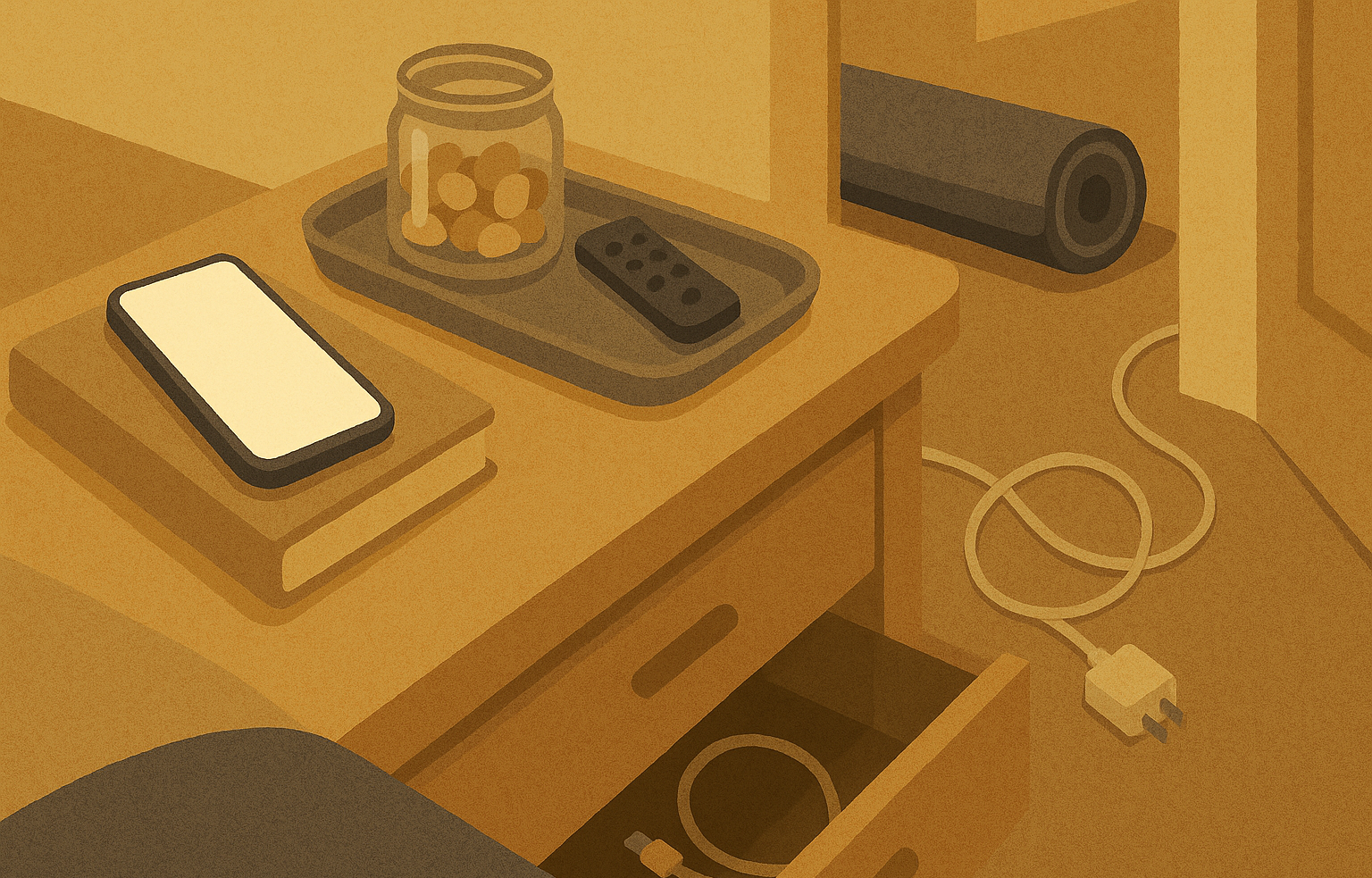
- Put your phone in another room, or at least out of reach and face down
- Close email and messaging apps
- Keep only the tabs or tools open that relate to the task
You are not making a moral statement about technology. You are just making the default action during that block “continue working” instead of “check something”.
Imagine yourself as the “office manager” of your own attention. Your job is to set up the space so that wandering off would take more effort than staying.
Turn Deep Work Into A Ritual, Not A Fight
If you treat deep work as a daily wrestling match with your willpower, you will quickly lose interest. Rituals are lighter. They turn effort into a sequence you can start without thinking much.
Create a pre-work sequence
Think about what happens in the three minutes before your block starts. That tiny window can make or break it.
Design a short, repeatable sequence, such as:
- Clear your desk of everything unrelated.
- Fill a glass of water or make a coffee.
- Write the one sentence that describes what “done” looks like for this block.
For example: “Draft the first section of the proposal” or “Solve the first three problems from chapter 4”.
By the time you sit down, you are not deciding what to do. You are already mid-script.
Over time this sequence becomes a cue. You might notice that, once you have tidied the desk and written your target sentence, starting feels less like a decision and more like the next obvious step.
Use a simple constraint
Deep work needs a clear boundary. A kitchen timer works better than abstract resolve.
You can use a timer app or even a basic clock, as long as you commit to a start and end time.
A common pattern is:
- 50 minutes of focus
- 10 minutes off screen, moving, stretching, or resting your eyes
You are not trying to feel focused every second. You are aiming to stay with the chosen task until the timer ends. Boredom or discomfort during that time is not a problem. It is part of the work.
This is where you might notice something surprising: some days you will not feel like starting at all, and ten minutes later you will be absorbed. Emotion is a poor predictor of whether a deep work block will be productive.
Accept That You Cannot Do Deep Work All Day
You might secretly wish to live in a cabin, write for eight hours, and ignore everything else. That fantasy can quietly sabotage the real progress available in your current life.
Mihaly Csikszentmihalyi wrote about flow as an optimal state between challenge and skill. You do not reach that state by stretching work to fill the entire day. You reach it by giving a challenging task your best attention for a limited period.
Here is the contrarian part: you probably need less deep work than you think. A couple of high quality blocks can move your meaningful projects further than ten hours of scattered effort.
If you do knowledge work, you might notice that your sharpest thinking shows up for only a few hours anyway. The rest of the day is often coordination, communication, and maintenance.
So instead of asking “How can I stay focused all day?”, try:
- “What is the one block that would make today feel well used if I protected it?”
- “What shallow tasks can I batch before or after that block so they do not leak into it?”
You are not failing because you cannot concentrate for six hours straight. Human attention is not built for that. You are responsible for what you do with the two or three hours that you can shape.
When you let go of the fantasy schedule, you stop postponing deep work until life is perfect. You work with the day you actually have.
This shift also protects you from a common trap: turning deep work into another standard to beat yourself up with. You are not trying to become a machine. You are trying to give the right things a fair chance.
One Small Step Today
Open your calendar, choose a single thirty to ninety minute block for tomorrow, label it for one specific deep task, and write one sentence describing what “done” will look like when that block ends.