The Power of Journaling
Journaling is not a diary of events. It is a private gym where you lift thoughts, train attention, and build the strength to see your life clearly.
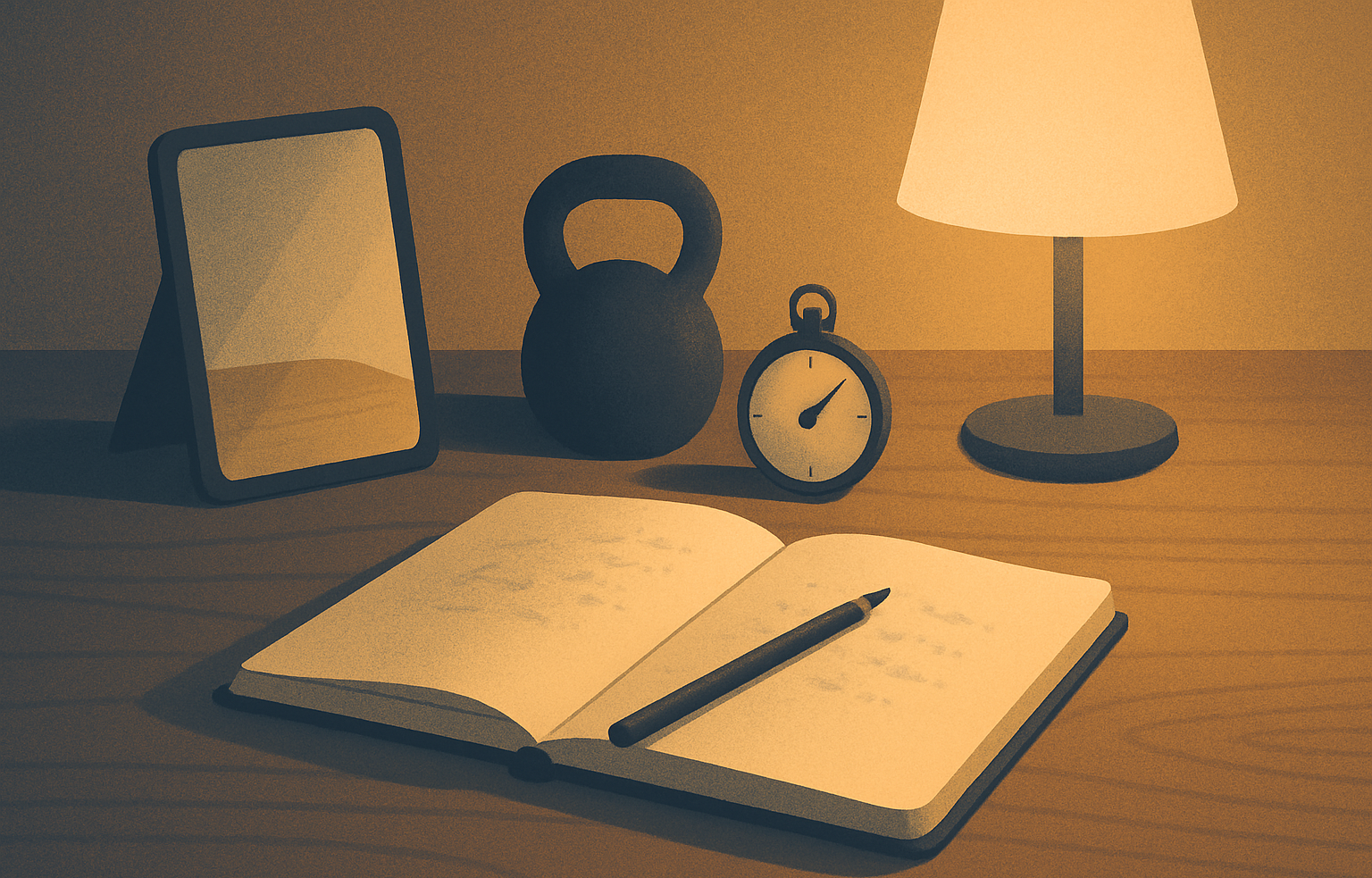
You open a blank page and freeze. Your head feels crowded, but the moment you try to write, your mind goes quiet, like someone turned off the channel. Journaling helps most when you treat it as a training ground for your attention, not as a sentimental archive.
Journaling Is A Gym, Not A Museum
You might imagine journaling as collecting moments, almost like putting memories into glass cases. You write what happened, who said what, maybe how you felt. That is a museum. Interesting, but passive.
A gym is different. In a gym, you use weight and resistance on purpose. You stress the system so it grows. Journaling can be the same. You take the mess in your head and push against it on the page.
Notice the shift:
- A diary asks, “What happened today?”
- A thinking journal asks, “What is actually going on here, and what do I want to do about it?”
When you write with that second question in mind, the page turns into a mirror and a whiteboard at the same time. You see your patterns more clearly, and you sketch next moves.
Here is a concrete picture. It is Sunday night. You have that familiar knot in your stomach before work. If you treat your journal like a museum, you might write, “Weekend was okay, hung out with friends, work tomorrow, kind of dreading it.” Then you close the notebook and feel the same.
In the gym version, you write, “I feel dread about tomorrow.” Then you ask, “What is actually going on here?” You realize you are anxious about a meeting with your manager. You write what you fear will happen, then you sketch one small action, like drafting three bullet points you want to raise. You still do not love Monday, but the dread has a name and a plan.
One contrarian point: you do not need to write every day for journaling to matter. You need to write when thinking is hard. Your journal is a tool you reach for when your mind feels foggy, not a chain you wear so you can brag about a streak.
Try this mental reframe: you are not “journaling”. You are doing thinking reps. Each sentence is one more repetition of noticing, naming, and deciding.
What Journaling Actually Trains In You
If you treat journaling like a thinking gym, what are you training? You are not just venting. You are building three specific skills: attention, emotional literacy, and deliberate choice.
1. Attention: Holding One Thought Still
Your mind flickers. You start worrying about a deadline, then you jump to a text you forgot to answer, then you remember you still have laundry in the machine. On the page, you have to pick one thread long enough to write a full sentence.
That simple act builds focus. You anchor your attention to words. You stay with a thought long enough to see more than its surface. This is similar to what James Clear describes with small habits. You are not creating a masterpiece. You are proving to yourself that you can show up in a tiny, controlled way.
A quiet bonus: when you hold one thought still on paper, you often discover that it is smaller than it felt in your head. What looked like a huge tangle becomes three specific worries and one concrete task.
2. Emotional Literacy: Naming What You Feel
Most days you move through a blur of “fine”, “stressed”, or “tired”. These are vague labels that do not help you act differently. On paper, you can slow down.
“I am angry” turns into “I feel overlooked when my manager ignores my suggestions in meetings.” Once you have that sentence, you have something you can work with. You can plan a conversation, change your approach, or adjust your expectations.
Over time, your vocabulary for feelings grows. You notice the difference between “irritated”, “hurt”, and “disappointed”. That nuance lets you respond in a way that actually fits what you feel, instead of reacting in a blunt, automatic way.
3. Deliberate Choice: Moving From Reaction To Response
Thoughts without decisions create rumination. Decisions without clear thoughts create chaos. Journaling trains the bridge between them.
A rough pattern looks like this:
- “Here is what happened.”
- “Here is the story I am telling myself about it.”
- “Here is what I actually want to do next.”
The more you repeat that pattern, the easier it becomes to step out of autopilot. You stop carrying the same half-formed problems from week to week and start turning them into concrete next moves.
Here is where common advice can mislead you. You might hear that you should “just get your feelings out” and stop there. Venting can feel good, but if you never reach that third line, “Here is what I want to do next,” the page becomes a place where your complaints harden instead of move. You are allowed to ask more from your journal than temporary relief.
Three Simple Formats That Turn The Page Into A Tool
You do not need an aesthetic notebook, fancy pens, or a twenty-step ritual. You need a format that helps your brain do work. Here are three that stay short and practical.
1. The Thought Dump
This is the closest to a classic “brain dump”, but with a twist. You write continuously for ten minutes. No editing, no pausing to polish. When the timer ends, you add two short lines:
- “What matters most in all of this?”
- “What is one thing I can influence today?”
The dump clears noise. The two questions filter for signal. You walk away with at least one concrete focus, not just a page of complaints.
Example: Your head is full of scattered worries about money, health, and work. After writing, you realize what bothers you most is avoiding a medical checkup. Your one influence today is to book the appointment. The noise shrinks.
2. The Situation Lens
Use this when you are stuck on one specific problem. Draw three short headings on the page:
- Facts
- Story
- Next step
Under “Facts”, you write only what a camera would see. Under “Story”, you write what you are making it mean. Under “Next step”, you write one small move that fits the facts, not the story.
For instance, imagine you text a friend and they do not reply for two days. In your head, you spiral into “I did something wrong” or “They do not care.” On paper:
- Facts: “I sent a message Tuesday. It is Thursday. No reply yet.”
- Story: “They must be annoyed with me.”
- Next step: “Send a simple follow-up tomorrow, then focus on my work today.”
You separate reality from interpretation and work from there. The situation might still sting, but it stops running your day.
3. The Decision Sheet
Decisions often live half-formed in your mind. That is where indecision grows. The Decision Sheet is just a page split into two:
- If I say yes
- If I say no
You write five lines under each. Not pros and cons in the abstract. Concrete effects on your time, energy, and values.
Say you are offered a side project that pays well but will eat your evenings. On the page, “If I say yes” might include “Less time for sleep”, “More money for debt”, “Less attention for my relationship”. “If I say no” might include “Slower debt payoff”, “More evenings for reading and rest”.
Seeing both sides in ink forces you to admit what you already know. You stop pretending you can have it both ways.
Why Writing By Hand Still Matters (And When It Does Not)
You might hear strong opinions about “real” journaling being pen and paper. There is some truth to it. Writing by hand slows you down just enough for reflection. Your hand can only move so fast. That lag is a feature, not a bug.
When you write by hand:
- Your thoughts have to condense into shorter sentences.
- Your body is involved, which creates a physical memory of the reflection.
- You are less likely to alt-tab into distraction.
Still, digital journaling has strengths too, especially for speed and search. If you are untangling a complex project or thinking through a script for a difficult conversation, typing might keep up with your thoughts better.
A practical way to split it is simple:
- Use paper when your mood is hot: anger, anxiety, shame. You want to slow down.
- Use digital when your thinking is cold: planning, outlining, tracking.
The real mistake is not picking the “wrong” medium. It is insisting on a pure system that you never actually use. A half-legible notebook you touch three times a week beats a perfect app you open twice a year.
There is another quiet trap here. You can turn journaling into a hobby about stationery instead of a practice about awareness. New notebooks, new pens, new apps. None of that is bad, but if you notice that you keep changing tools while your actual pages are mostly empty, take that as data. Your brain might be chasing the feeling of a fresh start instead of the friction of honest writing.
Building A Journaling Habit Without Making It A Chore
Habits live or die not on intention, but on friction. If journaling feels heavy, you will avoid it. You can borrow a few ideas from BJ Fogg and James Clear here without turning it into a science experiment.
Make It Tiny
Decide that “journaling” means writing one sentence. Not a page. Not ten minutes. One sentence. You can always write more, but the bar to success stays low.
For example:
- “After I brush my teeth at night, I write one sentence about something that is bothering me.”
- “After I open my laptop for work, I write one sentence about what I intend to focus on first.”
This shifts journaling from “project” to “habit”. You are building a reflex, not chasing inspiration.
Anchor It To Something You Already Do
You do not need more discipline as much as you need better anchors. Attach journaling to something already fixed in your day: coffee, your commute, your lunch break, bedtime.
If you ride a train to work, your anchor might be “When I sit down, I open my notes app and answer one question: What am I avoiding right now?” The train becomes a cue, not just dead time.
Keep Your Tools Within Reach
You will not write if your notebook is buried in a drawer or your journaling app is on page four of your home screen. Make access lazy.
- Leave the notebook open on your pillow with a pen on top.
- Pin your journaling note to the top of your notes app.
- Keep a small pocket notebook in the bag you carry every day.
The less effort it takes to start, the more likely you are to do it when your willpower is low.
Here is the contrarian part: it is fine if your journaling habit looks boring. You do not need spreads, prompts, or artful pages. Consistent, plain sentences will serve your future self better than pretty, rare entries.
One Small Step Today
Pick one current worry or decision, set a five minute timer, and write it out using the “Facts, Story, Next step” format on a single page. Stop when the timer rings, circle your next step, and do just that step before the day ends.