Digital Minimalism Without the Dogma
You do not need to live in airplane mode to reclaim your focus. You need one clear rule: every digital tool must earn its place in your life, or it leaves.
When Your Phone Runs You
You pick up your phone to check one message. Ten minutes later you are watching a video you do not care about, holding a device you are slightly ashamed of.
You tell yourself you should delete everything and start fresh, but the thought feels exhausting. You need your maps, your banking, your work apps. You do not actually want a dumbphone. You just want to feel like you are choosing what you look at, instead of being dragged by it.
Digital minimalism can help with that, but not as a purity contest. You do not need to quit every platform. You need a simple rule: every digital tool must earn its place in your life, or it leaves.
What Digital Minimalism Is Really For
Cal Newport uses digital minimalism to describe a life where your tech setup supports your values instead of competing with them. Stripped of slogans, it comes down to three questions.
- What do you actually care about feeling and doing in a normal week?
- Which digital tools clearly help with that?
- Which ones mostly produce noise?
You might notice something right away. Deleting apps is not the first step. Clarity is.
Think about how you used your phone yesterday:
- Your group chat kept your friendships alive.
- Your notes app held ideas from a meeting.
- Your video app filled the bored gap between tasks with clips that you barely remember.
Those are three different jobs. The first two move you toward connection and progress. The third numbs you out while pretending to entertain you.
Digital minimalism is not about less for its own sake. It is about being honest about which jobs you actually want your devices to do, then refusing the rest.
Here is a contrarian twist you can try: sometimes adding one tool reduces noise. Installing a proper task manager, for example, can keep you from turning your notes app, inbox, and messages into one messy to do list. You are not trying to own the fewest apps. You are trying to own the smallest setup that actually works.
You can see this more clearly if you picture a specific day. Imagine you are a teacher who uses three different messaging apps, two calendars, and an email inbox to keep track of students, parents, and colleagues. Every ding feels urgent. If you add one good classroom platform that pulls all those threads together, that is an extra tool. It is also fewer places to check, fewer stray messages, and fewer chances to miss something important. More software, less chaos.
Why All-or-Nothing Rules Fail You
You have probably felt the pull of extreme solutions: delete every social app, quit email on your phone, move to a paper calendar. For a few days you feel clean, almost virtuous. Then work needs a quick reply, or a friend asks why you never see their photos, and you slowly reinstall everything.
The problem is not your willpower. The problem is that strict digital rules often ignore how your life actually works.
If you freelance, your clients probably live on messaging platforms and shared drives. If you tried to follow a “no notifications ever” rule, you would constantly miss urgent revisions and start to look unreliable. On the other hand, if you leave every app buzzing in real time, your focus breaks every five minutes.
Binary rules force a false choice: be reachable or be focused. You need something more subtle.
The more realistic approach is to design contexts instead of commandments.
- During deep work blocks, you mute everything except one client channel that truly must stay open, and you put that window behind your main work.
- During admin time in the afternoon, you open all the other channels and clear them in one pass.
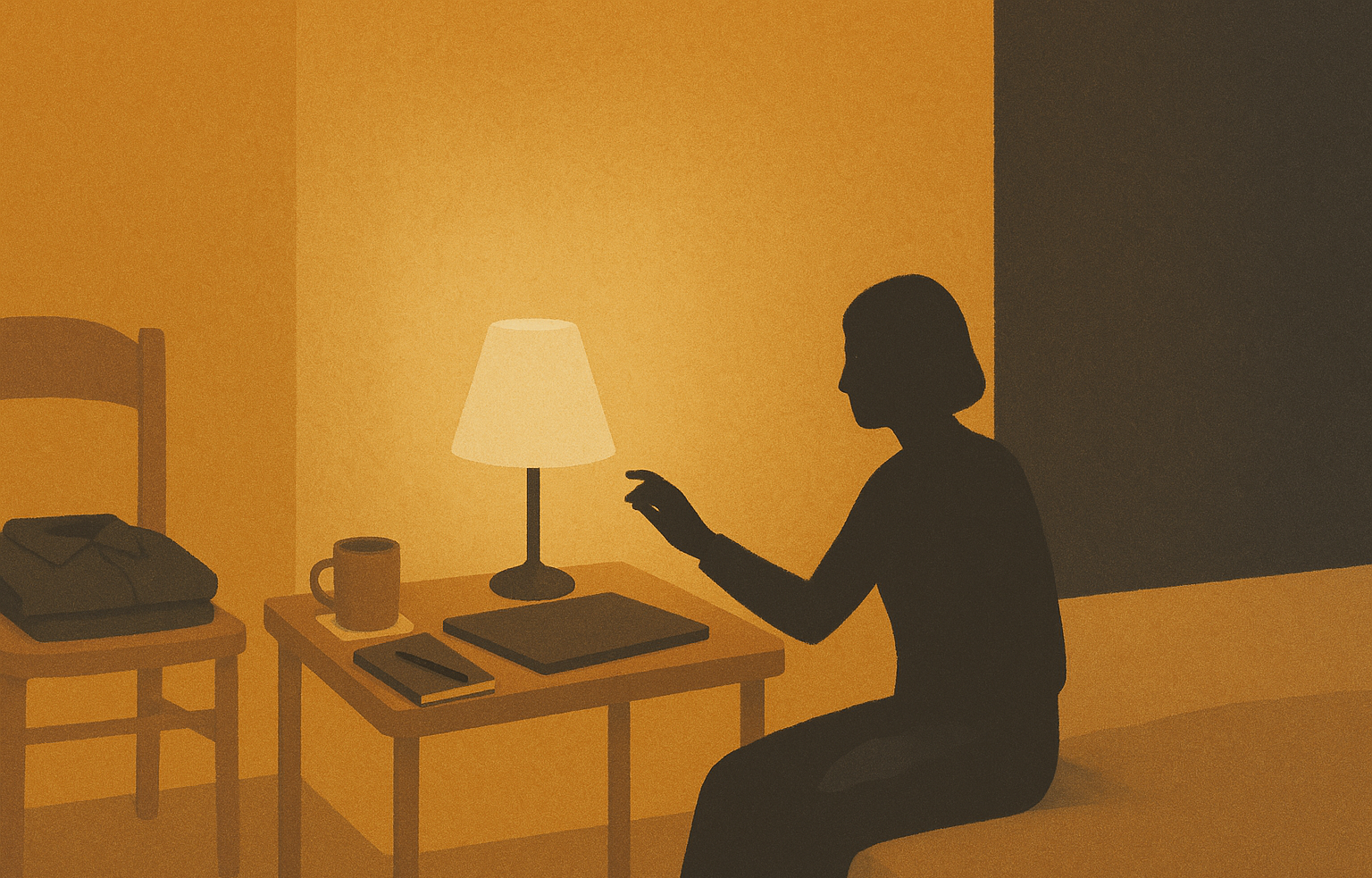
- In the evening, you allow social apps, but only on a tablet that stays in the living room, not on the phone beside your bed.
You are not trying to become the kind of person who never touches a screen. You are trying to move from default access to deliberate access.
Another quiet failure of all or nothing: it turns every slip into a story about your character. You reinstall a video app for one event, then feel like you have “failed” at being minimal, so you give up and lean back into old patterns. Flexible rules survive bad days because they assume you will break them sometimes, then return.
It can help to test this in one real area. Say you are a nurse who often covers night shifts. If you followed a strict “no phone after 9 p.m.” rule, you would miss schedule updates and late calls from your manager. Instead, you might set one context: work-related calls and messages only, everything else off. You can even use a focus mode that allows just a few contacts. You still keep your job running smoothly, but you stop letting every group chat pierce your attention at 2 a.m.
A Simple Test: Does This Tool Earn Its Place?
You do not need a spreadsheet to evaluate your apps. You do need a short, honest test.
For each digital tool that takes real time or attention, ask three questions.
What specific job does this do for me?
Not “staying informed” or “relaxing”. That is vague. Try “letting my extended family see kid photos without constant texting” or “helping me find local events”.
If you cannot name a clear job, that is a red flag.
How often do I use it for that job versus something I later regret?
Be rough and honest. If you open a platform “to message one person” and nine times out of ten you end up scrolling for twenty minutes, then the job you think it has is not the job it actually performs in your life.
Could another, calmer tool do the same job with less collateral damage?
Maybe your group of friends could move from a noisy social feed to a private chat. Maybe newsletters can replace news apps. Maybe a playlist replaces algorithmic video.
If a tool scores poorly on these questions, you have three options:
- Remove it. Delete the app, log out, or close the account. This is for tools that rarely help and often hurt.
- Restrict it. Keep it, but on strict terms. Maybe desktop only. Maybe weekends only. Maybe only inside a defined time window.
- Rebuild it. Keep the platform, but change your relationship. Unfollow aggressively. Turn off recommendations. Pin only the accounts or channels that actually serve you.
This is closer to pruning a garden than clear-cutting a forest. You keep what you want to grow. You cut what steals light.
If you want a shorthand, you can call this your earn-your-slot rule. If a tool does not justify the time and energy it costs, it loses its slot on your home screen, in your bookmarks, or in your day.
To see how this looks in practice, imagine your streaming habits. You tell yourself you use a video platform “to learn new skills”. When you apply the test, you notice you watch one tutorial a week and three nights of random clips. The real job it is doing is “helping me avoid bedtime”. You could remove the app from your phone, restrict it to a TV in the living room, and subscribe to one or two long-form channels that genuinely teach you something. Same service, different slot in your life.
Designing Your Default Day Around Attention
You can have a clean home screen and still feel scattered. The structure of your day matters more than the icons on your phone.
Think of your attention as a budget. Every time you context switch, reply to a ping, or glance at a feed, you are spending from it. You rarely notice the cost in the moment. You feel it later, when you sit down to do real work and your mind slides off the page.
You can protect that budget with a few daily design choices.
1. Fix your “screened” blocks
Decide in advance when you want devices fully in play.
- Maybe that is 9 to 10 for admin tasks and messaging.
- Maybe it is 12:30 to 1 for personal errands and calls.
- Maybe it is 8 to 9 in the evening for entertainment.
During those blocks, you allow yourself to be reachable and to handle digital tasks. You still keep some rules, like no aimless browsing, but you do not try to be a monk.
The rest of the day becomes surprisingly quiet. You are not battling urges every five minutes, because you know there is a proper time coming.
You can even label these blocks in your calendar so you stop deciding on the fly. When you see “Messages and admin” at 3 p.m., you can let unread badges sit untouched at 11 a.m. without the constant itch to check.
2. Protect at least one “clean” block
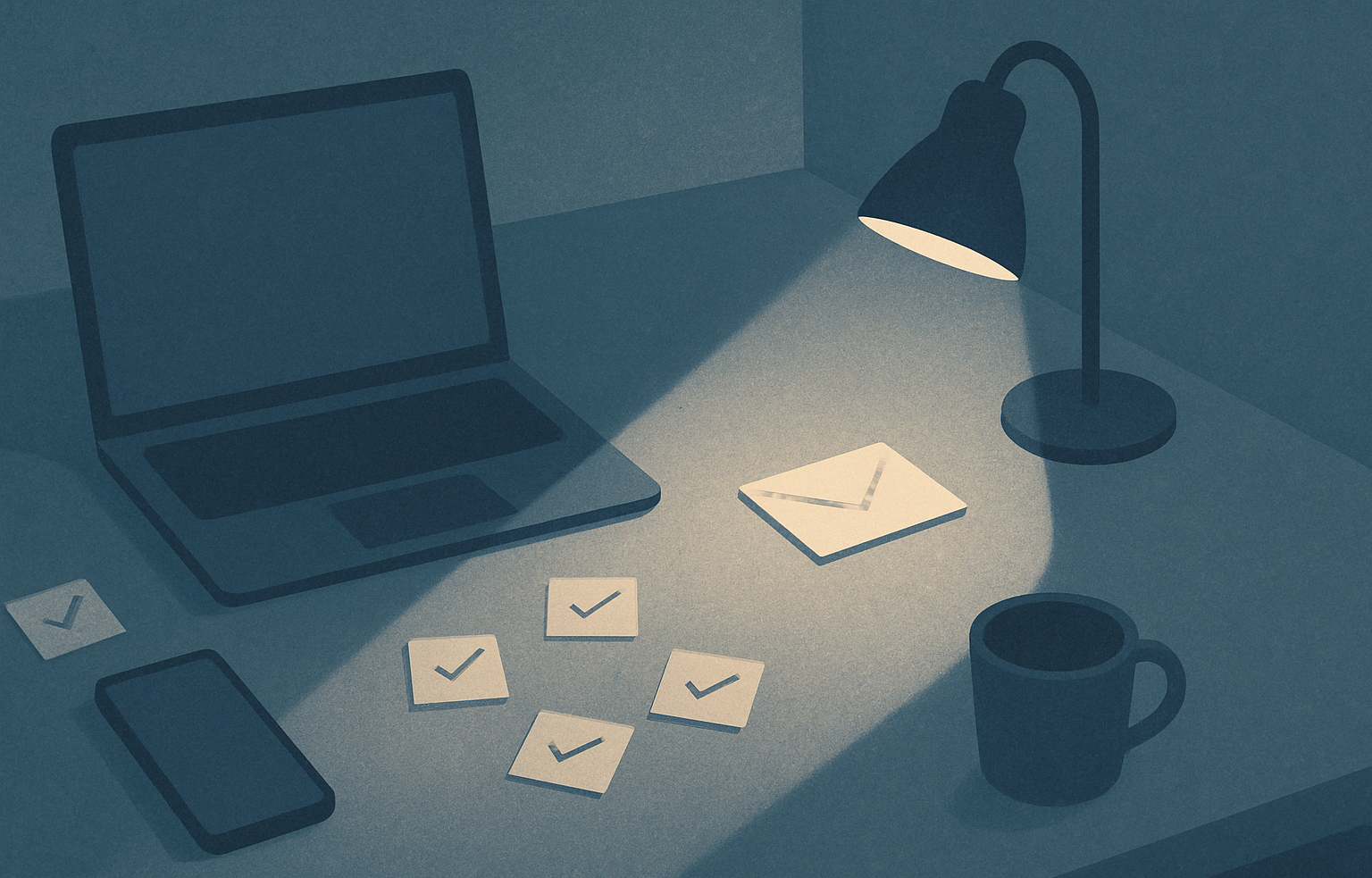
Pick one stretch each day, even thirty or forty minutes, where you give a single task your full attention. No notifications, no tabs that tempt you, no phone in reach.
You might write, study, design, plan, or think through a decision. The content does not matter as much as the condition: one thing, one mind.
This pairs well with ideas from Flow: The Psychology of Optimal Experience by Mihaly Csikszentmihalyi. When challenge and skill meet without constant interruption, your mind can actually enjoy effort. A clean block gives that a chance.
If this feels unrealistic, start with the smallest honest window you can protect. You might be a parent with a toddler at home or someone in a crowded office. Maybe your clean block is the first twenty minutes after you arrive at work, with headphones on and your status set to “heads down”. Short is fine. What matters is that you prove to yourself you can create a small island of attention on purpose.
3. Build friction where you are weakest
Where do you usually slip?
- Late-night scrolling in bed
- Tab surfing during work
- Tapping a certain app every time you feel slightly bored
Add small obstacles exactly there:
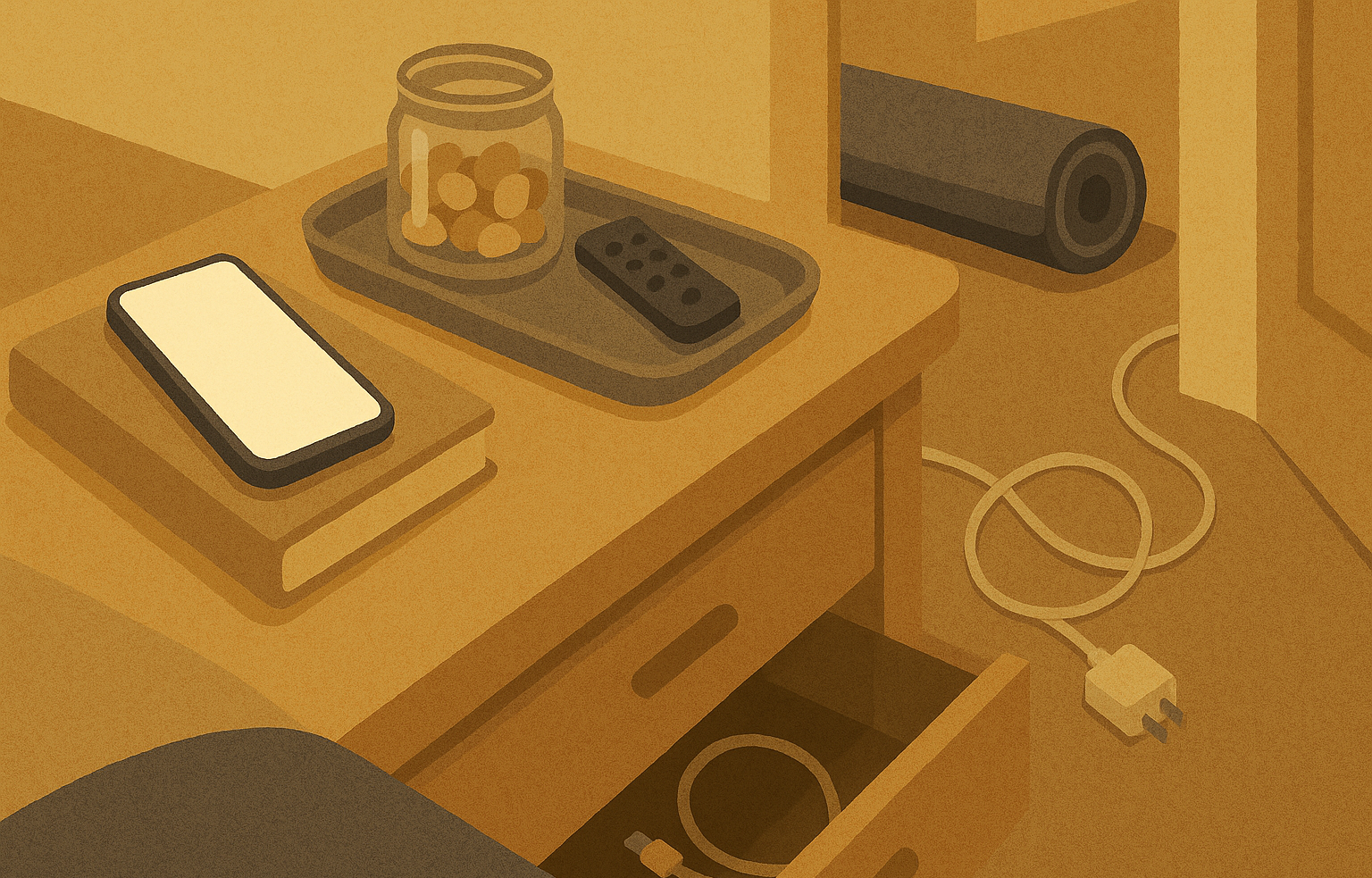
- Move that app off your home screen.
- Log out so you need to enter a password.
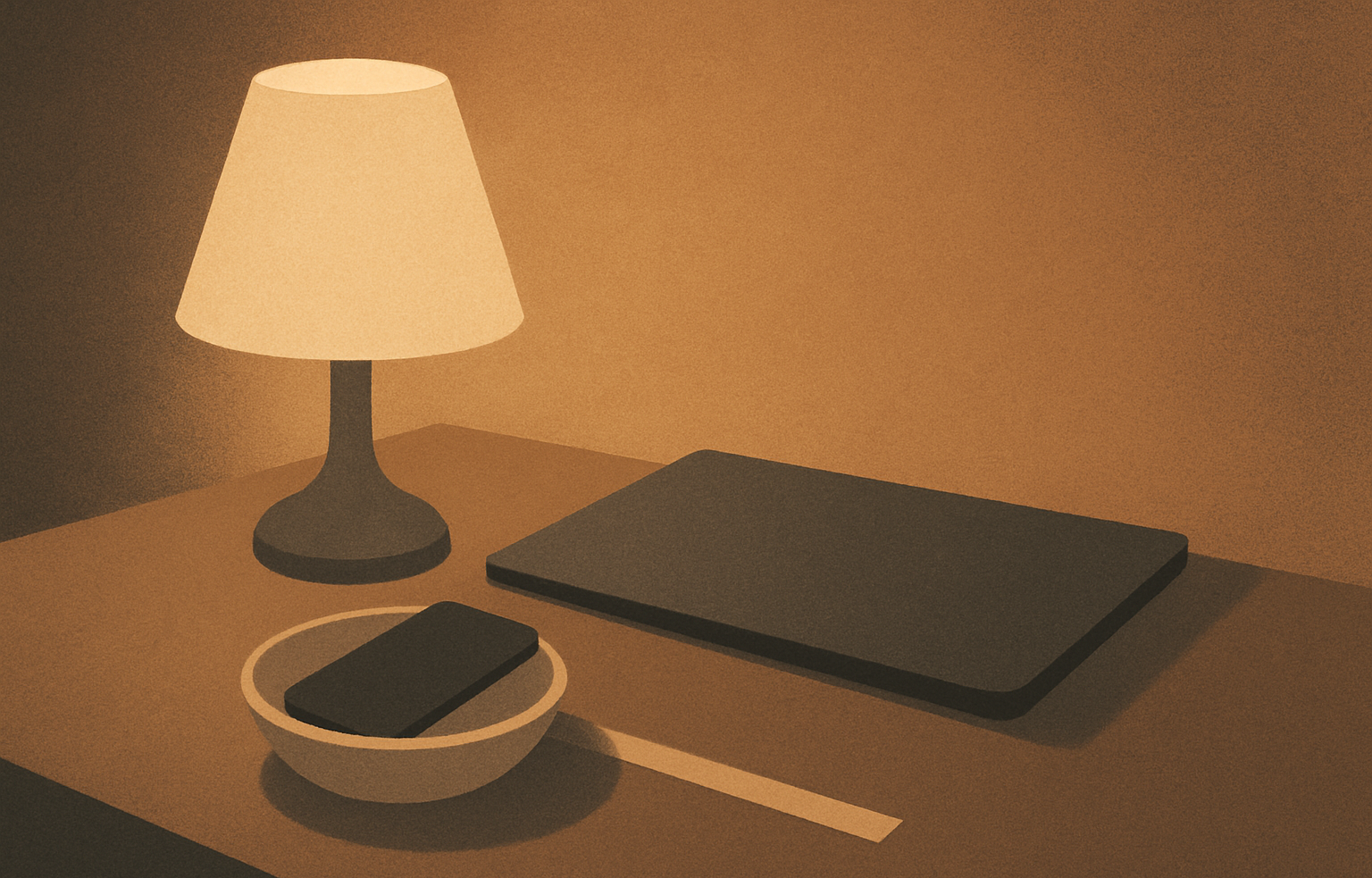
- Keep your phone on a shelf during deep work.
- Use website blockers during your clean block.
You are not trying to win a willpower contest. You are trying to make your best choice the easiest one to make.
Think of friction as a speed bump, not a wall. A speed bump will not stop you if you truly need to check something, but it will slow you down enough to ask “Do I actually want to do this right now?” That tiny gap is often all you need.
Letting Tech Support What You Actually Care About
Digital minimalism often gets framed as self-denial. Delete, restrict, abstain. That misses something important. The point is not to live with as little tech as possible. The point is to free up space for what you say matters.
Look at a normal weekday and ask three blunt questions:
- When did you feel most alive or engaged?
- When did you feel most drained or numb?
- Where were your devices in those moments?
You might find that your phone was present in the best parts too. A video call with a sibling. A playlist that helped you focus. A note you captured that turned into a good idea later. Those are not the enemy. They are evidence that tech can be part of a meaningful day.
The enemy is the automatic behavior that creeps in around the edges:
- Opening a social app during a lull in conversation.
- Reading the same three news headlines three times.
- Checking email again because you do not want to face the next hard task.
A useful mental move is to treat your attention as something other people are actively trying to buy. Because they are. Ads, infinite scroll, autoplay, badges in red. None of that is neutral.
When you see it that way, saying no to an app or feature stops feeling like self-punishment. It feels more like declining a bad deal. You give me some stimulation now, and in return you take my ability to focus later. Not worth it.
There is another contrarian angle here. Sometimes your “productivity” tools are the worst offenders. A chat app for work that never sleeps. A project board that invites constant tinkering instead of finishing. A calendar that you refresh instead of making a decision.
Less glamorous moves like batching, setting status messages, or agreeing on response times with your team can be more powerful than cleaning up your social feed. You do not want a calm phone while your work computer screams.
Digital minimalism without dogma asks a simple thing: line up your tools behind your values. If a tool helps you create, connect, or recover in ways you are proud of, great. If it does not, it either changes or goes.
What to Try Tomorrow
Tomorrow, take ten minutes to delete one app or browser bookmark that fails your earn-your-slot rule. Do not replace it, reorganize your home screen, or set up new tools. Just remove that single source of digital noise, then live with the space it creates for one week.