The Willpower Instinct
The Willpower Instinct argues that self-control is a physical, limited capacity shaped by sleep, food, breathing, stress and self-compassion, not just discipline.
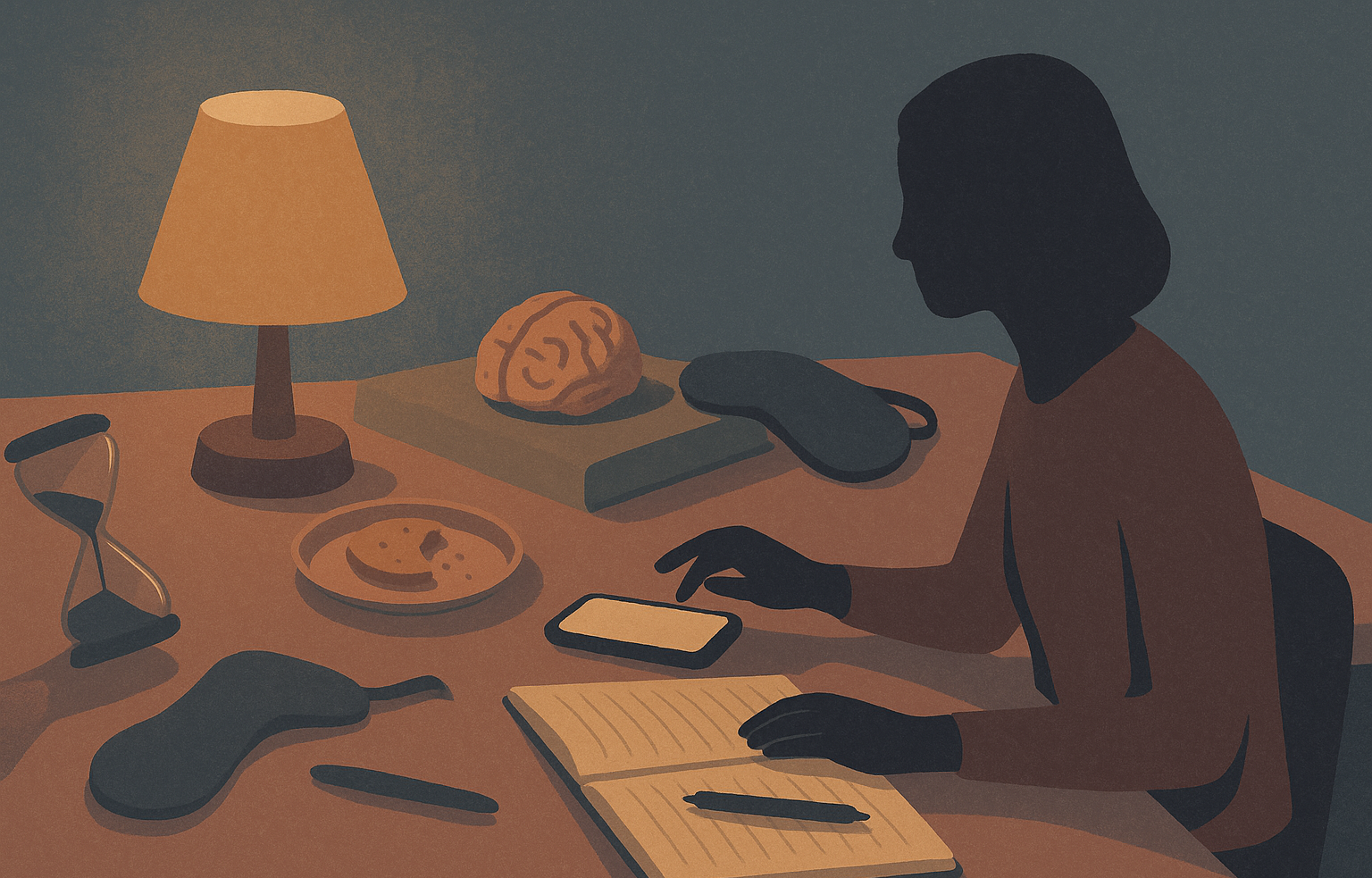
You notice it on a Tuesday afternoon, staring at an email you’ve avoided for three days. You’re not tired enough to sleep, not busy enough to blame your schedule, but still you tab away, check the news, open the fridge. The story you tell yourself is simple: you just don’t have enough discipline. Kelly McGonigal suggests this is the wrong story. What feels like a moral failing is often your biology and attention working at cross-purposes—stress chemistry, blood sugar, breath, and even shame quietly steering your choices while you argue with yourself about being “stronger.”
Who this book is for / who it is not for
This book is for people who feel like failures of character when they eat the cookies, check social media, or skip the workout, and are ready to treat willpower as biology instead of morality. If you are curious why you can be disciplined at work yet impulsive at night, or why stress reliably sabotages your goals, McGonigal gives you a lab tour of your own brain and body.
It is also a fit if you like science translated into experiments you can run in daily life. Each chapter grew out of a popular Stanford Continuing Studies course and ends with exercises, not pep talks.
It is not for readers looking for a quick motivational jolt or a tidy system with morning routines and productivity hacks laid out step by step. Nor is it ideal if you dislike references to neuroscience and behavioral studies; the book leans on research more than on stories of superstar performers.
Willpower as three competing selves
One of the most useful shifts in the book is redefining willpower as three different forces: “I will,” “I won’t,” and “I want.” McGonigal argues that self-control problems often come from overfocusing on the first two and losing contact with the third.
“I will” is your capacity to do the hard, useful thing: go to the gym, sit down to work, make the awkward phone call. “I won’t” is your ability to resist temptation: not smoke, not scroll, not have the second drink. “I want” is the remembering of your deeper, longer term goals that give the other two any meaning, a lens that echoes our piece on aligning goals with core values.
In class, she asks students to name a willpower challenge and then locate which self is weakest. Someone might be good at saying “no” to dessert (“I won’t”) but terrible at saying “yes” to starting a side project (“I will”). Another may have both “I will” and “I won’t” but no clear sense of “I want,” which makes every act of control feel like deprivation rather than alignment.
The payoff of this framing is practical: before trying to “be stronger,” you diagnose which self you need to strengthen and design your environment and habits around that.
The biology of self-control: glucose, sleep and stress
McGonigal spends substantial time on what is happening in your body when you exercise (or lose) self-control, centering on the tug of war between the prefrontal cortex and older reward systems.
She explains studies where participants who had to exert self-control on a boring task performed worse on a second, unrelated willpower task, a pattern interpreted as “ego depletion.” Early work suggested that blood glucose was one limiting factor. In the book, this shows up as the argument that being tired and hungry makes you more impulsive, which aligns with everyday experience: the late night junk food run, the angry email sent after a long day.
From this she draws concrete advice: do not schedule your hardest decisions for when you are sleep deprived or starving; plan snacks that avoid dramatic blood sugar spikes and crashes. She shares experiments where simply getting more consistent sleep improved people’s ability to resist impulses during the day, and where students who identified their personal “danger zones” for fatigue and hunger could protect those windows from major temptations.
Stress is another biological constraint. Under acute stress, the brain shifts into survival mode, making short term relief more attractive than long term goals. McGonigal describes research where stressed dieters ate more, not less, and where financial stress led people to take out worse loans. The lesson is not that you lack character, but that your nervous system is wired to favor quick comfort when it feels under threat.
This is where the book plugs into ideas like energy management, not time management. Your willpower failures are often energy problems, not effort problems. Protecting sleep, planning food and reducing background stress can increase your capacity for self-control more reliably than demanding more grit.
Stress as fuel and the role of self-compassion
A counterintuitive claim in the book is that stress is not always the enemy of willpower. What matters is how you interpret it. McGonigal describes the “biological tug of war” between the fight-or-flight response and the “pause and plan” response governed by the prefrontal cortex.
She cites research where participants who were told that their racing heart and sweaty palms were signs their body was preparing to meet a challenge performed better on a stressful task and had healthier physiological responses. Reframing stress as readiness allowed the prefrontal cortex to stay online instead of being hijacked by fear.
This has direct implications for self-control. When you feel the urge to procrastinate or escape, noticing your stress response and labeling it as energy you can channel into action can help you choose a different behavior. One of her in-class experiments has students notice a stress trigger, take a single slow breath, and then ask, “What choice right now serves my future self?” Repeated practice starts to associate stress with a moment to choose, not just to react.
Self-compassion is the second major surprise. Many people assume that harsh self-criticism will improve their discipline. McGonigal presents studies where people who forgave themselves for a willpower failure, like breaking a diet by eating a doughnut, were less likely to spiral into a full binge. In contrast, those who shamed themselves were more likely to give up entirely.
She gives the example of smokers attempting to quit. Those who treated lapses as information, not proof of failure, and responded with kindness toward themselves were more successful long term. Shame is a stressor that triggers short term coping, while compassion reduces stress and keeps the “pause and plan” system engaged. Simple practices like talking to yourself as you would to a close friend are suggested as ways to break the guilt cycle that erodes willpower.
Attention, temptation and remembering what you want
Another central idea is that where your attention goes, your willpower follows. McGonigal leans on research showing that simply seeing or imagining a temptation increases the likelihood of giving in, unless something reconnects you to your longer term goals.
She discusses experiments in which people who vividly imagined the rewards of their future goal (finishing a degree, saving for retirement) were better able to resist small, immediate rewards. In one study, participants who wrote about their future selves and kept that description in view made more patient financial choices than those who did not.
In the classroom, students are encouraged to create physical reminders of their “I want”: a photo on a phone lock screen, a sentence on a sticky note near the computer, a calendar event that pings with the reason they are trying to change. When the temptation shows up, the cue is already there to bring the bigger picture into awareness.
The book also looks at how marketing and digital design hijack this attention loop. Notifications are engineered to evoke curiosity and fear of missing out, tilting you toward the quick hit of checking your device. McGonigal’s suggestion is not total abstinence, but simple barriers and rules in advance, like charging your phone outside the bedroom or deciding that you will only check social media after completing a block of focused work. These strategies echo our piece on single-tasking as a practice, but with more on the internal experience: noticing urges rise and fall and learning that an urge is not an order.
The honest caveat
For all its strengths, The Willpower Instinct reflects a moment in the science that has since been debated. The ego depletion research that underpins some of McGonigal’s early chapters has faced replication problems. Later studies and meta-analyses found smaller or inconsistent effects, suggesting that the idea of willpower as a “muscle” that runs out after use is more limited than the book presents. Some researchers argue that beliefs about willpower, not just glucose, influence whether people feel depleted.
McGonigal has acknowledged some of this in later talks, emphasizing that while you can feel worn down after repeated acts of self-control, it is not a fixed law of nature. The book also leans toward a neurocentric story that can underplay social and structural factors. If you are working three jobs or living in chronic poverty, advice focused on better sleep and mindfulness may sound naïve. The core message that willpower is embodied and trainable holds up, but readers should hold the specific scientific claims with a light, updated grip.
Where to start
If you want the most leverage in the shortest time, start with Chapter 1 (“You Have a Willpower Instinct”) and Chapter 2 (“The Willpower Instinct in the Body”), which define willpower and explain the “I will, I won’t, I want” model and the biology of self-control. Then move to Chapter 5 on stress mindsets and Chapter 8 on self-compassion, which many readers find most immediately usable. You can safely skim chapters on addictions you do not share and instead focus on the exercises at the end of each chapter that invite you to run a weekly willpower experiment in your own life.
To treat willpower as a resource you respect rather than a moral failing, this book is worth at least one careful read and a slow second pass through the exercises.
The people who succeed are not the ones with the most willpower; they are the ones who have learned to structure their lives so that they use the least willpower. — Kelly McGonigal