Awaken the Giant Within
Awaken the Giant Within argues that lasting change comes from mastering your mental, emotional, and physical state through deliberate decisions, beliefs, and identity-level shifts.
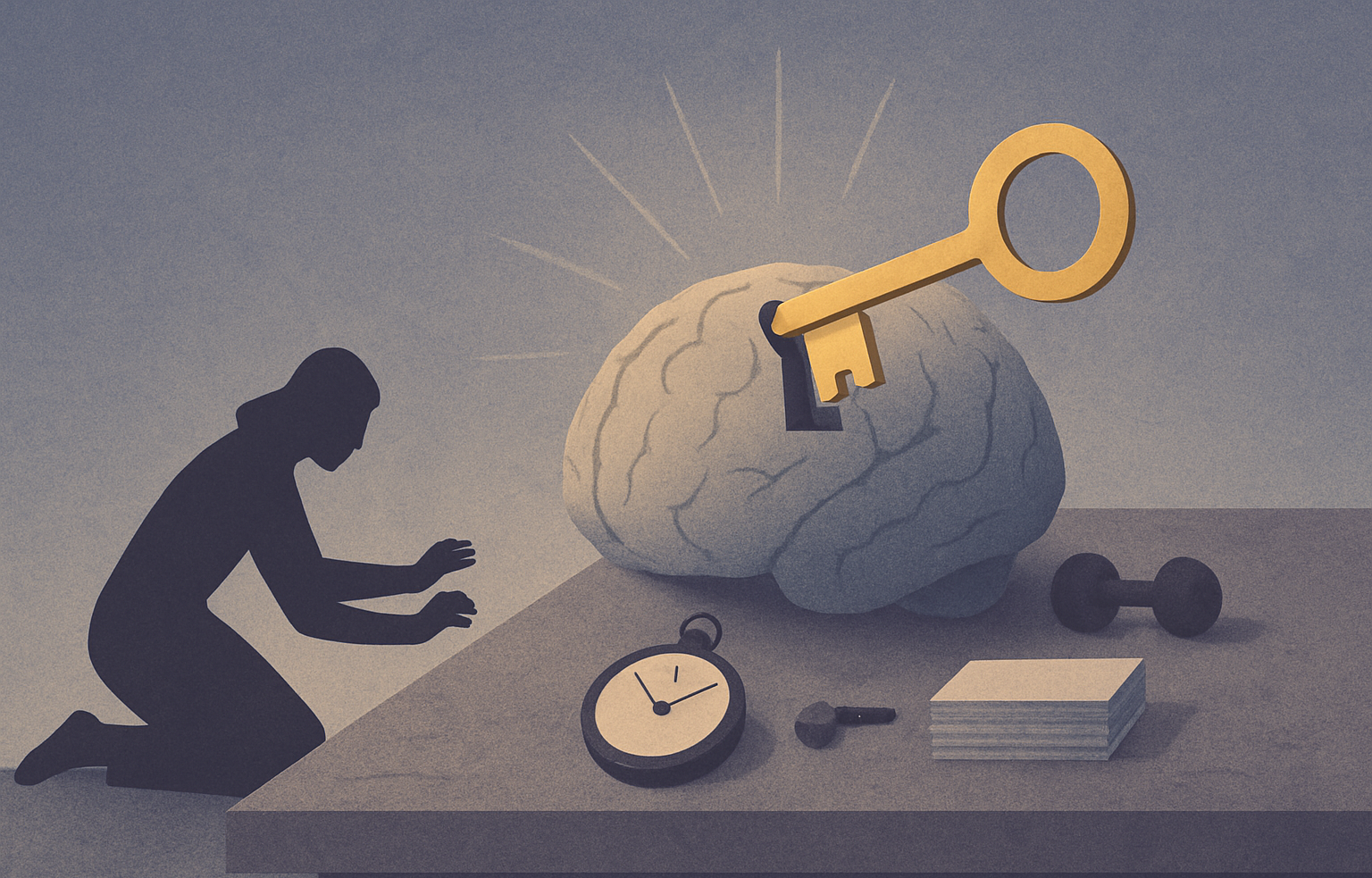
Awaken the Giant Within by Tony Robbins argues that lasting change comes from mastering your mental, emotional, and physical state through deliberate decisions, beliefs, and identity-level shifts.
Who this book is for / who it isn’t for
Awaken the Giant Within is built for readers who are willing to treat personal change as a full-contact sport: people who want to examine their beliefs, rewrite their internal stories, and aggressively set new standards for their lives. If you are drawn to practical psychology wrapped in intensity and repetition, the book gives you a thick toolkit for changing emotional patterns, breaking limiting beliefs, and redesigning your future.
It is not a good fit if you dislike high-energy motivational language, are looking for tightly argued academic research, or want minimalist advice you can skim in an afternoon. Readers who have already gone through multiple core values and goal setting books may also find sections repetitive or overlong. And if you are only curious about Robbins in a historical or critical sense, you will likely be better served by a profile or interview than by 500 pages of direct instruction.
State first: how you feel determines what you do
One of the central ideas in the book is that your emotional state is the gateway to every decision you make. When you feel confident, resourceful, and energized, options appear. When you feel fearful or depleted, the same situation looks impossible. Robbins returns again and again to the claim that we must learn to manage state first, strategy second.
He unpacks state into three levers: physiology, focus, and language. Physiology is how you use your body: posture, breathing, movement, facial expression. Focus is what you pay attention to and how you frame it. Language is the specific words and metaphors you use when you talk to yourself or others. In seminars he has participants change their posture, breathe deeply, move, and shout power phrases to experience how quickly their state can shift.
In the book, he uses personal examples like changing his own state through a daily “hour of power” routine that combines intense physical movement, gratitude, visualization, and affirmations. The point is not the ritual itself but the principle: if you wait for your emotions to change on their own, you stay stuck; if you deliberately change your body and focus, your feelings follow. For readers who are used to purely cognitive approaches, this emphasis on physiology can be a useful corrective.
Decisions as the real turning points
Robbins argues that decisions, not conditions, shape destiny. The turning points in our lives are not the external events but the meanings and decisions we attach to them. He distinguishes between preferences and real decisions. A real decision is backed by cutting off other options and taking immediate action in the direction you chose.
He illustrates this with stories from his own life, including the choice to stop living in poverty by changing his standards for what he would tolerate. He describes deciding that he would not just get by but become a student of human development, leading him to devour hundreds of books, attend seminars, and model successful people. In the book he quotes clients who decided to end destructive relationships, stop using drugs, or commit to financial turnaround and then backed those decisions with new habits.
There is a practical sequence here: decide what you are absolutely committed to, link massive pain to your current behavior, link massive pleasure to the new path, then take one concrete action immediately. This blends motivation psychology with simple behavioral commitment. It also syncs well with the idea of pre-committing to choices to avoid decision fatigue. The book’s insistence is that indecision is itself a decision, usually for the status quo.
Neuro-associative conditioning: rewiring pain and pleasure
The most distinctive framework in Awaken the Giant Within is what Robbins calls Neuro-Associative Conditioning (NAC). The premise is that your brain is constantly linking experiences with pain or pleasure, and these links drive your behavior more reliably than logic or goals. If overeating is associated with comfort and connection and dieting is associated with deprivation and failure, your brain will protect the old pattern.
Robbins lays out a six-step NAC process. You identify what you want to change, associate massive pain with the old pattern, interrupt it, create a new empowering alternative, condition it through repetition and emotion, and then test it. In the book, he walks through examples such as a woman who had tried to quit smoking many times. Through NAC, she vividly linked cigarettes with disgust, illness, and loss, while linking not smoking with freedom, clean air, and pride. The shift in emotional meaning made quitting more durable than white-knuckled willpower.
He also applies NAC to finances, relationships, and productivity. For instance, someone who procrastinates might learn to link delay with immediate pain by imagining vivid negative consequences, while linking prompt action with relief and progress. This is not a new scientific model, but it is a usable translation of reinforcement principles: behaviors that feel consistently rewarding get repeated; those that feel truly costly get dropped.
Beliefs, identity, and raising your standards
Beyond individual decisions and associations, the book argues that the deepest lever of change is identity: what you believe about who you are and what you deserve. Robbins distinguishes between beliefs about the world (“people can’t be trusted”), beliefs about cause (“hard work leads to success”), and beliefs about identity (“I am a disciplined person” or “I am a failure”). The last category acts like a thermostat. No matter what happens short term, you tend to steer back to what fits your self-image.
He gives the example of people who lose weight but still see themselves as “fat,” and who gradually regain the lost weight because the new body does not match the old story. Conversely, when someone adopts an identity like “I am an athlete,” training and nutrition choices begin to feel natural rather than forced. In the book, Robbins recounts his own shift from seeing himself as a “fat kid” to someone obsessed with energy, which drove his interest in nutrition and peak performance.
A practical tool here is the exercise on “raising your standards.” He asks readers to write down what they will no longer tolerate in their life and what they are now committed to making a must. This ties into clarifying personal core values and creating a personal vision that pulls you forward. The claim is that once something becomes a genuine must, your identity and behavior start reorganizing around it.
The role of questions, language, and focus
Although the book is often remembered for its big ideas about state and identity, some of the most immediately usable tools are simple shifts in language. Robbins argues that the questions you habitually ask determine your emotional life. “Why does this always happen to me?” produces one set of answers; “What can I learn from this?” produces another. Your brain is a goal-seeking machine that treats questions as commands.
He gives concrete examples of “poor” and “power” questions. After a setback, instead of asking “How could I be so stupid?”, he suggests questions like “What is great about this?” or “What can I do right now to make things better?” These are not magic, but they do redirect attention. Similarly, he recommends softening catastrophic language. Turning “This is a nightmare” into “This is a challenge” can dial down intensity enough to respond instead of react.
Robbins also plays with “transformational vocabulary,” changing words to shift emotional impact. Annoyed becomes “a bit peeved,” devastated becomes “a little disappointed,” and so on. The exercises may feel cheesy to some readers, but they underline a point most of us underestimate: the micro-choices in how we describe our lives shape how those lives feel from the inside.
The honest caveat
Awaken the Giant Within is ambitious and energetic, but it is not careful psychology. Much of the material draws loosely on behavioral principles, cognitive reframing, and exposure, yet the book rarely cites research or distinguishes anecdote from evidence. For some readers, that is acceptable; for others, it raises legitimate questions about how replicable the results are. There is also a real risk that readers in the middle of trauma, serious mental illness, or structural hardship may over-internalize the message that everything comes down to personal decision and state. Robbins occasionally gestures at external constraints, but the dominant tone implies that anyone can dramatically change quickly if they simply leverage enough pain and pleasure. The truth is less tidy: the tools here can help, but they are not substitutes for therapy, community, or material support.
Where to start
Because the book is long and dense, it pays to be selective. Start with Part Two, especially the chapters on decisions and beliefs, where Robbins lays out the foundations of personal power. Then read the section on Neuro-Associative Conditioning, which contains the most distinctive methodology. If you are specifically interested in emotional patterns, the chapters on state, questions, and vocabulary are worth focused attention. Many readers will get most of the value by spending time with these core sections and then skimming the more tactical chapters on finances and relationships.
One line from Awaken the Giant Within stays useful long after the seminar energy fades: change your standards and the rest of your life will eventually adjust to match.
It is in your moments of decision that your destiny is shaped. — Tony Robbins