Building Anti-Fragile Habits
Your habits work on calm days, then fall apart when life gets messy. Anti-fragile habits not only survive chaos, they grow stronger each time they are tested.
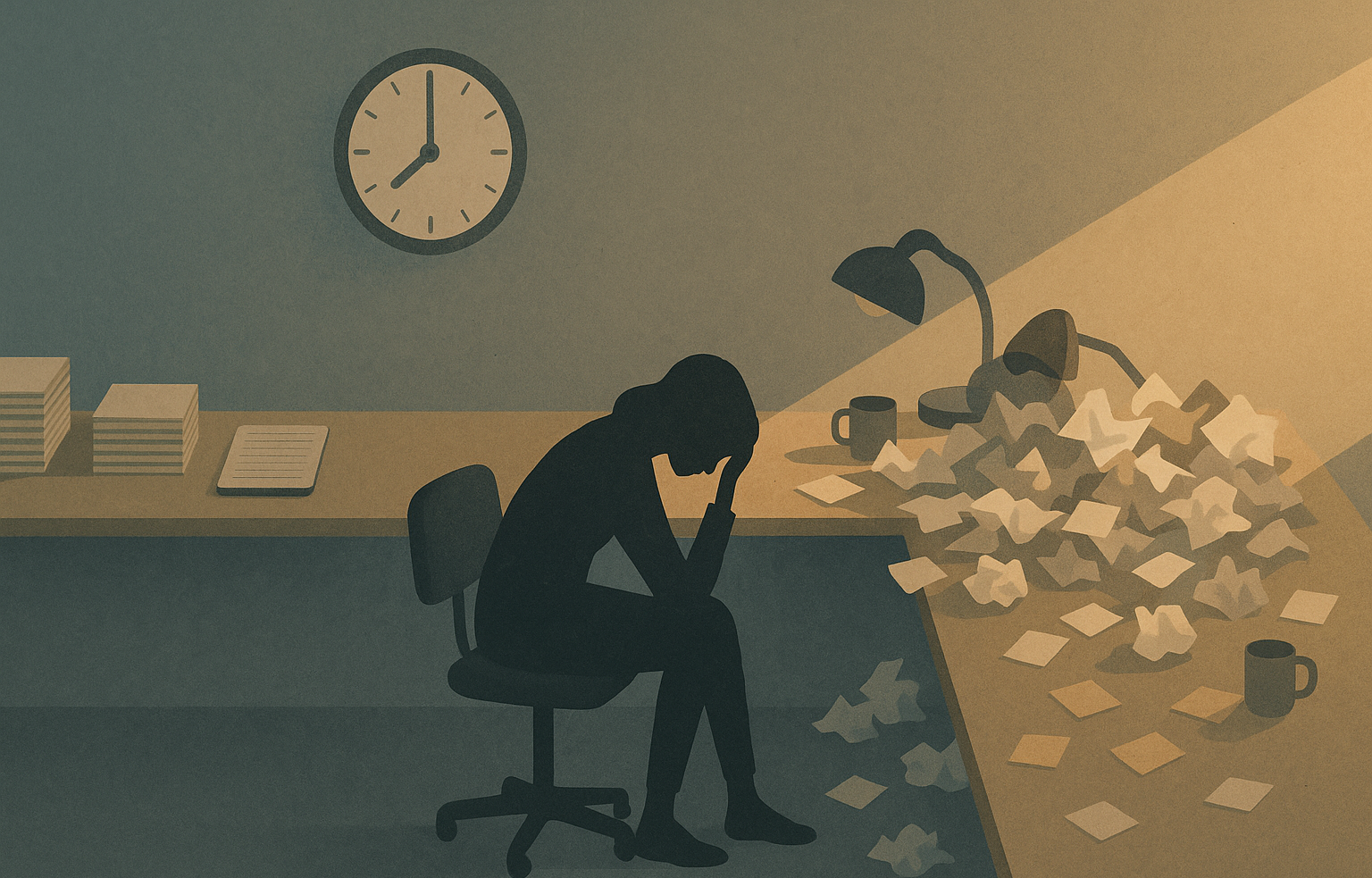
You have a routine that works on quiet Tuesdays, then a sleep-deprived night, a late train, or a sick child wipes it out. One bad week, and your streak is gone. You do not just miss a day. You feel like you are back at zero.
This is the problem with fragile habits. They only survive when life plays along. What you actually need are habits that get stronger from stress, not weaker. You need anti-fragile habits.
Fragile, Robust, Anti-Fragile: What You Are Really Building
Think about your habits like different materials in a storm.
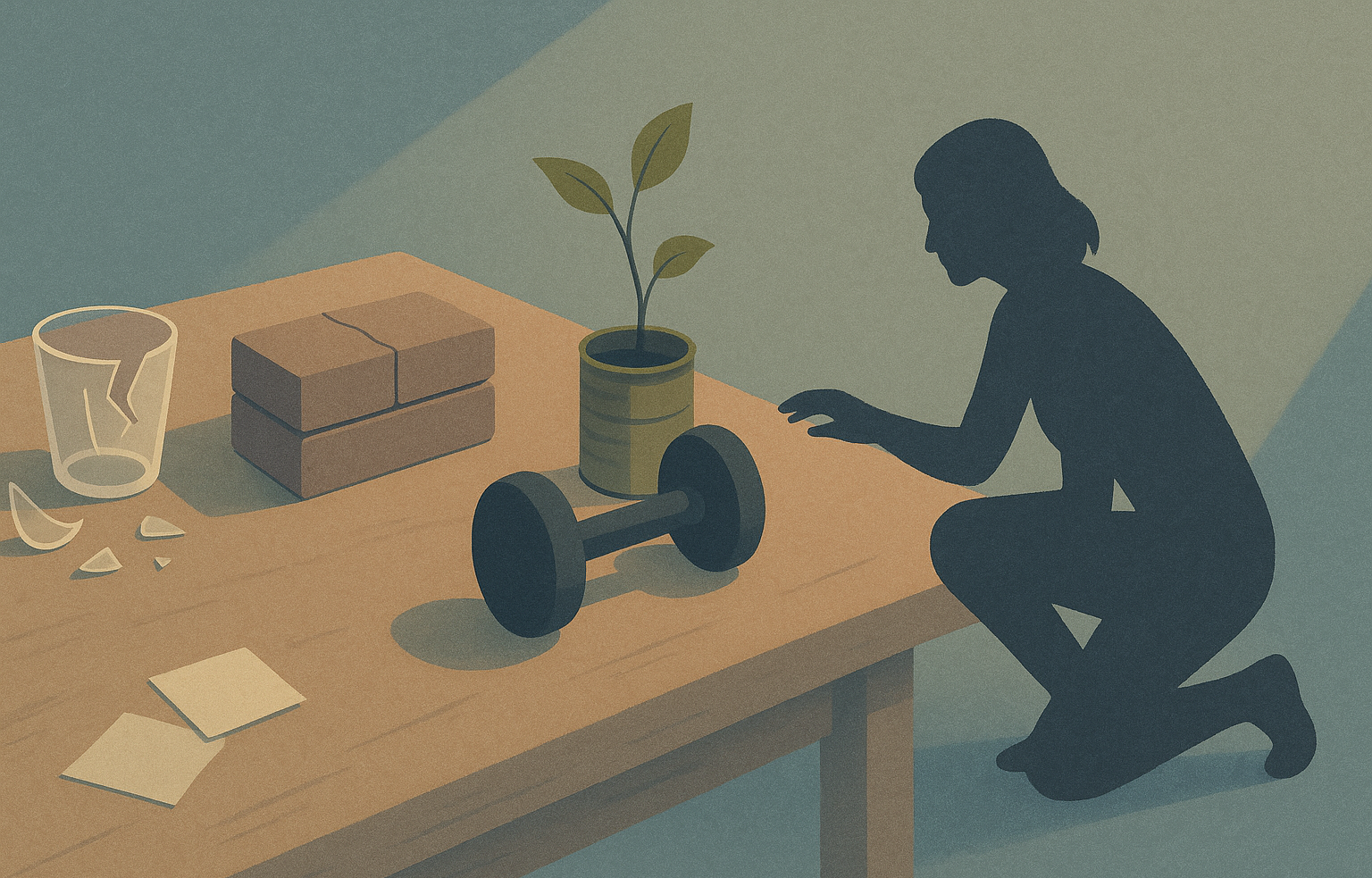
Glass shatters when dropped. That is a fragile habit. You go to the gym at 7 a.m. every weekday. One late night, you miss it, and suddenly the whole routine feels broken. You tell yourself you will “start again Monday”.
A brick wall is robust. It can take a hit and stay standing, but it does not improve from it. This is a habit that survives a missed day, but does not learn from the disruption. You skip once, you pick it up again, but nothing changes about how you built it.
A muscle is anti-fragile. Stress and micro-tears are exactly what make it grow. An anti-fragile habit uses disruptions as data. A travel day forces you to shorten your workout, so you design a 10-minute fallback routine. A week of illness shows you your sleep schedule is fragile, so you adjust your evening screen time to protect it.
You are always building one of three things:
- A habit that breaks when life changes.
- A habit that merely survives life changes.
- A habit that adapts and improves because of life changes.
You might think you are failing at discipline when you cannot keep a perfect streak. Often you are just using a glass design in a world that keeps dropping things.
Why Most Habit Advice Accidentally Creates Fragility
A lot of common advice looks helpful on the surface but quietly wires fragility into your habits.
You are told to “never miss twice”. That sounds reasonable, but you might start treating a single miss as a near-disaster. The pressure not to break the streak becomes heavier than the habit itself. One chaotic week at work, the streak snaps, and your mind labels the habit as ruined.
You are told to pick a perfect time each day. The same chair, the same mug, the same playlist. That can be powerful for automaticity, but if the habit only works at 7 a.m. at your own kitchen table, what happens in a hotel room, or during school holidays?
You might also build habits that depend on rare conditions: the quiet library, the ideal gym, the exact brand of notebook. You mistake the supporting props for the habit itself.
Here is how this looks in real life. On January 3rd, you decide you are “finally” going to write. You set up a precise ritual at your favorite café: same corner table, noise-cancelling headphones, the good pen. It works for a week. Then on a rainy Thursday the café is full, you end up at a wobbly table near the door, and the words feel awful. Instead of seeing this as a chance to learn to write under less perfect conditions, you silently conclude, “Guess I am not a writer after all.”
James Clear talks about identity-based habits: you act in line with the kind of person you believe you are. This idea can become fragile if you secretly tie your identity to perfect performance. “I am a runner” quietly turns into “I am a runner who never misses a day”. The moment you do miss, your identity feels cracked.
An anti-fragile approach flips this:
- You expect disruption, so you design for it.
- You respect streaks, but you do not worship them.
- You care more about identity than about unbroken chains.
Instead of “I never miss”, you hold “I always return”.
The Three-Layer Habit: Default, Minimum, and Repair
A habit that survives chaos usually has more than one form. Think of it as a three-layer structure instead of a single rigid behavior.
- Default version. This is what you do on an ordinary day. Your normal workout, writing session, reading time, or planning ritual.
- Minimum version. This is your “no matter what” version. It is tiny, portable, and takes less than five minutes.
- Repair version. This is what you do after the habit breaks or after a rough patch, to ease yourself back in instead of demanding full intensity.
Take a reading habit as an example.
- Default: 20 minutes of reading before bed, phone on airplane mode.
- Minimum: Read 2 pages, even if you are exhausted in a hotel room.
- Repair: After a week of skipping, start with 10 minutes for three nights, before expecting 20 again.
The minimum version protects the identity. You can honestly say “I am a reader”, even on the night you only read two pages sitting on the edge of a guest bed.
The repair version protects your pride. Instead of trying to jump back to full performance and then feeling crushed when it feels hard, you treat your habit like a muscle that needs warmup after injury.
You can apply this three-layer pattern to almost anything:
- Exercise: full workout, 5-minute mobility routine, then a gentle ramp back after illness.
- Writing: 500 words, one sentence, then a short timed session to restart.
- Meditation: 15 minutes, 3 deliberate breaths, then a 5-minute guided session for a few days.
The contrarian part is this: your minimum version is not a backup plan. It is part of the habit by design. You do not feel guilty when you use it. You feel like you just proved the habit can shrink to survive.
Building Flexibility Without Losing Discipline
You might worry that too much flexibility will make you soft. If you always have a “minimum version”, will you start choosing it every day?
That risk is real if you treat flexibility as a loophole. You tell yourself you are doing the habit, but really you are just checking a box. Anti-fragile habits keep two things in tension: commitment and adaptability.
A useful way to think about this is rule design.
Rigid rule: “I will go to the gym at 6 p.m. every weekday.”
This works until a late meeting, a traffic jam, or a parent-teacher conference knocks it over.
Vague rule: “I will exercise most days.”
This has plenty of flexibility, but no bite. You can always tell yourself that tomorrow counts too.
A flexible but disciplined rule might sound like this:
- “On workdays, I move my body for at least 20 minutes. If I miss my planned workout time, I do a shorter bodyweight routine at home before bed.”
Notice what you are doing there:
- You define the non-negotiable (some form of movement).
- You define the fallback in advance (short bodyweight routine).
- You include a time-bound condition (before bed, not “sometime”).
This is not being soft. It is refusing to let your all-or-nothing brain run the show.
You can create similar rules for other habits:
- “I plan my day on paper before I open email. If that fails, I pause at lunch to plan the afternoon on a sticky note.”
- “I write on weekdays. If I do not touch my project, I at least draft one messy paragraph in a notes app before I sleep.”
Here is the twist most habit advice skips: sometimes the strict version is the real escape hatch. It lets you feel virtuous while you quietly avoid harder work elsewhere. A softer, well-designed rule that survives bad weeks can be more demanding in the long run, because it keeps you in the game for years instead of months.
Discipline here is not about never bending. It is about deciding in advance how you will bend, so you do not snap.
Learning From Disruptions Instead of Just Enduring Them
Most of the time, you treat disruptions as bad luck. Travel, illness, visitors, seasonal deadlines, school breaks. You wait for them to pass, then you hope your habits are still there.
An anti-fragile approach treats every disruption as a tiny experiment. You ask, “What did this reveal about how I built the habit?”
Imagine you normally cook healthy dinners. Then a string of late evenings pushes you into takeout for a week. You could just blame time pressure, or you could look closer.
You might notice:
- You only know recipes that take 40 minutes or more.
- Your kitchen has no quick staples that last.
- You decide what to eat when you are already hungry and tired.
Instead of just “trying harder next time”, you treat that week as feedback:
- You collect three 10-minute meal ideas and keep ingredients on hand.
- You pre-decide two “backup dinners” for nights when you get home late.
- You put a short planning slot in your calendar earlier in the day.
The goal is not to avoid all future takeout. The goal is to make the next chaotic week slightly less destructive to the habit.
You can run the same kind of review on any disruption:
- Travel shows whether your habit is location dependent.
- Illness shows whether it has a gentle setting.
- Busy season shows whether it has a compressed setting.
- Emotional stress shows whether it has a soothing, low-pressure form.
A simple three-question check-in works well:
- What exactly knocked the habit off course this time?
- What did that reveal about how narrow or brittle the habit is?
- What small design change would make it bend more easily next time?
You are not trying to predict every future problem. You are slowly teaching your habits to handle a wider range of conditions.
Identity: Becoming the Kind of Person Who Always Returns
You can design smart rules and fallback versions, but if your self-talk stays fragile, your habits will too.
After a bad stretch you might tell yourself:
- “I am lazy.”
- “I always fall off.”
- “I cannot keep anything going.”
Those sentences are not observations. They are identity statements. Once you believe them, every future miss becomes more evidence.
Anti-fragile habits grow from a different identity: not “I never fail”, but “I am the kind of person who returns.”
That sounds simple, but it changes how you interpret the same event.
Picture this. On March 12th, a Wednesday, you get home at 10 p.m. after covering a co-worker’s shift. You have not meditated in nine days. You are tired, annoyed, and tempted to just scroll in bed. The fragile script says, “The streak is dead, I blew it.” The anti-fragile script says, “Tonight is exactly when I prove I return,” so you sit at the edge of the bed, close your eyes, and take three slow breaths. Ninety seconds. That is it. You still go to sleep labeled “someone who meditates”, not “someone who quit.”
You miss a week of journaling.
- Fragile identity: “See, I knew I could not stick with it.”
- Anti-fragile identity: “Interesting, a week is my current recovery time. I want to make that one day.”
You miss a month of workouts after an injury.
- Fragile identity: “I have lost all my progress.”
- Anti-fragile identity: “I know how to rebuild, and my body remembers more than I think.”
You are not pretending the setback is good. You are saying, “Setbacks are part of my story, and coming back is part of who I am.”
You can reinforce this identity in small ways:
- Use language like “I am restarting” instead of “I am starting over.”
- Track “returns” as their own kind of win. You can literally mark them with a different color in your calendar.
- Talk about your habits as ongoing experiments, not pass or fail tests.
Over time, you will notice a shift. You stop expecting a clean, uninterrupted line of progress. You start respecting the messy, jagged line that still trends upward.
One Small Step Today
Open your calendar and block a single 5-minute window tomorrow for the minimum version of one habit that usually collapses on you, and treat that tiny block as an appointment you will keep.