Digital Minimalism
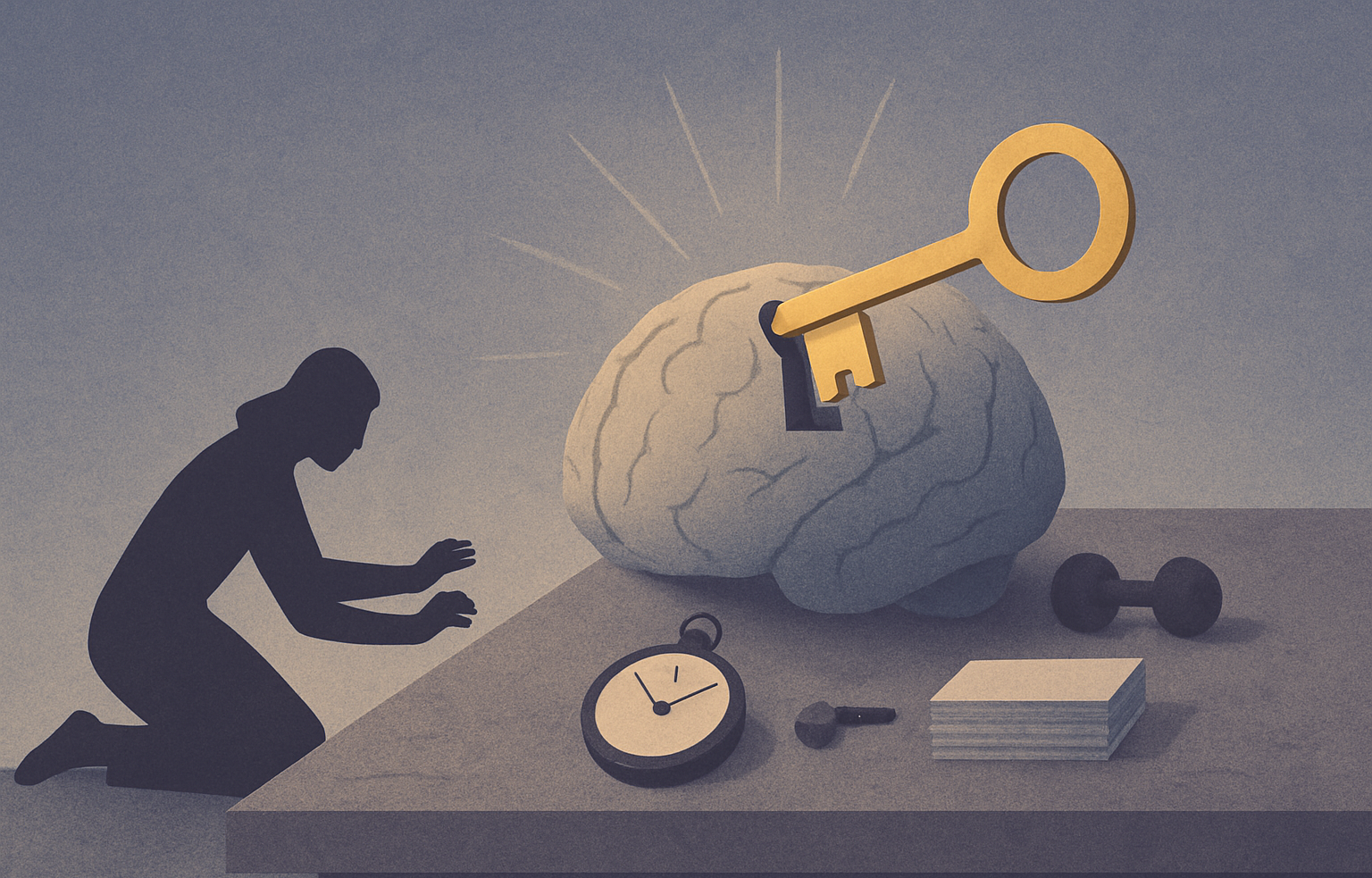
Digital Minimalism argues that you should choose digital tools intentionally around your deepest values, using a 30‑day declutter to reset your relationship with attention-hungry products.
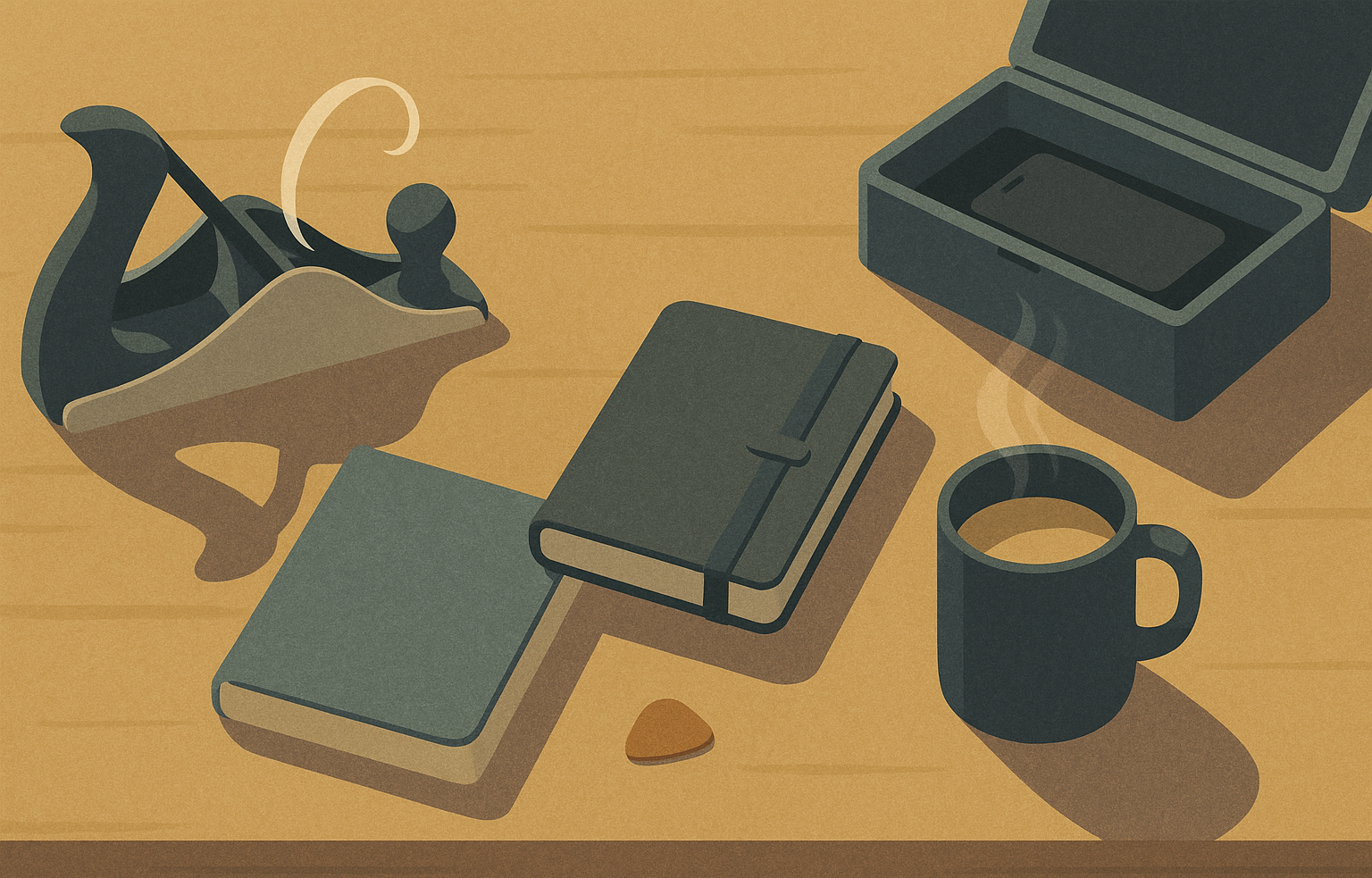
You reach for your phone to check one message and surface twenty minutes later, unsure what you just traded that time for. The apps are familiar, the feeling afterward is not: a thin restlessness, a sense that your attention is being rented out in tiny, forgettable slices. Cal Newport suggests this is not a problem of weak willpower but of architecture. Our devices have been quietly arranged around other people’s goals, and small tweaks rarely change that. This summary explores his proposal to start from your own values instead, and let many digital habits fall away.
Who this book is for / who it is not for
This book is for people who feel vaguely exhausted by their phones but cannot quite explain why. If you have ever closed Instagram and reopened it again without thinking, or caught yourself scrolling during time that was supposed to belong to your kids, your partner, or your craft, you are the intended reader. It is especially relevant if you liked Deep Work and now realize that distraction is not just a workplace problem but the water you swim in all day.
It is less helpful if you are looking for hacks to get more done inside the same social media diet. Productivity enthusiasts who want a better to‑do app, not a changed relationship to technology, will find this book frustrating. It also may not resonate if your digital life is already tightly constrained by circumstance, such as people whose jobs legitimately require constant social feeds. The core promise is not efficient multitasking, but a slower, more value driven digital life.
Values before apps: reclaiming your attention
Cal Newport starts with a simple claim: you cannot fix your digital life at the level of individual apps. Turning off a few notifications while leaving your attention up for sale still keeps you in the same game. His alternative is digital minimalism, a philosophy that says your default should be to miss out on most technologies and then add back only the ones that clearly serve what you care about.
He illustrates this through people like a lawyer who removed social media from his phone and realized his actual value was being a present father. Once he framed his choices around that value, it became obvious that late night Twitter threads were not neutral entertainment. They directly crowded out bedtime stories and unstructured play.
The book pushes readers to articulate a small set of values first: being an engaged parent, doing meaningful craft, cultivating deep friendships, contributing to a community. Those values then become a filter: if a tool does not significantly support one of them, it is a candidate for elimination. This is very close in spirit to clarifying your core values before setting goals. Technology becomes a servant of values rather than a vague source of stimulation.
By framing the problem this way, Newport sidesteps debates about whether a particular app is good or bad in the abstract. What matters is whether it is good for your life, as you define it, once you actually run the numbers on time and attention.
The 30‑day digital declutter experiment
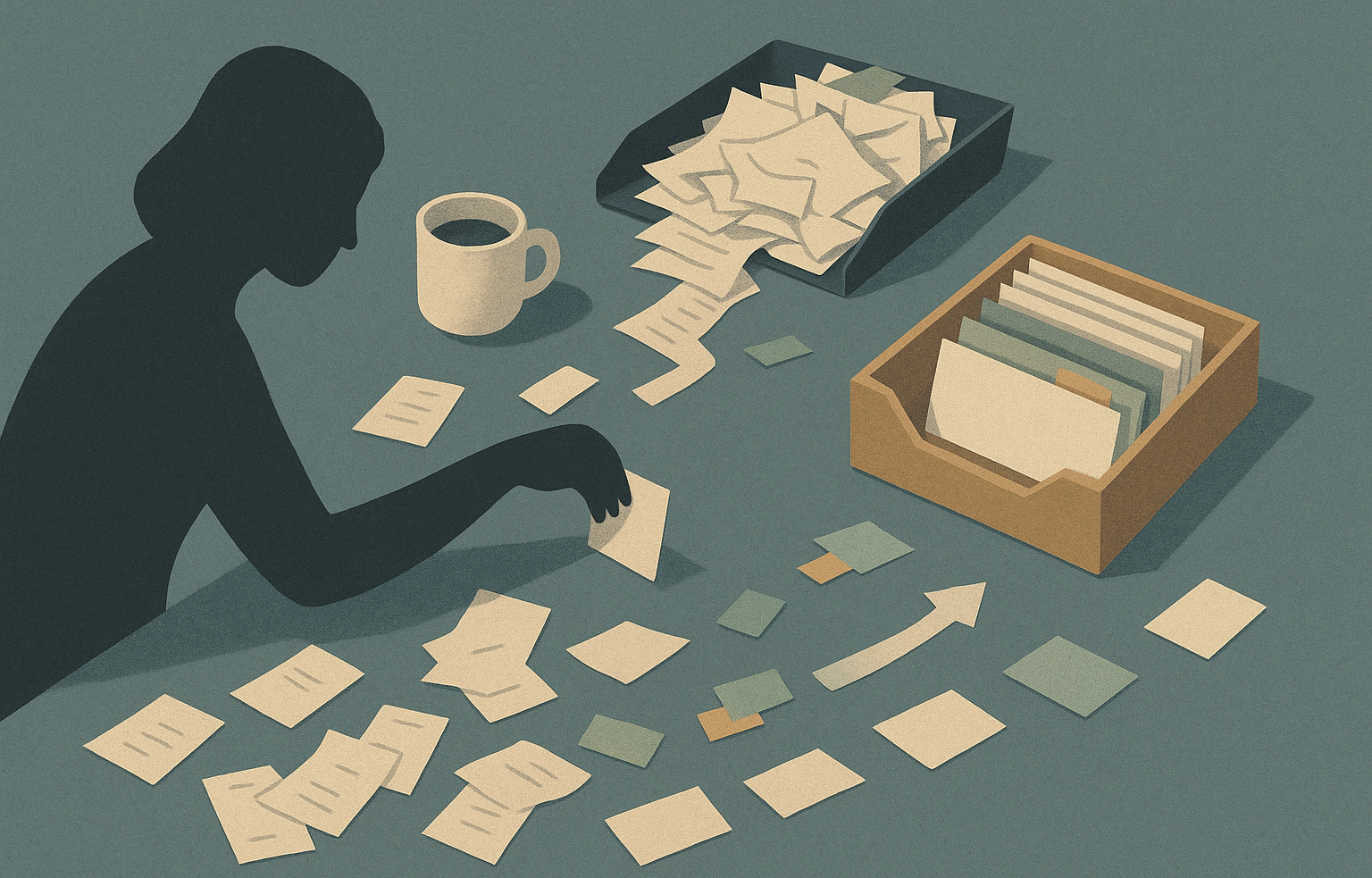
The most concrete contribution of Digital Minimalism is the 30‑day digital declutter. Instead of slowly tweaking settings, Newport asks you to remove all optional digital tools from your daily life for a month, then add back only what passes a strict test.
He describes running this experiment with hundreds of volunteers on his blog. Participants removed social media apps from their phones, stopped streaming on autopilot, and shelved borderline tools like news feeds and casual games. Essential technologies such as email for work, maps, or banking apps stayed. The point is not Luddite purity but a clean break from low‑value default behaviors.
For many participants, the first week felt like withdrawal: phantom phone checks, a jumpy urge to reach for a device, and a strange sense of boredom. By week two and three, new activities began to fill the vacuum: reading long neglected books, starting woodworking projects, joining local groups, or simply taking long walks. One participant, a young professional, realized that his guitar, untouched for years, finally came back into his hands when Instagram was no longer an option.
At the end of the month, Newport has people reintroduce tools one by one. Each tool must satisfy a high bar: it must support a deeply held value and be the best way to do so, and you must prescribe exactly how and when you use it. Vague justifications like “staying in touch” are not enough. This prescription matters. It turns “I use Facebook” into “I log in from a desktop for 20 minutes on Sunday to see family photos.”
The declutter works because it is experiential. Instead of arguing with yourself about what you might miss, you feel what your life is like without the optional layer of technology, and you let that experience guide permanent changes.
Solitude, leisure, and the cost of constant connection
Another central idea is that humans need real solitude, defined not as physical isolation but as freedom from input from other minds. Newport points to figures like Abraham Lincoln drafting speeches during carriage rides and Martin Luther King Jr. shaping the “I Have a Dream” speech during quiet reflection. Their insight is not mystical. It comes from unbroken time to listen to their own thoughts.
Modern life, with podcasts in every commute and notifications filling every pause, erases this kind of solitude. Newport cites research on how boredom and mind wandering support creativity and emotional processing. When you fill every empty moment with a feed, you outsource your inner life to other people’s priorities.
He also attacks what he calls “low quality leisure.” Scrolling, binging, and tapping offer quick hits of entertainment but rarely produce satisfaction. In contrast, high quality leisure requires effort and often skill: board games with friends, learning an instrument, volunteering, repairing things. Newport profiles people who replace digital noise with analog pursuits like rock climbing or woodworking clubs and report feeling more energized despite doing more.
This is where the book connects to ideas like The Power of Solitude. You are not being asked to embrace boredom for its own sake. You are trading frictionless digital consumption for richer, more demanding forms of rest and connection that actually refill your energy.
Choosing tools like a craftsman
Newport borrows the metaphor of the craftsman to describe how we should adopt technology. A skilled craftsperson does not grab every gadget in the hardware store. They select a small set of tools that fit their process and master them deeply. The measure is utility relative to a clear goal, not novelty.
He offers strategies such as the “clutter test” for digital tools: would the positive impact of this technology substantially outweigh the negatives if you had to pay money for it and install it manually each time? Most social platforms fail that test once you stop treating them as free background noise.
The book is filled with small calibration stories. A freelance designer keeps text messaging but removes messaging from her laptop so deep work sessions are not punctured. A college student deletes all social apps from his phone but allows himself to log in from a desktop in the library twice a week. A father keeps YouTube only as a bookmarked list of how‑to videos for DIY home projects, stripping away the recommendation engine by never signing in.
These examples show that digital minimalism is not a fixed rule set but a mindset. You look at each tool, ask what value it creates, design strict boundaries around it, and discard it if it keeps failing to earn its place.
The honest caveat: privilege, edge cases, and missing nuance
Digital Minimalism is persuasive, but its worldview has blind spots. Newport writes from the vantage point of a tenured academic with significant control over his schedule and relatively little professional pressure to be visibly active on public platforms. For gig workers, creators, journalists, or people building small businesses, social media is not merely a distraction. It can be a pipeline to work, opportunities, and community. The book acknowledges this in passing but does not fully grapple with the tradeoffs when your income is directly tied to engagement metrics.
Some critics also argue that Newport underplays the structural design of platforms. Telling individuals to opt out can feel like advising them to swim harder against a current that is intentionally engineered to pull them in. There is little discussion of collective or policy responses to the attention economy. The research he cites on the harms of social media is suggestive rather than conclusive. Correlations between screen time and anxiety are often modest and tangled with other factors. If you expect a rigorous tour through the scientific debate, you will not find it here. The book’s strength is in its philosophy and stories, not in carefully hedged data.
Where to start
If you read only part of Digital Minimalism, start with the chapter that lays out the 30‑day digital declutter and the one that explores solitude and its role in a healthy mental life. Together they give you the practical engine of the book and the deeper “why” behind cutting back. From there, the chapters on high quality leisure and the “attention resistance” movement add useful color but are optional if you already resonate with the core ideas. The book also rewards a second, faster read a few months after your first declutter, once you have lived with your new digital boundaries for a while.
A quieter, more deliberate relationship with technology is not about nostalgia for a pre‑internet past; it is about making sure your best hours belong to you and not to a product team’s engagement graph.
Clutter is costly, in both time and energy, and the less you own, the more clearly you can see what really matters. — Cal Newport, Digital Minimalism (2019)