Decision Fatigue and How to Reduce It
Your willpower is a limited budget, and every tiny choice spends from it. Learn how to protect that budget by pre-deciding simple defaults that spare your mind.
You sit down to work, and your brain already feels foggy. You have not done anything demanding yet, but choosing clothes, breakfast, and what to check first has drained you more than you admit. By the time you reach the real task, your willpower is running on fumes.
That is decision fatigue. Your willpower works like a daily budget, and you spend it on every choice you make. The more you spend on trivial decisions, the less you have left for the ones that matter.
What Decision Fatigue Really Is
Decision fatigue is the mental weariness that builds up when you make too many decisions in a day. It does not have to be dramatic. It shows up in quiet, familiar ways:
- You scroll menus for ten minutes, then order the same food as last time.
- You stare at a list of tasks, then open your inbox instead.
- You tell yourself you will go to the gym “later”, then never go.
Your brain likes shortcuts. Daniel Kahneman describes a fast, automatic mode of thinking and a slower, effortful one. Every real decision pulls from that slower, effortful system. When you deplete it, your brain starts cutting corners.
You usually see decision fatigue in three patterns:
- Avoidance. You delay choices, even small ones. Tasks sit untouched because choosing where to start feels heavy.
- Impulsive yes. You say yes to requests just to stop thinking about them, even when they collide with your priorities.
- Default no to yourself. You give up on your own plans by the evening, not because they changed, but because you have no energy left to choose them.
You might notice this most in the late afternoon. Someone suggests ordering food, skipping a workout, or adding “just one more thing” to your plate. You feel a tiny sigh inside and go along with it. None of this means you are weak or lazy. It means your mental budget is finite, and you are spending it without a plan.
Your Willpower As a Daily Budget
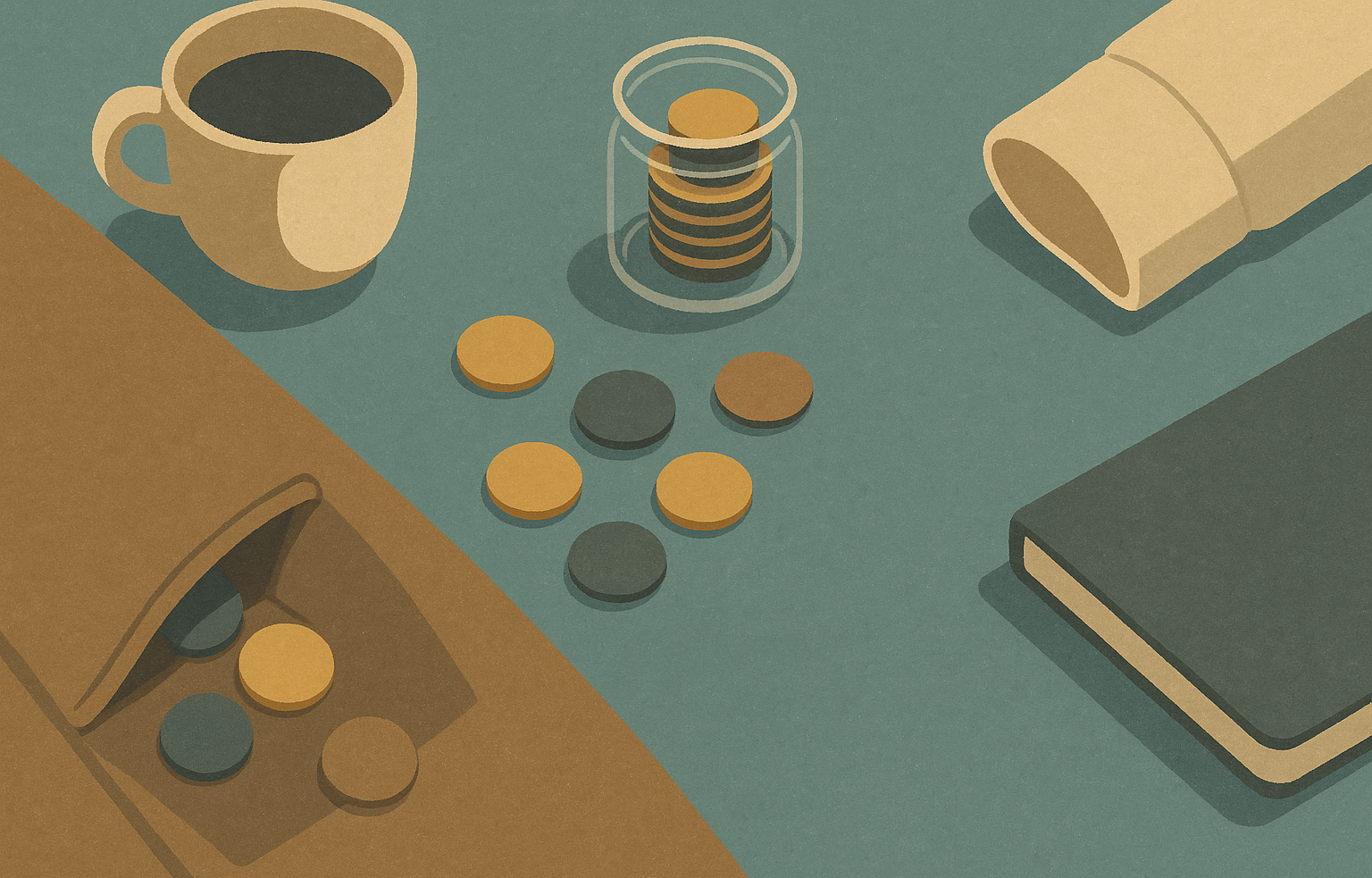
Imagine you wake up each morning with a limited number of “decision coins” in your pocket. Every choice that needs effort costs a coin. Once you run low, your brain starts to conserve energy in crude ways.
Some things that spend coins:
- Choosing outfits, meals, and routes.
- Re-evaluating your calendar over and over.
- Deciding how to respond to every notification in real time.
- Negotiating with yourself about habits: “Gym or rest? Cook or order? Start now or later?”
You cannot see this budget, but you feel it. Early in the day you can resist a distraction. Late at night you find yourself eating straight from the bag or watching one more episode.
You might run through a typical day like this: you decide what to wear, which messages to answer, whether to say yes to a favor, whether to speak up in a meeting, whether to take on a small extra task, whether to stop at the store on the way home. By the time you sit down for the thing you told yourself mattered most, you “do not feel like it”. The problem is not motivation. The problem is that you already spent your coins.
You might hear advice that sounds empowering but is quietly expensive, like “keep all your options open” or “decide in the moment what you feel like doing”. That approach treats every moment as a fresh decision. It burns coins all day.
The contrarian move is this: fewer active decisions can mean more freedom, not less. When you pre-decide the boring parts of your day, you protect your budget for the choices that truly need your full attention.
The Hidden Cost of Tiny Choices
You expect big decisions to be tiring, like choosing a job or moving cities. What drains you more often is the pile of small, repeated choices.
Take a simple morning:
- Alarm goes off. Snooze or get up.
- Phone lights up. Check messages or not.
- Breakfast. Cook or grab something on the way.
- Commute. Drive, bus, or bike.
- First work block. Email, chat, or deep task.
Nothing here is dramatic, yet each one asks you to decide. If you leave them all open, your day starts with a dozen small negotiations before you even get to anything meaningful.
You do this at work too. You open your task list, scan it, feel a minor wave of stress, then hop to email because it is easier. You repeat this loop several times. Each time you re-open that list, you spend a bit more of your budget without actually choosing.
There is another cost you rarely see: attention residue. When you half-decide something, then walk away, a part of your mind keeps chewing on it. That background processing makes the next decision feel heavier.
You can see a similar effect in your social world. You leave several messages “for later”, skip choosing a time for a call, and ignore a calendar invite you are unsure about. None of those are closed. They sit in the back of your mind as open loops. By the end of the day, you feel oddly tense without knowing why.
The trap is that tiny choices feel harmless. You tell yourself you are just “staying flexible” or “seeing how the day goes”. What you are really doing is spending your sharpest energy on low-stakes questions.
You cannot remove decisions from life, and you should not. You can, though, move many of them out of the present moment so your mind is not constantly on the hook.
Defaults: The Quiet Antidote to Decision Fatigue
A default is a choice you make once so you do not have to remake it every time. It is not a strict rule for life. It is a standing answer for ordinary situations.
Think of decision defaults as guardrails for your willpower budget.
A few examples:
- You decide that on weekdays you wear a simple set of outfits, already paired in your closet.
- You set a standard breakfast and lunch that you repeat, unless there is a good reason not to.
- You create a rule that you check email at set times instead of constantly.
You are not giving up freedom. You are moving from “decide every time” to “decide by exception”.
This is different from rigid routines that crumble the moment something unexpected happens. Defaults are flexible. They describe what you normally do when nothing unusual is going on.
Notice how this links to what Stephen Covey called putting important, not urgent, things first. Decision fatigue pushes you toward the urgent by the afternoon. Clear defaults help you protect the important work while your willpower is still reasonably funded.
There is a subtle advantage here that you only feel after trying it. When your day has strong defaults, your mind quiets down. You are not constantly asking “What now?” because the answer is already chosen in most cases. That calm is worth more than any productivity hack.
Where to Install Defaults So They Actually Help
You do not need a default for everything. You only need them where you feel friction often. A good test: if you catch yourself thinking “I should decide this ahead of time” at least twice a week, that area is a candidate.
Here are four high-impact places.
1. Morning and evening
These bookends shape your whole day.
Create simple defaults like:
- Wake time. One standard wake-up time for weekdays.
- First activity. One default “first thing” after you wake, such as a glass of water and five minutes with your notebook.
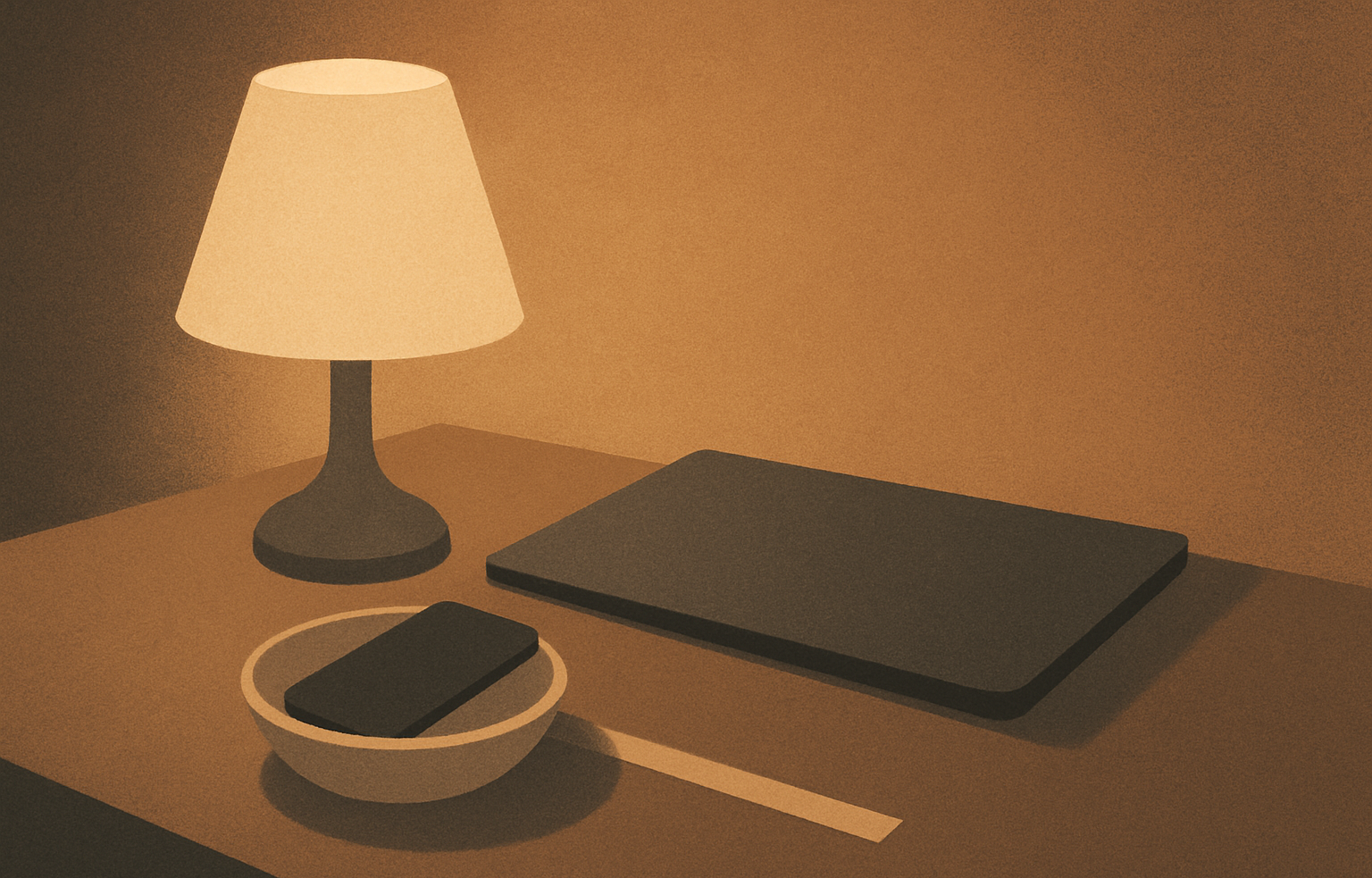
- Last screen time. A set time when screens go off at night.
You can still sleep in on weekends or stay out late sometimes. The default just makes the ordinary days smoother.
If your evenings often dissolve into random scrolling, a small default like “no phone in bed” can free up more mental space than you expect. You stop asking “One more video?” and the night becomes quieter automatically.
2. Food and clothes
You touch these decisions every day, so they are prime candidates.
- Clothing. Pre-choose a small “workday wardrobe” that you rotate. Place outfits together so you grab a full set without thinking.
- Meals. Decide a few repeatable breakfasts and lunches. Plan them once per week and shop to support them.
You might worry that this will feel boring. That is the common fear. The surprise comes later, when you notice you do not care what you had for lunch nearly as much as you care about having energy left in the afternoon.
Instead of standing in front of the fridge every night, debating what to cook, then ordering takeout anyway, you can decide on three simple dinners and keep the ingredients on hand. The question shifts from “What should I eat?” to “Is tonight one of my three defaults or a special case?” That small shift lets you save energy, money, and frustration.
3. Work start and focus
Your first hour of work is expensive in willpower terms. Treat it with care.
Set defaults like:
- Start time. The time you open your main work tool, not the time you wake up.
- First block content. A rule such as “first 45 minutes are for my most important task, not email.”
- Task selection. Choose the next day’s first task before you stop work, so you are not choosing it with a foggy morning brain.
This is where a lot of productivity advice goes wrong. You are told to work from endless to-do lists and react all day. A better approach is to decide in advance what deserves your fresh attention so you do not burn your budget deciding in the moment.
You also avoid the quiet self-blame that comes from “wasting the morning”. If your default is clear, you either followed it or you ran into something specific that blocked you. That is easier to fix than a vague sense that you “should have done more”.
4. Social and digital boundaries
Your phone and inbox are decision engines. Every ping asks “respond now, later, or never?”
You can blunt this drain with defaults such as:
- Notification rules. Turn off non-essential alerts. Decide what can reach you instantly and what must wait.
- Reply windows. Choose one or two time blocks when you process messages. Outside those windows, your default is to let them sit.
- Social media. Set a maximum daily window or a rule like “no social apps before lunch.”
You still get to respond, connect, and be available. You just move the decision into planned pockets instead of letting it nibble at you all day.
You might notice resistance here, especially if you feel pressure to be constantly reachable. Treat this as an experiment. You can always adjust the default if you miss something truly important. In practice, you usually gain back more focus than you lose in immediacy.
How to Build One Default Without Overthinking It
You do not need a full system. You need one useful default and a bit of practice living with it.
Here is a simple way to create it:
- Pick a friction point. Choose one place where you often feel drained by choices. For example: “Every evening I debate working out, then do not.”
- Name a clean default. Turn it into a simple rule, in plain language. For example: “On weekdays I go to the gym right after work, unless I am sick or traveling.”
- Prepare the environment. Make the default easy to follow. Lay out gym clothes, pre-pack a bag, or set a reminder before you leave work.
- Follow it for seven days. Do not renegotiate every day. For one week, act as if the default is already how you live, unless something truly unusual happens.
- Adjust, not abandon. After a week, review. If the timing or details are off, tweak the default instead of discarding the whole idea.
Here is the contrarian part: the success of a default is not measured by perfection. It is measured by how many decisions it removes. If you follow it four out of five weekdays, you have already spared yourself four separate “Should I?” negotiations.
You might even notice a side effect. Once one area of your life runs on defaults, other areas start to feel noisy by comparison. That contrast helps you see where your remaining decision coins are leaking out.
Your aim is not to police your behavior. Your aim is to spare your limited willpower for situations where your choice genuinely matters.
One Small Step Today
Choose one daily choice that drains you, and write a single sentence default for it on a piece of paper, then follow that default just for tomorrow.