The Compound Effect of Small Habits
Big goals are loud and exciting; small habits are quiet and boring. Yet it is those tiny, repeated actions that quietly compound into real change.
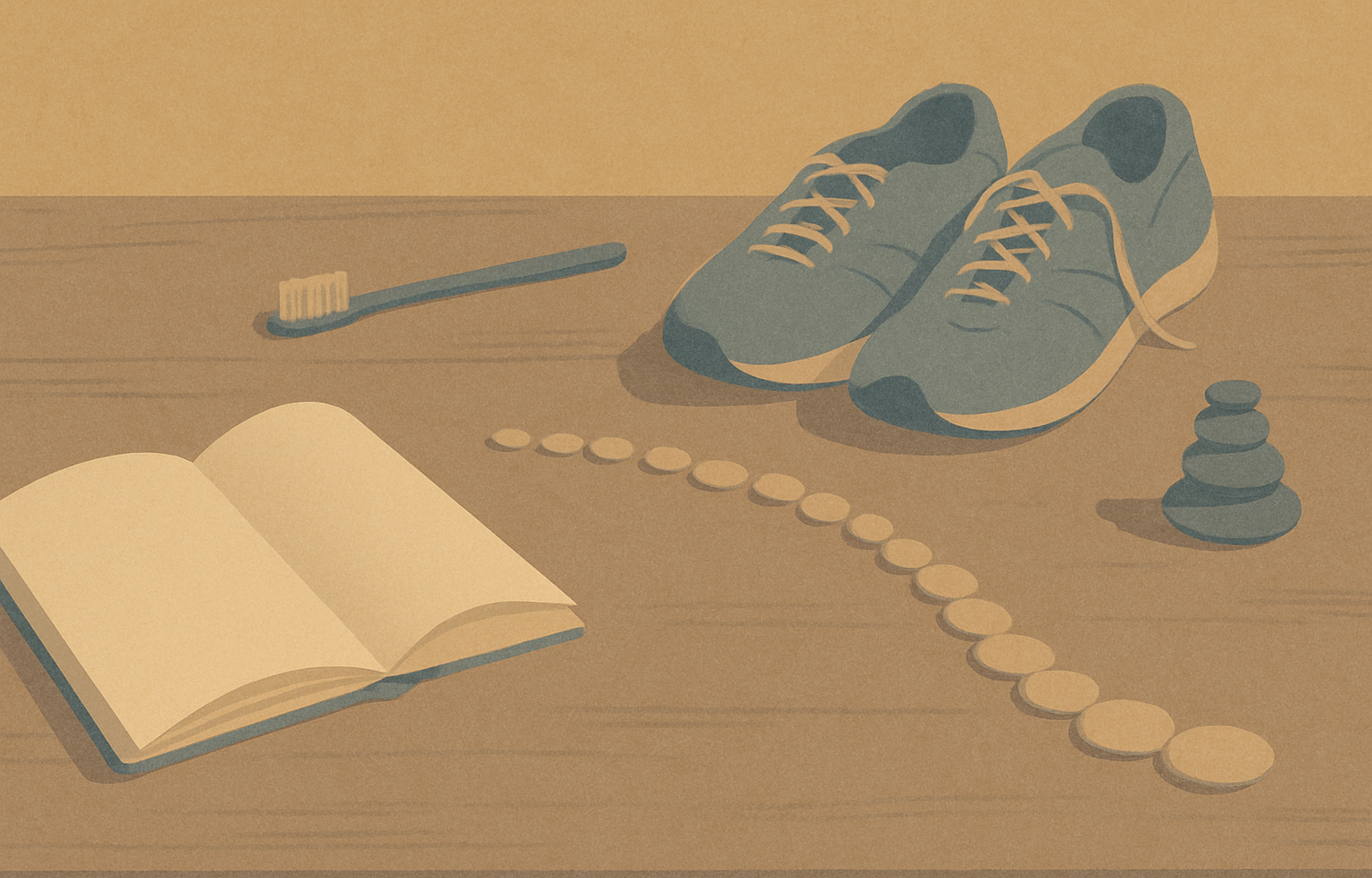
You promise yourself a fresh start on Monday. By Wednesday, the workout plan is forgotten, the new bedtime slipped, and the notebook of goals is back in a drawer. The big change felt exciting for a day or two, then ordinary life swallowed it.
The quiet stuff you almost ignore, the habits that feel too small to matter, are what actually move your life. The math behind those tiny choices explains why boring consistency beats rare bursts of motivation.
Why Tiny Habits Look Useless (And Why You Ignore Them)
If you brush your teeth once, nothing happens. If you skip once, nothing happens either. That is how most habits look up close. One salad does not change your body, one book does not change your mind, one early night does not erase your exhaustion.
Your brain is wired to notice big, immediate payoffs. You react fast to a loud notification, a sudden sale, or a sharp pain. A habit that pays off slowly does not trigger the same urgency. It feels optional, even when it is not.
So you tell yourself stories like:
- “Missing today will not matter.”
- “I will make up for it later.”
- “I need something that makes a bigger difference.”
The trap is that these stories are also true for a single day. Missing one workout does not matter. Hitting snooze once does not matter. Ordering takeout once does not matter.
What you miss is the line those choices start to draw. You do not see the direction, only the dot. Because the effect is delayed, you treat the choice as harmless.
That is why the idea of getting one percent better per day sounds dull. There is no dramatic before-and-after photo of one percent. It will not impress anyone when you describe it. Yet that small edge, repeated, quietly bends your life.
The Simple Math Of One Percent Better
You do not need a complicated formula, only two facts:
- A small improvement, repeated, multiplies.
- A small decline, repeated, also multiplies.
Imagine you start at “1” as a baseline. You improve by just 1 percent each day for a year. On day one you are at 1.01. On day two you apply that same 1 percent to a slightly bigger number. Over time, that tiny upgrade keeps compounding.
If you run the actual calculation, the number at the end of the year is many times your starting point. You are not just a bit better. You are in a different place. The exact figure is less important than the shape of the curve. At first the line is almost flat. Then it starts to bend. Later it shoots upward.
The reverse is also true. Shrink by 1 percent each day and you do not land slightly worse. You slide toward zero. Each small slip becomes a base for the next small slip.
Habits work the same way:
- Reading ten pages a day looks trivial. Over a year, you finish several solid books and your default way of thinking shifts.
- Saving a small amount from each paycheck looks insignificant. Over a decade, the compounding of those deposits quietly changes what choices are open to you.
- Going to bed twenty minutes earlier feels barely noticeable. Over months, the extra sleep repairs your focus and patience.
James Clear popularized this idea with the simple phrase “1 percent better every day.” The phrase is catchy, but the power is in the math. You are not aiming for a heroic effort. You are aiming for repeated, modest gains that can accumulate.
You can see this in your own day. If you spend fifteen minutes each morning scrolling your phone in bed, it feels like nothing. Stretch that over a year, and you have traded days of your life for scattered attention. Flip that same fifteen minutes into a walk, some pushups, or a few pages of reading, and you have traded the same sliver of time for a different curve.
The catch is that compounding rewards the consistent, not the intense. You do not win by having one perfect week. You win by having many fairly average weeks, with a few missed days that you quietly correct.
Boredom Is A Feature, Not A Bug
You are told to “find your passion” and to “stay motivated.” That advice can quietly sabotage your habits. Real change often feels repetitive and dull. If you expect constant excitement, you judge a habit as broken when it becomes ordinary.
Think of brushing your teeth. You do not wake up thrilled to do it. You do not debate whether you feel inspired. You simply stand at the sink and brush. The action is small, consistent, and boring. It also protects your health for decades.
Useful habits often share that quality. They blur into the background. They stop feeling special. That is not a sign they stopped working. It is a sign they became part of your identity.
You might notice this when you look back at an old pattern you barely think about now. Maybe you used to drink a soda with lunch every day, and now you reach for water without effort. There was no grand turning point. Just a series of small, unremarkable choices that rewrote what “normal” means for you.
The contrarian truth here is uncomfortable: if a habit never becomes boring, it is likely not stable. If you rely on novelty to keep a habit alive, you will abandon it when life becomes stressful or dull. Boredom is not the enemy. It is the test you pass to earn the rewards of compounding.
Instead of asking “How do I make this exciting,” try asking “How do I make this easy enough that I will do it even when I am not excited.”
The Smallest Useful Version
You may think your main problem is laziness. Often your real problem is scale. You set the bar too high, so you fail early, then decide you are the problem.
Picture yourself at the start of exam season. You declare that you will “study three hours every night.” The first evening, an urgent email arrives. The second, a friend invites you out. By the third, you have already broken the streak and quietly give up.
If you instead decide to review just one page of notes, every night, the pattern is different. One page is too small to fail. Once you open the book for that single page, you might keep going. Even on the worst days, you still keep the streak alive.
You can use the same idea in your own habits. Shrink the habit until it feels slightly silly:
- Instead of “run five kilometers,” put on your running shoes and step outside.
- Instead of “meditate twenty minutes,” sit quietly for two minutes with your phone in another room.
- Instead of “write one chapter,” open the document and write two sentences.
You are not lowering your standards for the outcome. You still want to be fit, calm, or creative. You are lowering your standards for the action that keeps the compound effect going. The point is not to impress yourself today. The point is to keep investing in the habit so compounding has something to work with.
This is similar to what James Clear calls habit stacking and small wins. You attach tiny actions to things you already do, then let the wins pile up. A small action you repeat beats a grand plan you abandon.
The surprising part is that these tiny starts often grow on their own. Once you do the small version, momentum makes it easier to extend it. You are already in your shoes, already in the chair, already in the document. The hard part was starting.
Protecting The Habit When Life Gets Messy
Your life does not pause so you can build perfect habits. Projects pile up, kids get sick, your mood dips, a crisis hits. If your routines only work on calm days, they will not survive long enough to compound.
You protect your habits by planning for messy days in advance. You accept that there will be travel days, illness days, and “I slept four hours” days, and you decide ahead of time what the minimum version of your habit looks like then.
You can create a simple rule for yourself:
- On a normal day, you do your full version.
- On a bad day, you do the tiniest version that still keeps the identity alive.
For example, if you are building a reading habit, your full version might be ten pages. Your bad-day version might be one page while you brush your teeth. If you are building a strength habit, your full version might be a gym session. Your bad-day version might be five slow squats next to your bed before you sleep.
This matters because compounding cares about streaks more than individual performances. Missing a day is fine. Letting a miss turn into a slide is where you lose ground. A tiny version on a hard day keeps the chain intact and reminds you who you are trying to be.
You do not need to shame yourself into this. You just need a clear rule that you can execute even when your energy is low. When life calms down again, you simply return to the full version. The habit survived the storm.
When Consistency Should Not Be Your Goal
You often hear that you must be consistent at all costs. That sounds disciplined, but it can trap you in habits that no longer serve you.
If you keep compounding the wrong thing, you do not get rewarded for your effort. You only get more of what you do not want: more stress, more debt, more resentment.
Some habits that look “disciplined” from the outside are actually harmful when they compound:
- Answering work emails late into every night grows your reputation as always available. That compounds into more demands and fewer boundaries.
- Saying yes to every request compounds into a calendar you do not control.
- Checking your phone first thing every morning teaches your brain that your attention belongs to whoever pings you.
Before you double down on consistency, ask a simple question: “If this habit continues to compound for five years, do I like where it leads.”
This is where the idea of identity-based habits from James Clear and the growth mindset idea from Carol Dweck both point in a useful direction. You are not just repeating actions. You are voting for a kind of person you become.
There are times when quitting a habit is the wise move. You might stop a daily news scroll that leaves you anxious, or a nightly drink that interrupts your sleep, even if you have done it for years. Breaking a streak can be a step toward a better kind of compounding.
The key is to focus on consistency in the direction that actually matters to you, not consistency for its own sake.
One Small Step Today
Pick one habit that you want to grow, then cut it down to a version you can do in two minutes or less, and do that version today.
Not tomorrow, not when your schedule clears. Today. Set a timer if you need to. When the two minutes are up, you can stop, or continue if you feel like it. Either way, you have placed one small deposit in the account you want to grow.