The Power of Saying No
Every time you say yes when you mean no, you trade a quiet piece of your own life away. Learning to refuse is how you begin to reclaim your time and energy.
When Every Yes Starts To Hurt
Your calendar is full of things you never really chose. A meeting you agreed to out of guilt, a weekend trip you did not want, a project you accepted because the silence after the ask felt awkward. Each of those yeses seemed small in the moment.
Saying no is not about becoming selfish. It is about noticing that every untrue yes is a hidden no to your own needs, and deciding to stop making that trade by default.
Every Yes Is Already a No To Something Else
You never say yes in a vacuum. When you say yes to one thing, you automatically say no to something else, even if you never name it.
Greg McKeown calls this the disciplined pursuit of less. You cannot do everything, so your only real choice is which tradeoffs you accept on purpose.
Picture this:
Your manager asks if you can take on “just one more” internal project. You say yes. On the surface, you declined nothing. In reality, you said no to:
- An unrushed evening with your partner
- Sleep that would have made tomorrow’s work easier
- A quiet hour for the creative idea you keep postponing
You rarely feel these hidden nos right away. They show up later as resentment, burnout, or a foggy sense that your days never quite match what you say matters.
A simple way to see the tradeoff more clearly is to ask yourself, before you answer:
- What is this yes displacing. Name it plainly. Reading before bed, cooking instead of ordering in, time with your kid.
- Would I trade that on purpose. Not in theory, but given how this week already looks.
You might still choose to say yes. The difference is that the no you are saying to yourself is now visible. Once you see it, it becomes much harder to lie to yourself about the cost.
The Quiet Cost of Untrue Yeses
You have probably had a day that looked productive on paper but felt strangely hollow. Tasks completed, people helped, inbox cleared, yet an uncomfortable sense that none of it was really yours.
Untrue yeses do not only steal your time. They also erode your self-respect.
You might notice yourself:
- Cutting sleep to make late meetings
- Rushing through work you used to enjoy
- Secretly hoping something gets canceled so you can breathe
On the outside, you look involved and capable. On the inside, you feel strangely absent from your own life. The schedule is full, but almost none of it reflects what you would choose if you started from a blank page.
Untrue yeses often come from understandable places:
- You want to be liked
- You fear conflict
- You feel guilty having needs
- You worry that one no will close a door forever
There is a quiet contradiction here. You say yes to avoid disappointing others, yet you walk away having disappointed yourself. Over time, that pattern teaches you a dangerous lesson: that your needs always come last.
A small contrarian point: you sometimes hear that you should “always say yes to opportunities.” That sounds bold and generous, but if you actually follow it, you turn your life into a grab bag someone else is shaking. A yes that costs you your health, sanity, or integrity is not bold. It is expensive in the wrong currency.
Boundaries as a Tool, Not a Personality Trait
You might tell yourself “I am just bad at boundaries” as if it is a fixed part of your nature. It is not. Boundaries are skills and tools, not a personality type.
Think of a boundary as a simple rule about how your time, energy, or attention can be used. It is less like a brick wall and more like a traffic light. It keeps things flowing in a way that avoids crashes.
Two helpful kinds of boundaries are:
- Time boundaries. Limits on when and how long.
- Context boundaries. Limits on where certain things belong.
Time boundaries sound like:
- “I can help for 15 minutes, then I need to get back to this report.”
- “I do not take meetings after 4 p.m.”
- “I can come for brunch, but I will leave by 1.”
Context boundaries sound like:
- “I do not discuss work by text on weekends.”
- “I do not lend money to friends.”
- “I do not answer calls during family dinner.”
The phrases that support those rules are learned, not inborn. You build them the same way you learn any skill: you practice slightly uncomfortable versions until they feel natural.
Try this structure when you need to say no:
- Appreciate the ask. “Thanks for thinking of me.”
- State your no clearly. “I am not able to take this on.”
- Optional short reason. “My plate is full this quarter.”
- Optional alternative. “You might try Sam, this is more in his lane.”
You do not owe long justifications, detailed life stories, or apologies stacked on top of apologies. A short, clear no respects both you and the other person. It gives them reality to work with.
Saying No To the Urgent To Protect the Important
You rarely feel pulled to say no to obviously trivial things. The real trouble comes from the urgent items that sound responsible in the moment but quietly crowd out what matters most.
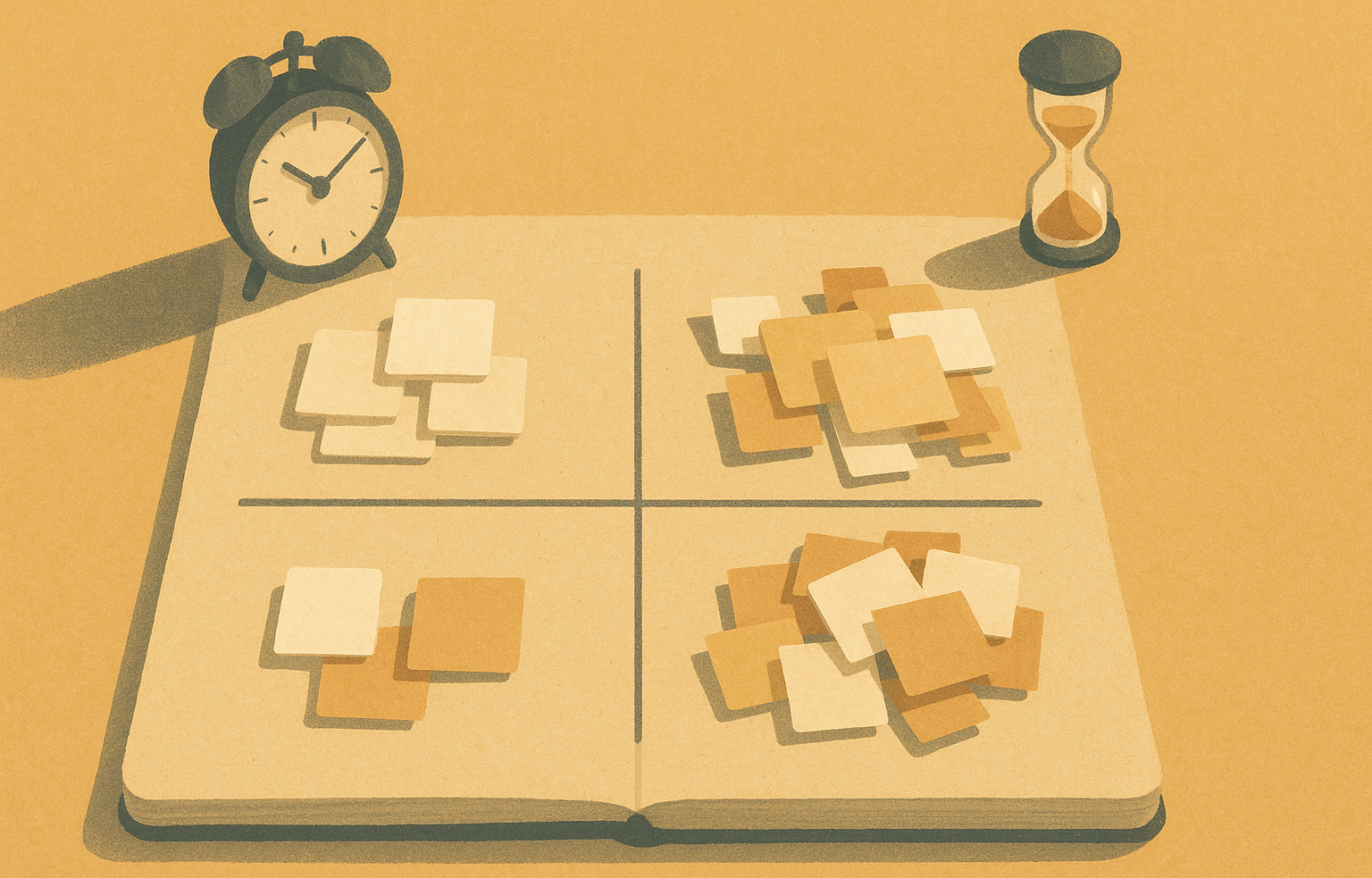
Stephen Covey described this using four quadrants of urgent and important work. Your deepest priorities often live in the “important but not urgent” space: exercise, learning, relationships, long-term projects. The fire drills, pings, and “quick favors” tend to be urgent but not truly important.
A short example:
You plan to work on a long-term proposal from 2 to 4 p.m. At 1:50, you get a message: “Can you jump on a call at 2 to discuss this minor issue, it will be quick.”
You have three choices:
- Say yes and push your proposal to “later”
- Say no and keep your promise to yourself
- Say “I can do 15 minutes, then I need to step away” and protect most of the block
In that moment, the urgent request feels more real than your own calendar block. There is another person attached to it, maybe a hint of pressure. Your proposal has no voice, so it gets sacrificed.
The shift is this: you start treating your important-but-not-urgent work as if it were a real commitment to another person. You defend it the same way you would defend a medical appointment or your child’s recital.
A few practical moves help:
- Name your non‑negotiables. For example, three workouts a week, dinner with family on Sundays, one long focus block each morning.
- Put them in your calendar first. These are not “if I have time” tasks. They are the scaffolding.
- Say no from that structure. “I already have something at that time” is both true and enough.
You are not being difficult when you decline an urgent request that conflicts with your priorities. You are refusing to treat your own life as a set of empty slots for other people’s emergencies.
The Fear Behind Your Yes
If saying no were only a matter of wording, you would not struggle with it. The real friction usually sits under the surface in the form of fear.
Common fears include:
- Fear of being seen as selfish or uncaring
- Fear of missing out on a rare chance
- Fear that saying no once means never being asked again
- Fear of conflict or disappointment
Those fears are understandable, but they are often exaggerated.
Consider a nurse who is known for always swapping shifts to help coworkers. One month, she is exhausted, but she still says yes whenever someone asks. She is afraid that a no will make her look uncooperative.
She finally reaches a breaking point and starts saying, “I cannot swap this week, I need the rest.” At first, the conversations feel awkward. A few colleagues are surprised. Then something interesting happens: people accept it. Some even seem relieved to hear someone state a limit out loud.
Her fear was not completely wrong. One coworker does grumble about it. Yet the cost of pleasing that one person was nights of poor sleep and mounting frustration. The discomfort of a short, honest no is real, but the price of endless yeses is higher.
Here is a contrarian twist: you sometimes fear that saying no will damage relationships, when in reality, it is saying yes while quietly seething that does the real damage. Resentment leaks out in tone, in delayed replies, in half‑hearted effort. People feel that more deeply than they feel a clear, respectful boundary.
Two questions help you check whether a yes is fear driven:
- If I were not afraid of their reaction, what would I choose here?
- If I say yes, will I feel bitter later?
If your honest answers are “I would decline” and “Yes, I will resent this,” then your yes is not kindness. It is self‑betrayal dressed as generosity.
One Small No Today
Pick one small request you have not answered yet, and practice a clean, respectful no.
It could be a casual invite, a work favor, a volunteer ask, or a social obligation that makes your chest tighten when you think about it.
Your job is to send one message or have one short conversation that follows this structure:
- Appreciation
- Clear no
- Optional short reason
- Optional alternative
For example: “Thanks for thinking of me. I am not able to join the committee this term, my schedule is already full. I hope it goes well.”
Send it. Say it. Then notice two things: how your body feels right after, and how your next hour of time feels when it still belongs to you.
That single honest no is not just about that one request. It is a small vote for a life where your yes actually means yes, and your time and energy are no longer the default property of everyone who happens to ask.