Deep Work
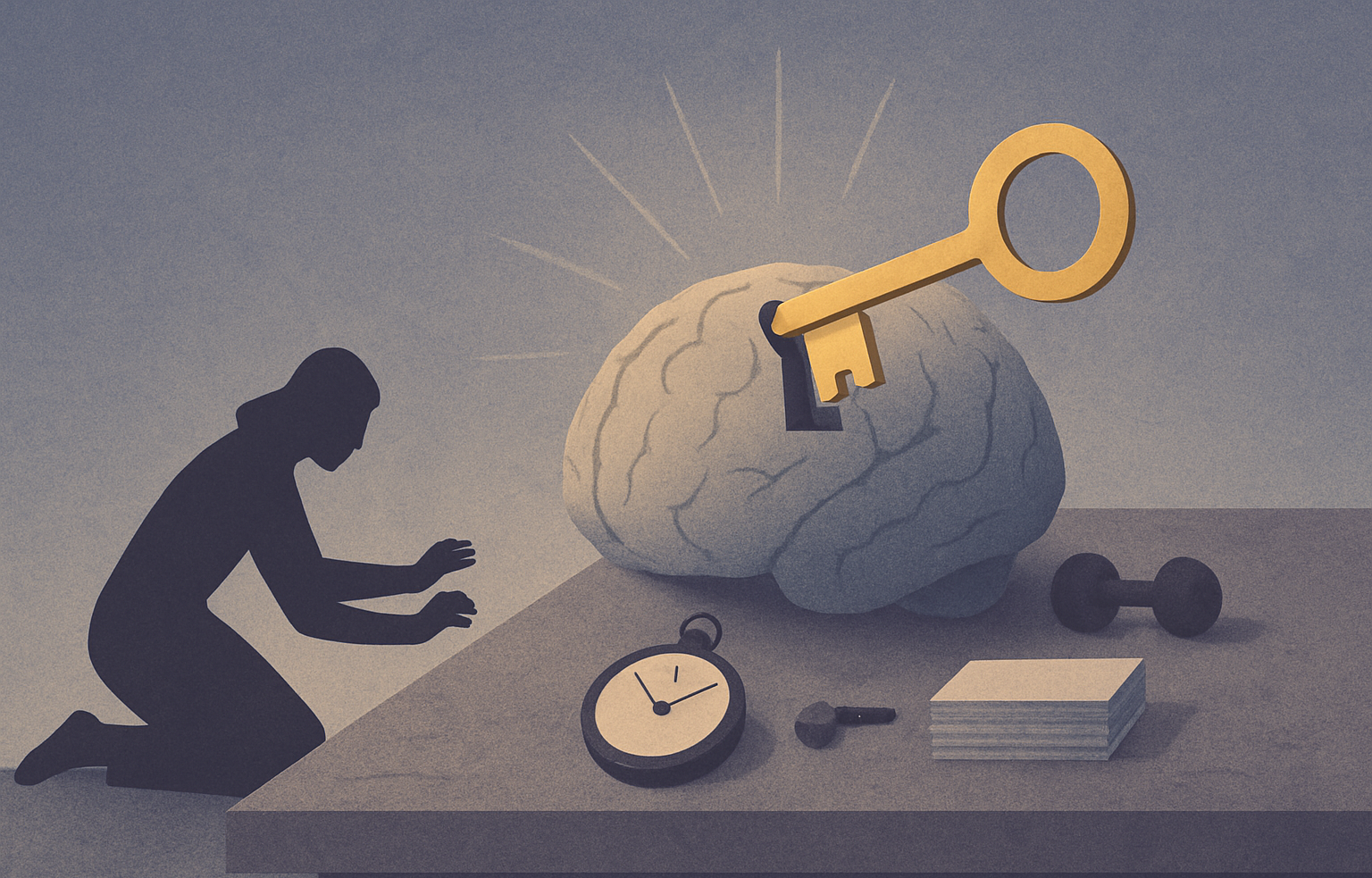
Deep Work argues that sustained, distraction-free focus is becoming rarer and more economically valuable, and that you must protect it with deliberate practice and ritual.

Deep Work argues that sustained, distraction-free focus is becoming rarer and more economically valuable, and that you must protect it through deliberate practice and clear rituals.
Who this book is for / who it isn’t for
Deep Work is written for knowledge workers who feel constantly busy but strangely unaccomplished: programmers, writers, academics, consultants, and managers who live in their inbox. If you suspect that Slack, meetings, and social media are quietly strangling your best work, this book gives you language for the problem and a method to fight back.
Students and early career professionals will find a career compass here. Cal Newport frames deep work as the core skill that lets you move up the value chain rather than skate on shallow tasks. If you care about building rare and valuable skills, this is oxygen.
It will land less well for people whose jobs are almost entirely reactive support, like front line customer service or retail, where you genuinely cannot block off long quiet stretches. It also is not for readers looking for a soft, therapeutic exploration of burnout. Newport writes like a computer scientist: structured, prescriptive, and focused on systems more than feelings.
Why depth is a superpower in a distracted economy
Newport’s starting point is blunt: most of us spend our days in what he calls “shallow work” – logistical tasks, email, status updates, meetings, and busywork that are easy to replicate and easy to automate. “Deep work” is his label for the opposite: professional activity performed in a state of distraction-free concentration that pushes your cognitive abilities to their limit.
He argues this skill matters for two economic reasons. The people who will thrive are those who can quickly master hard things and produce at an elite level in both quality and speed, and deep work is the only reliable path to both outcomes. Shallow work, by contrast, is easy to copy. A clever undergraduate anywhere on the planet can answer email and sit in Zoom calls. The ability to produce original algorithms, convincing legal arguments, difficult proofs, or resonant prose is what actually commands a premium.
Newport illustrates this with high-performing teams whose value comes not from tweeting incessantly or jumping into every meeting, but from long stretches spent wrestling with models, code, or manuscripts, surfacing a small number of high-quality outputs. Some companies respond by actively sheltering their best coders and analysts from meetings because those people ship orders of magnitude more valuable work when given uninterrupted time.
The uncomfortable conclusion is that a typical modern office, with its open floor plans, constant messaging, and expectation of instant response, is structurally hostile to the very skill that drives real results.
Training your brain to tolerate boredom
Newport’s most useful claim is that deep work is a trained capacity, not a character trait. You are not “bad at focus” by nature so much as you have trained yourself, through constant digital stimulation, to avoid boredom at all costs.
He tells the story of a young doctoral student in theoretical computer science who transformed his publication record by rebuilding his tolerance for sustained thinking. The student began scheduling long, internet-free stretches in the library, during which he did nothing but sit with difficult proofs. At first, his mind rebelled. Over months, his brain relearned that boredom was not an emergency and that discomfort was a sign of progress. The payoff was a remarkable surge in finished papers.
Newport pairs this with deliberately unglamorous advice. Stop treating boredom as something that must be anesthetized with a phone. When you are in line at the store, on the train, or walking between meetings, resist the urge to check your feeds. This is not a moral stance. It is practice for deeper work, in the same way that strength training in the gym supports a sport.
This angle dovetails with the broader idea that your attention is a finite resource. Elsewhere on this site, the argument in The Art of Single-Tasking echoes Newport’s view. Every time you context switch, you incur a cognitive switching cost. Treating your attention as something to be trained and guarded, rather than casually spent, is the foundation under every other tactic in the book.
Rituals, rules, and the architecture of focus
The middle of Deep Work is about turning a vague desire to focus into a concrete schedule and environment. Newport insists that relying on willpower is a losing game. What works is building rituals and rules that make deep work the path of least resistance.
He gives several personal examples. During the academic year, he blocks his days on a calendar with explicit deep work sessions for writing and thinking, often in two to three hour units. He chooses specific locations on campus where he does nothing but this kind of work, which trains an association between that place and that mental mode. He even has a shutdown ritual in which he reviews his tasks, plans the next day, and then says “schedule shutdown, complete” out loud, signaling to his brain that work is over.
The book includes stories from others who structure their lives in even more extreme ways: the biographer who retreats to a cabin for weeks at a time to draft, clearing every distraction from his environment; the executive who schedules regular “think weeks” without meetings to make higher-level decisions for the company.
Newport also suggests rules that shrink shallow work back to its proper size. Set office hours for email responses rather than treating your inbox as a real-time chat client. Measure the ratio of deep to shallow work in your week to make the tradeoffs visible. These rules are intentionally rigid so that you do not renegotiate them with yourself in every tempting moment.
Quitting social media and draining the shallows
Deep Work is often remembered for its sharp stance on social media. Newport does not simply say “use less Twitter.” He urges you to perform a cost-benefit analysis on each tool. The question is not “could this be useful sometimes” but “does this contribute significantly to the things I care about, relative to its costs in time and attention.”
He describes his own choice to avoid almost all social networks despite working in a field where online presence is often treated as mandatory. That absence did not harm his academic career or his readership. Instead, the time he recovered powered books and research that created far more value than any online brand maintenance.
The book’s final chapters focus on “draining the shallows” within your workday. Newport shares the example of a company that experimented with office hours for collaboration, leaving large blocks of time in which employees were not expected to respond instantly. The result was higher satisfaction and better output. He recommends quantifying how much shallow work you can tolerate in a day and scheduling it, rather than letting it slosh into every available gap.
Here he converges with ideas from Decision Fatigue and How to Reduce It. By batching email, standardizing meeting times, and pre-deciding what gets your attention, you protect the limited number of high-quality decisions and problem-solving sessions you have in you each day.
Where Deep Work overreaches
The book’s biggest strength is its clarity of purpose, and that is also where it sometimes overshoots. Newport occasionally writes as if deep work is the universally correct mode and shallow work is almost pure waste. In reality, many roles depend on responsiveness, emotional labor, or real-time coordination that cannot simply be minimized without unintended consequences.
The evidence base is another soft spot. Newport draws on credible research around attention, deliberate practice, and flow, but the chain from citation to prescription is not always tight. The deliberate practice literature he cites comes largely from domains like chess and music where feedback is immediate and performance is easy to measure. Translating that logic into ambiguous knowledge work is more complicated than the book sometimes admits.
His stance on social media, while bracing, underplays the way online networks can support marginalized voices, creative collaboration, or serendipitous opportunities. For some careers, a strategically cultivated online presence is not a distraction but part of the job. The book treats those cases briefly before moving back to its preferred prescription to quit almost everything.
Where to start
If you are sampling rather than reading cover to cover, begin with Part 1, especially the chapter that distinguishes deep work from shallow work and lays out the economic argument. That section gives you the frame that makes the rest of the tactics worth caring about.
Then move to the chapters on building rituals and routines around focus, including Newport’s discussion of scheduling deep work blocks and his shutdown ritual. You can treat the more extreme social media recommendations as an optional experiment rather than a mandatory doctrine. For a short book, it also rewards rereading every year or two as your career context shifts and you have more control over your calendar.
Deep Work is ultimately a manifesto for treating your attention as your primary capital, and for most knowledge workers that is a lens worth keeping.
Clarity about what matters provides clarity about what does not. – Cal Newport