Imposter Syndrome as a Signal
That shaky feeling that you do not belong is not always a warning sign. Often it is quiet evidence that you are standing at the edge of your real growth.

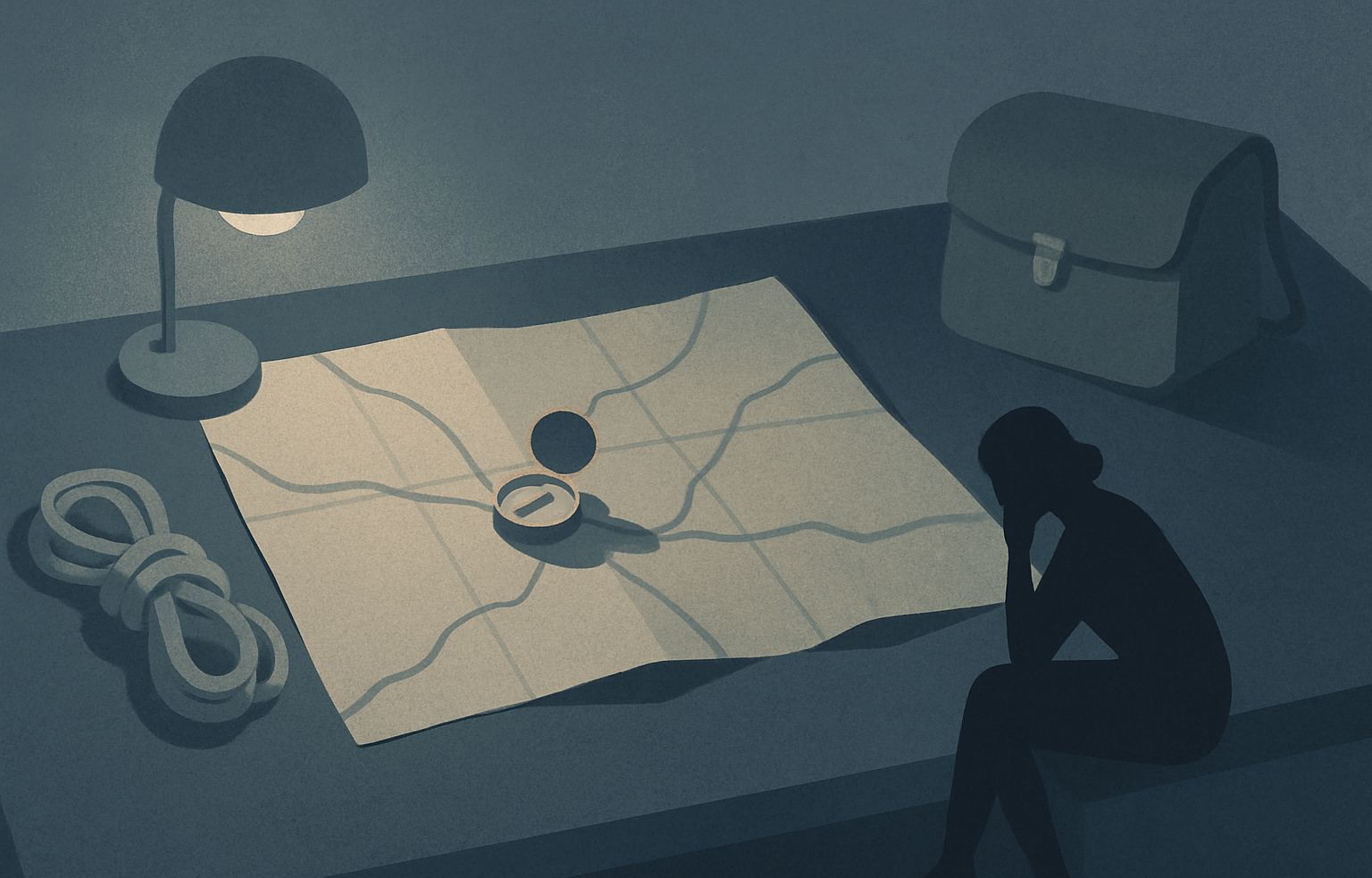
You land the new role, sign the bigger client, or start the harder class, and suddenly you feel exposed. Your chest tightens before meetings and you wait for someone to realize you have no idea what you are doing.
That weight is imposter syndrome. You usually treat it as proof that you are not ready, when it is often a signal that you are standing exactly where growth happens: at the edge of your competence.
What Imposter Syndrome Really Is Pointing At
You feel like an imposter when the story you hold about yourself collides with a new reality.
You think, “I am the junior on the team,” while your title now says “manager.” You think, “I am not a real writer,” while you are editing a draft for publication. The outside world has upgraded your role. Your inner identity is lagging behind.
That mismatch creates tension. Your brain does not like tension, so it generates a simple story: “You must have fooled everyone. You do not belong here.”
In practice, imposter feelings often show up when three things are true:
- Your responsibilities just expanded. New job, bigger project, first time leading, public speaking, publishing your work.
- Feedback is delayed or vague. You cannot tell quickly if you are doing well, so your mind fills the gap with doubt.
- Your standards are high. You care, which means you see every gap in your knowledge in painful detail.
Take a concrete case. You move from individual contributor to team lead. You used to measure your day by the tasks you finished. Now success looks like clearing roadblocks, giving feedback, and aligning people. No one gives you a clear scorecard, and half of what you do happens in private conversations. On paper you are a leader. Inside, you still feel like the new hire pretending to be an adult.
You think the feeling is proof you are out of your depth. More often, it is proof that you are playing in a new depth at all. Someone who never leaves the shallow end does not get imposter syndrome. They get boredom.
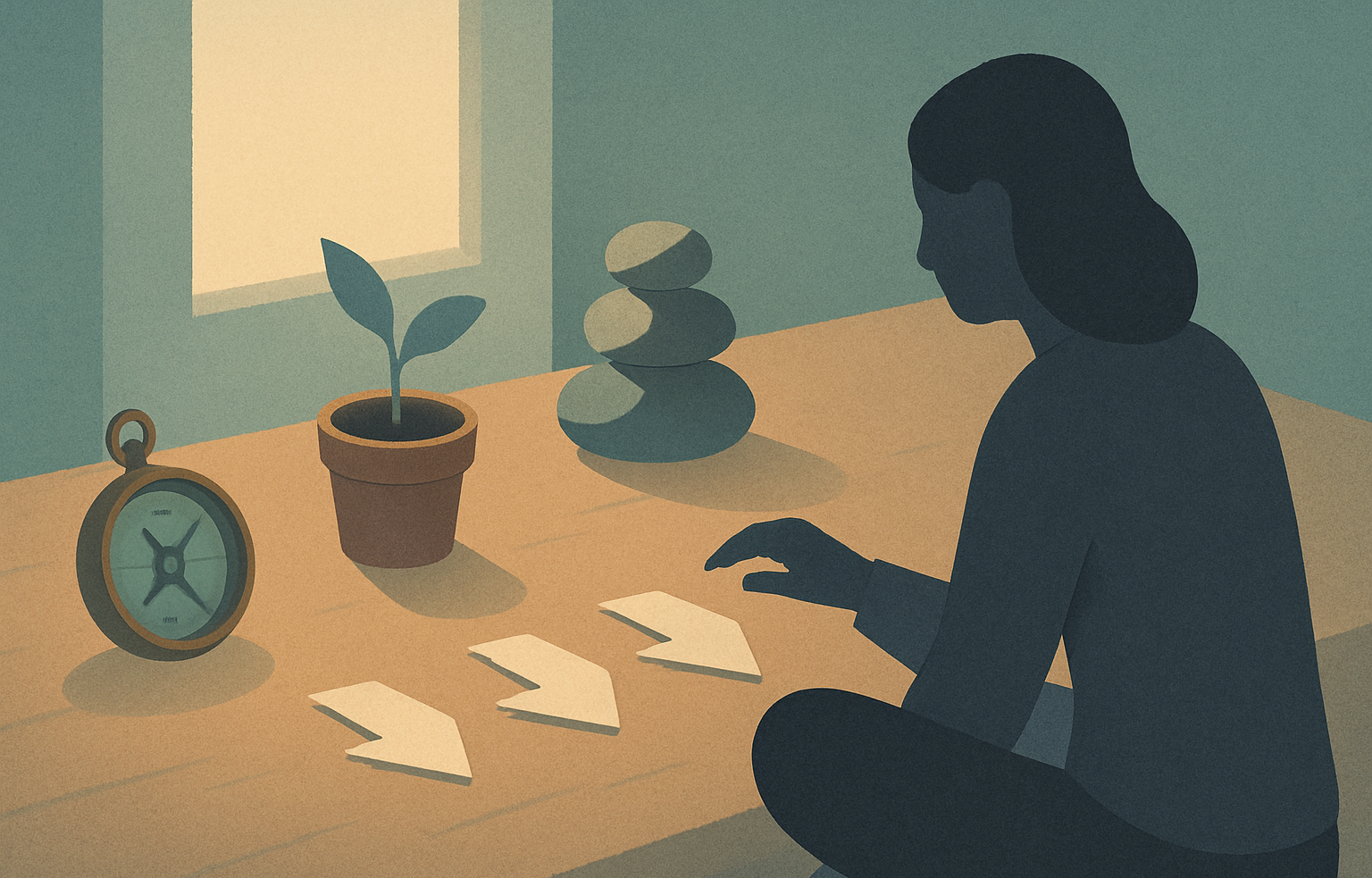
Imposter syndrome is a clumsy internal alert that says, “Your skills and your situation are no longer perfectly matched.” That is uncomfortable. It is also the only condition under which you grow.
The Growth Edge: Where Anxiety And Learning Meet
You can think of your work in three zones:
- Comfort zone. Tasks you can do on autopilot. Your sense of identity fits perfectly here. You feel calm, maybe a little dull.
- Stretch zone. Tasks you can almost do, but not quite. You need focus, help, or practice. You feel alert, slightly anxious, and very alive.
- Panic zone. Tasks so far beyond your current ability that you freeze. You feel overwhelmed and may shut down.
Imposter syndrome usually appears in the stretch zone. It is your nervous system reacting to real uncertainty. You might mess up. You might look foolish. You might have to ask for help. All of that is true, and all of that is where actual learning happens.
This is close to what Carol Dweck describes as a growth mindset. You treat your skills as something you build, not something you prove. Imposter thoughts say, “If I were truly talented, this would not feel hard.” A growth mindset replies, “It feels hard because I am building the talent.”
There is a useful test here: if you feel like an imposter but you can still take the next small step, you are in the stretch zone. The feeling is a signal to lean in with care, not to retreat.
You only need to worry when your whole body says “slam the brakes,” you cannot even see a doable next action, and the stakes are extreme. That is the panic zone. In that case, the signal is not “grow,” it is “break this into smaller pieces” or “get backup.”
A quick exercise helps you feel the difference. Think of one task that feels scary right now. On a scale from 1 to 10, rate how overloaded your body feels when you picture doing it. If you are around 4 to 7, you are likely in stretch. If you are at 9 or 10, shrink the task until the number drops. You are not aiming for zero tension. You are aiming for tolerable tension.
The Hidden Upsides Of Feeling Like An Imposter
You are trained to see imposter syndrome as a flaw to eliminate. There are costs, of course. Chronic self doubt can drain your energy and make you play much smaller than you could.
There are also quiet benefits, if you handle the feeling with some skill.
1. It keeps your ego in check
When you believe you already know enough, you stop listening. You talk over people. You miss details. You ship sloppy work because you assume it is fine.
A dose of imposter feeling nudges you in the other direction. You double check numbers. You read the brief again. You ask clarifying questions instead of pretending you understand. That is not weakness. That is professional humility.
You can see the contrast in yourself. Think about the times you felt untouchable. You probably glossed over preparation and rushed through work. Then compare that with a time you felt slightly out of your depth. You likely slowed down, sought feedback, and cared more about accuracy. That second mode is the one that protects you.
2. It points out your real learning gaps
Imposter thoughts are often oddly specific:
- “I do not understand the financial side of this role.”
- “I can do the individual work, but I do not know how to manage conflict on the team.”
- “I can write well, but I cannot structure longer pieces.”
If you listen closely, your anxiety is handing you a learning roadmap. The problem is not “I am a fraud.” The problem is “I am a beginner at these three particular skills.”
Once you name them, you can treat them like any other skill: break them down, find resources, ask someone experienced, and practice.
Try a quick mapping exercise. Take one imposter thought and write, “Underneath this, I am unsure about…” Then list three concrete abilities or bits of knowledge. For example, “running meetings, setting priorities, giving constructive feedback.” You now have a study plan instead of a vague cloud of shame.
3. It keeps you aligned with effort, not image
There is a trap where you start caring more about looking competent than becoming competent. You smooth over mistakes. You hide questions. You craft a polished image at the cost of your own learning speed.
Imposter syndrome, in its raw form, makes it very hard to believe your own image. That can hurt. It can also free you. If you are not convinced by your performance, you are less likely to worship it. You can relax into being a work in progress, which is what you are anyway.
The contrarian truth is that a total lack of imposter feeling is sometimes a warning sign. It can mean you are coasting, or that your self assessment has drifted away from reality. A little self doubt, paired with action, is often healthier than blind certainty.
Separating The Signal From The Static
Not all imposter thoughts are useful. Some are pure noise: inherited criticism, old shame, or perfectionism playing dress up as humility. You need a way to tell the difference.
A simple three-question check helps.
1. “Is this about my skills, or my worth as a person?”
“I need to get better at presentations” is skill focused. You can work with that.
“I am a joke” attacks your whole self. It is fuzzy, global, and unspecific. When your language jumps from a concrete task to a sweeping judgment, you have left signal territory and entered static.
Your job is to drag the thought back to specifics:
- “I am behind” becomes “I underestimated how long this would take.”
- “Everyone is smarter than me” becomes “Three people on this call know this topic better because they have done it for years.”
Specifics hurt less and help more.
2. “What would evidence look like?”
If you are a total imposter, there should be some visible signs. Maybe every project you touch fails. Maybe you get the same negative feedback, over and over.
Ask yourself:
- What would I expect to see if I truly could not do this job at all?
- What would I expect to see if I were doing reasonably well but still learning?
When you compare those pictures to reality, you usually find a mixed bag: some wins, some misses, no total disaster. That does not remove all doubt, but it softens the drama of “I am about to be exposed.”
Consider your last few months like a set of rough data points. You might see a couple of projects that went sideways, a few that landed fine, and one that turned out better than expected. That pattern rarely matches the story “I am a complete fraud.” It matches “I am new in some areas, and I am improving.”
3. “What is the smallest honest move I can make?”
Imposter syndrome likes impossible choices. Either you bluff your way through, or you confess your total fraudulence.
There is usually a third option: a small, honest adjustment.
- “I can handle this part, but I need help with that part.”
- “I have not done this exact thing before, but here is how I would approach it.”
- “I do not know the answer yet. I will research it and get back to you this afternoon.”
You stay truthful without collapsing into self attack. You respect the signal that you are stretched, and you respond with one concrete move instead of spinning in your head.
A simple practice: before a tough conversation or task, script one honest sentence you can use if you get stuck. For example, “I am still learning this area, so I might pause to check myself.” Knowing you have that line ready takes pressure off the performance and makes it easier to start.
Working With The Signal Instead Of Fighting It
Once you see imposter feelings as a signal, your goal shifts. You are no longer trying to crush the sensation. You are trying to decode it and respond with skill.
Here are practical ways to do that.
1. Name the edge clearly
Write down, in one sentence, what exact situation is triggering the feeling.
- “Running my first strategy meeting with senior leaders.”
- “Charging higher rates for my freelance work.”
- “Submitting my portfolio to that program.”
Then finish the sentence: “The edge here is …” For example, “The edge here is leading people who are more experienced than me.”
This moves the feeling out of the vague fog and into a clear arena. The more precise you get, the more workable it becomes.
You can see this in a student who is first in their family to attend university. The surface feeling is “I do not belong here.” When they name the edge, it might become “The edge here is asking for help in a system my family does not understand.” Once they name that, specific options appear: office hours, mentoring programs, study groups.
2. Shrink the arena
Growth happens at the edge, but you control how close you stand to it.
You do not have to jump straight from nothing to a keynote talk. You can:
- Speak up once in the smaller internal meeting.
- Take on a tiny pilot project before the massive one.
- Share your writing with one trusted person before posting it publicly.
You are still in the stretch zone, just in a smaller room. You give your nervous system a chance to adjust, instead of throwing it straight into panic.
3. Borrow a calmer vantage point
When you are inside the feeling, your perspective warps. Everything becomes about you. Every glance feels like judgment. Every pause in a conversation becomes proof you have said the wrong thing.
This is where a Stoic move helps. Marcus Aurelius practiced what later writers call the “view from above”: mentally pulling back to see himself as one small person in a big, busy world.
You can do a lighter version. Picture the room where the scary thing will happen. Then zoom the camera out: the building, the street, the city. You are still there, but smaller, surrounded by thousands of other parallel stories.
Your task does not become trivial. It just stops being the only thing that defines you. That little shift often takes the edge off the panic and lets you act.
4. Build receipts of competence
Your brain has a strong negative bias. It stores failures in high resolution and tosses successes into a blur.
You can counter this by keeping simple “receipts”:
- A note on your phone where you jot down specific wins: “Client renewed for another quarter,” “Professor said my analysis was sharp,” “Team asked me to lead again.”
- A folder with emails or messages where someone thanks you or praises your work.
You are not collecting trophies to brag about. You are building a factual counterweight to your next wave of “I have never done anything right.”
When the feeling hits, you can scan your receipts and say, “I have done hard things before. I can learn this too.” It does not kill the doubt, but it balances it.
One Small Step Today
Pick one situation in your current life where you feel like an imposter, then write a three-sentence note about it: name the situation, name the edge it represents, and name one tiny, concrete action you will take this week that keeps you in the stretch zone without tipping you into panic.