Mindset: The New Psychology of Success
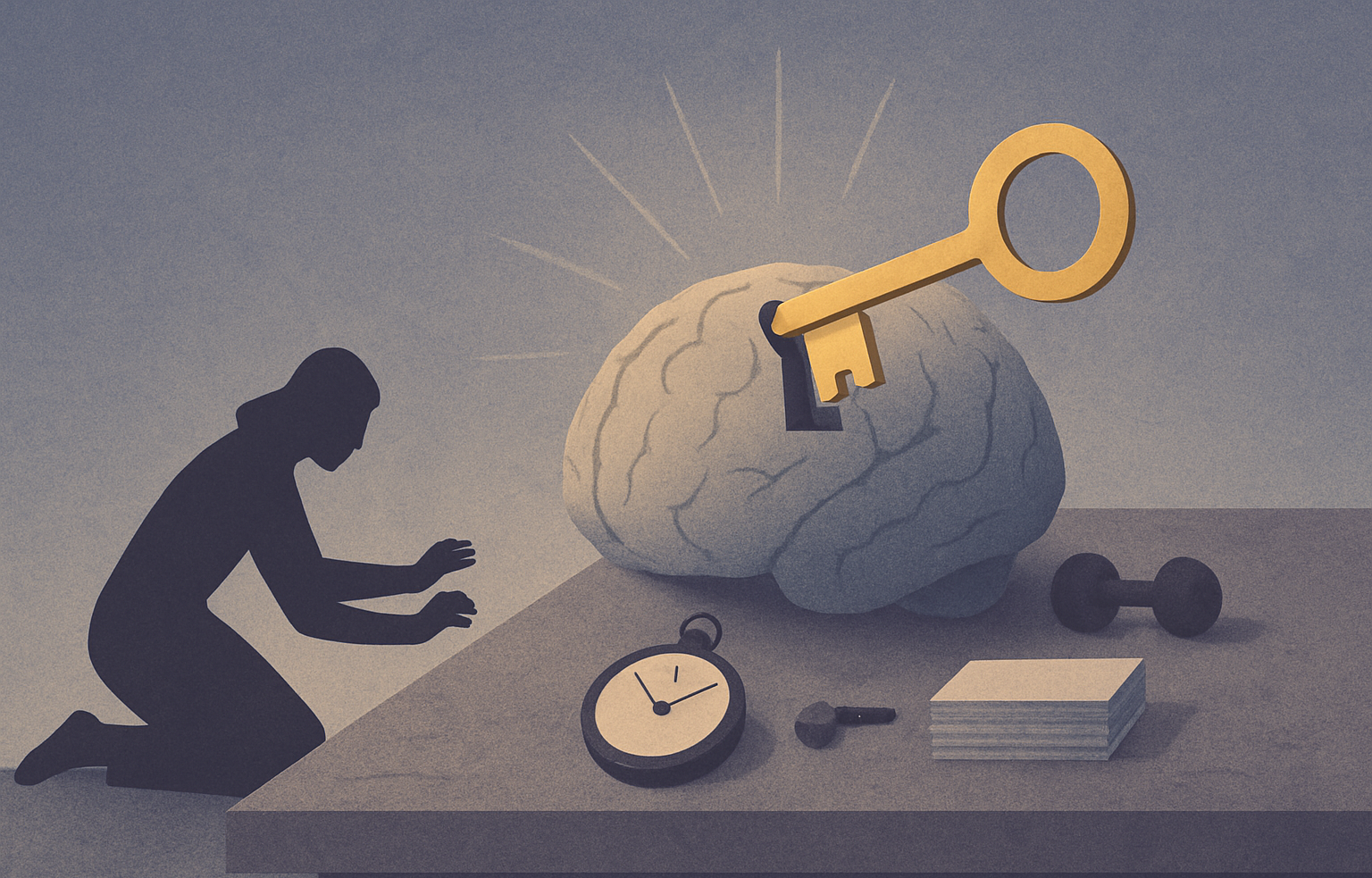
Mindset argues that believing skills can be developed through effort and strategy leads to stronger motivation, resilience, and long term achievement than believing talent is fixed.

Mindset argues that believing skills can be developed through effort, strategies, and help from others leads to better motivation and outcomes than believing talent is a fixed, inborn trait.
Who this book is for / who it isn’t for
Mindset is for readers who sense they are playing small because they secretly worry they are not talented enough. If you have ever backed away from a challenge, changed your goal to something safer, or stopped trying the moment you felt judged, the framework in this book will feel uncomfortably accurate.
It is also a useful lens for parents, teachers, coaches, and managers who give a lot of feedback. Carol Dweck spends much of the book in classrooms, on playing fields, and in offices, showing how small comments can shift people toward growth or shutdown.
This is not for readers who want tactics for a specific domain, like step by step business systems or sport training programs. It is a theory-of-change book, not a daily planner. It may also frustrate readers who dislike psychology stories and want dense data instead of studies paired with anecdotes.
Two mindsets and the question underneath every setback
The book starts with a simple distinction: in a fixed mindset, you believe your intelligence, personality, or talent are essentially set. In a growth mindset, you see those same traits as starting points that can be developed.
Dweck illustrates this with a study in which students were given puzzle problems. After an initial easy set, the researchers offered harder puzzles from a different test. Some kids lit up. They said things like, “I love a challenge.” Others shut down, declined the harder set, or quickly lost interest.
The difference was not current ability. It was interpretation. The enthusiastic kids saw difficulty as information: feedback about what to learn next. The discouraged kids saw difficulty as a verdict on their ability.
At the heart of the distinction is the question you ask yourself when something goes wrong. The fixed mindset asks, “What does this say about me?” and rushes to protect the answer: “I am smart,” “I am talented,” “I am the best.” The growth mindset asks, “What can I learn here?” and tolerates the discomfort of not looking good yet.
Dweck tells a story about losing a young academic job after her department decided not to keep her on. Her first impulse was humiliation and a sense of being exposed as not good enough. The turning point was realizing she could see this either as a permanent judgment on her talent or as painful feedback on where she needed to grow as a researcher and colleague. That reframing is the move the whole book builds around.
How praise and labels quietly shape identity
One of the most useful sections is about praise. In a classic set of experiments, Dweck and colleagues gave children a series of problems, then praised them in two different ways. Some were praised for intelligence: “You must be smart at this.” Others were praised for effort: “You must have worked hard.”
Kids praised for being smart became more cautious. When offered a choice between easier or harder tasks, they preferred the safe option. They also lied more about their scores later, exaggerating their performance to look better. Kids praised for effort chose challenge more often, were more resilient after failure, and did not need to protect an image.
The conclusion is not that all praise is bad. It is that praise implicitly answers the question “Who am I?” for a child. “You are so smart” makes intelligence a fragile identity to defend. “You really stuck with that problem and tried new strategies” makes persistence the identity.
Dweck extends this logic to labels like “gifted,” “natural,” or “not a math person.” A gifted child can end up avoiding hard work because struggling would mean they are no longer gifted. A teenager tagged as “bad at school” can stop trying because effort feels pointless. In both cases the label becomes a ceiling.
This section matters for anyone raising or teaching kids, but it is just as relevant in workplaces. Calling someone “a star” or “a genius” can accidentally make them risk averse. Praising teammates for preparation, experimentation, and learning curves aligns more with a growth mindset culture.
Effort, strategy, and feedback as the real levers of progress
Dweck is clear that growth mindset is not “just try harder.” Effort in the wrong strategy will still stall. What changes in a growth mindset is the relationship to effort itself.
In a fixed mindset, effort often looks like evidence that you lack talent. If you were really good, this would be easy. That belief makes people search for things that “come naturally” and abandon the rest. In a growth mindset, effort is how you convert potential into skill. It is not an emergency measure; it is the normal cost of progress.
She uses the example of Olympic swimmer Michael Phelps and his long time coach Bob Bowman. Phelps had physical advantages, but the story Dweck highlights is of relentless practice, detailed race plans, and drills for when things go wrong. In one race, his goggles filled with water, and he could not see the wall. Because he had practiced counting strokes and prepared mentally for disruptions, he still won. The point is that success came from cultivated strategies layered on top of talent.
The same pattern shows up in business. Dweck contrasts leaders who assume they are the smartest person in the room with those who keep asking naive questions, seek out criticism, and change course based on evidence. The first group surrounds themselves with admirers and blames others when results slip. The second designs systems that get information back quickly and normalizes course corrections.
If you pair this with deliberate goal setting, such as in The Power of Goal Setting: How to Set and Achieve Your Goals, growth mindset becomes a practical loop: set a goal that stretches you, try strategies, treat feedback as data, and update your approach instead of your self-worth.
Relationships, conflict, and the mindset you bring to other people
One of the less discussed but powerful parts of the book is about relationships. Dweck argues that we can hold a fixed or growth mindset not only about ourselves but also about others and about relationships themselves.
In a fixed mindset, you might believe that a “good” relationship is effortless. Conflict then becomes a sign that something is fundamentally wrong or that your partner is flawed. People in this frame interpret criticism as an attack on their character and respond with defensiveness or withdrawal.
In a growth mindset, relationships are built, not found. Misunderstandings and conflict are expected and treated as shared problems to solve. You still hold boundaries, but you do not see issues as permanent verdicts on either person.
Dweck includes stories of couples who reframed their struggles from “We are incompatible” to “We have never learned how to navigate this kind of disagreement.” That small shift opened space for communication skills, therapy, and experiments with new ways of responding. She also describes partners who learned to name their fixed-mindset reactions in the moment—“I am hearing this as ‘I am a failure’ right now”—which made it easier to calm down and stay in the conversation.
The same applies to how we see our own personality. If you believe “I am just bad at confrontation” as an unchangeable trait, you will either avoid hard conversations or explode when you can no longer hold them back. If you see courage and communication as trainable, you can practice, fail, and improve, especially if you align these efforts with your own core values.
The honest caveat: when growth mindset becomes slogan instead of practice
Where Mindset has been criticized is less about the core idea and more about its application and some of the early research claims. Replication attempts of certain classroom interventions have shown smaller effects than the initial studies suggested. Brief “mindset interventions” do not reliably transform underperforming schools, particularly when structural issues like poverty, class size, or curriculum are ignored.
There is also a real risk of misuse. Some educators or managers use the language of growth mindset to blame people for their struggles: “You just need more grit” or “You do not have a growth mindset yet,” without changing the feedback, resources, or incentives around them. That flips a liberating idea into a moral judgment.
The book also draws sharp lines between fixed and growth mindsets, while in real life most of us hold a mix, shifting by domain and by mood. Your relationship to music, career, and relationships might each sit in a different place. The binary framing is useful as a teaching tool but can oversimplify a complex psychological landscape.
Where to start
If you are sampling, start with Chapter 1, “The Mindsets,” for the core distinction and the student puzzle studies. Then read Chapter 3 on “The Truth About Ability and Accomplishment” for the discussion of effort, strategy, and the Phelps example. After that, pick the domain chapter that fits your life: Chapter 4 for parenting, teaching, and coaching, or Chapter 7 for business and leadership.
The book repays a re read a year later, especially if you mark places where you recognize your own fixed scripts and compare notes with how you actually behaved.
A growth mindset is less about positive thinking and more about choosing to treat your struggles as a starting point, not a verdict.
Becoming is better than being. — Carol S. Dweck