Boundaries with Yourself
You keep promises to your boss more easily than to yourself. When you draw firm internal lines, your focus, rest, and effort finally match what you say you value.
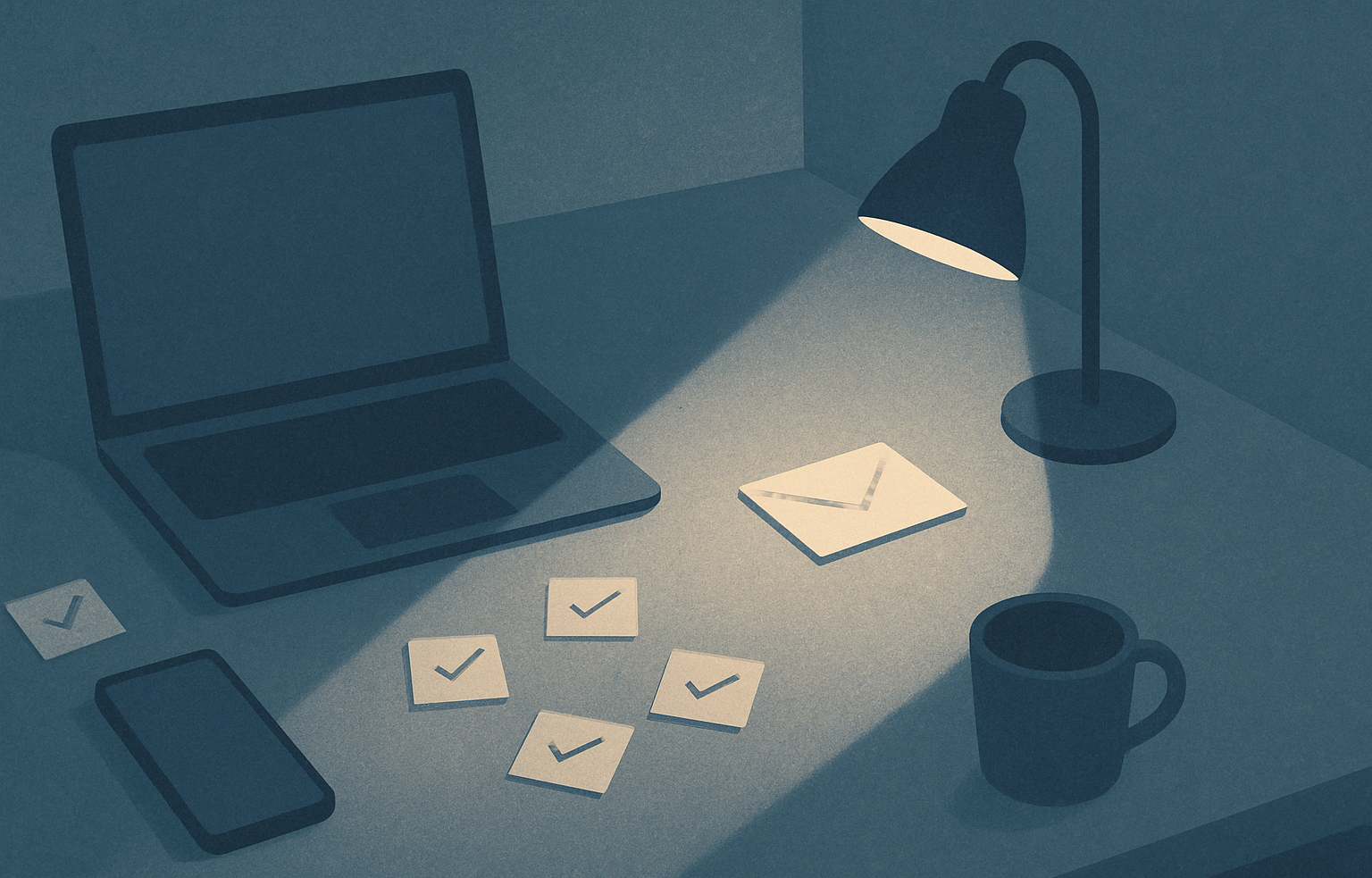
You say you will stop working at six, but you answer one more message, open one more tab, and suddenly it is eight thirty. You promise yourself you will not check your phone in bed, then your thumb is on the screen before you are even awake.
You already know about boundaries with other people. Internal boundaries are the quieter line where you decide what you will and will not do with your own attention, effort, and body. When you take them seriously, your focus sharpens, your energy lasts longer, and you stop feeling like you are breaking promises all day.
What It Means To Have Boundaries With Yourself
Think about the last time you told someone, “I will send that to you by Friday.” You probably treated that deadline as real. Now think about the last time you told yourself, “I will stop scrolling by 10 p.m.” That one felt flexible.
Boundaries with yourself are the rules you treat as non‑negotiable, even when no one is watching. They cover things like:
- When you start and stop working
- How you use your phone when you are tired
- What you do when you say you will “just check something quickly”
- How you speak to yourself when you make a mistake
You already have internal boundaries; they are often unspoken and inconsistent. For example, you might never miss a meeting, yet regularly skip lunch. Or you may always reply to a friend, yet ignore the calendar block for your own project.
This mismatch drains you. Each time you overrun your own line, you teach yourself that your word is soft. After a while, any plan you make feels optional, which is one reason habit changes feel shaky, even when your intentions are strong.
James Clear writes about identity‑based habits: you act like the kind of person you believe you are. Boundaries with yourself are how you prove that identity in daily choices. When you keep your own lines, you start to feel like someone you can trust.
Why External Rules Are Not Enough
You already live inside plenty of rules. Work hours, deadlines, family obligations, notifications, social norms. These are outer boundaries that shape how you spend your time.
They help, but they have limits:
- External rules protect other people’s priorities, not yours.
- They often reward visible busyness, not thoughtful effort.
- They rarely protect your rest, deep focus, or emotional margin.
Picture a day when you answer every ping. You stay online through dinner, reply to late messages, and say yes to one more request that was not truly urgent. On paper, you look responsive and committed. Inside, you feel depleted, your own development projects sit untouched, and every new request lands with a quiet sting.
Nothing in your environment tells you to stop. There is no meeting for “being off your laptop” or KPI for “protecting your attention.” Unless you draw your own line, the demands keep expanding into every empty space.
You feel this in small ways too:
- A group chat that is “just for fun” fills the gaps in your day.
- Your inbox becomes the default boss of what you work on.
- A binge‑worthy series eats the last hour you meant to use for yourself.
External rules rarely defend your focus or your energy. At some point you decide that some things are off limits, even if no one objects when you cross them.
Three Types of Internal Boundaries
A handful of clear lines, applied consistently, can change how your days feel. It helps to think in three categories: attention boundaries, effort boundaries, and self‑talk boundaries.
1. Attention boundaries
These define what your focus is allowed to do in certain windows.
Examples:
- First and last hour. No social media in the first hour after waking and the last hour before sleep.
- Work blocks. During a deep work block, your browser stays on one tab, and your phone lives in another room.
- Context swaps. You do not change tasks in response to every notification. Instead, you choose one or two times a day to clear messages.
This is where ideas from Cal Newport on deep work fit. If you never protect uninterrupted attention, you carry attention residue from one task into the next, and your brain never fully engages.
Think of an attention boundary like “I stop drinking coffee after 4 p.m.” You might occasionally break it on purpose, but you are not renegotiating it every afternoon.
2. Effort boundaries
These define how far you are willing to push in a day or week.
Examples:
- Stop time. You stop working by a set time unless there is a true emergency, not a vague sense of “I could do more.”
- Max stretch. You allow one late evening of work per week, not a rolling series of “tonight is the exception.”
- Project load. You cap active big projects to two at a time, even if new ideas sound tempting.
If you freelance or work independently, you know how this goes. On weeks when you say yes to every request, you work past midnight, eat at your desk, and end Friday in a fog. On weeks when you apply effort boundaries, you reply to new inquiries with a start date two weeks out, schedule one no‑meeting afternoon, and delay nonessential revisions. Your income stays steady. Your burnout risk drops.
Effort boundaries protect your future self from the part of you that thinks you are a machine.
3. Self‑talk boundaries
These define what you are allowed to say to yourself.
For many people, this is the hardest category. You might tolerate phrases in your own head that you would never say to a friend: “You are useless”, “You always mess this up”, “You are behind everyone.”
Setting a self‑talk boundary sounds like:
- “I do not call myself names.”
- “I can critique my behavior, but not my worth.”
- “When I catch harsh self‑talk, I pause and restate it in plain, factual language.”
You are aiming for accuracy instead of abuse. If you missed a deadline, a factual version is “I said Friday, and I sent it on Monday.” That sentence still stings, but it leaves room to ask what got in the way and what you want to change next time.
Over time, cleaner self‑talk makes it easier to keep other boundaries because you are no longer bracing for an internal attack every time you slip.
How To Start Keeping Promises To Yourself
Once you name a boundary, the real work is keeping it when it is inconvenient. That is where you usually slip. You feel tired, bored, stressed, or excited, and the line suddenly seems optional.
You build reliability with yourself the same way you build it with anyone else: through clear agreements, small tests, and honest repair when you fail.
1. Make the boundary concrete
“Use my phone less” is vague. “Phone stays outside the bedroom from 10 p.m.” is concrete.
Try writing boundaries in “when X, then Y” format. You might recognize this as close to an implementation intention, which another article here explores in more depth.
Examples:
- “When I sit at my desk in the morning, I open my main project file before I open email.”
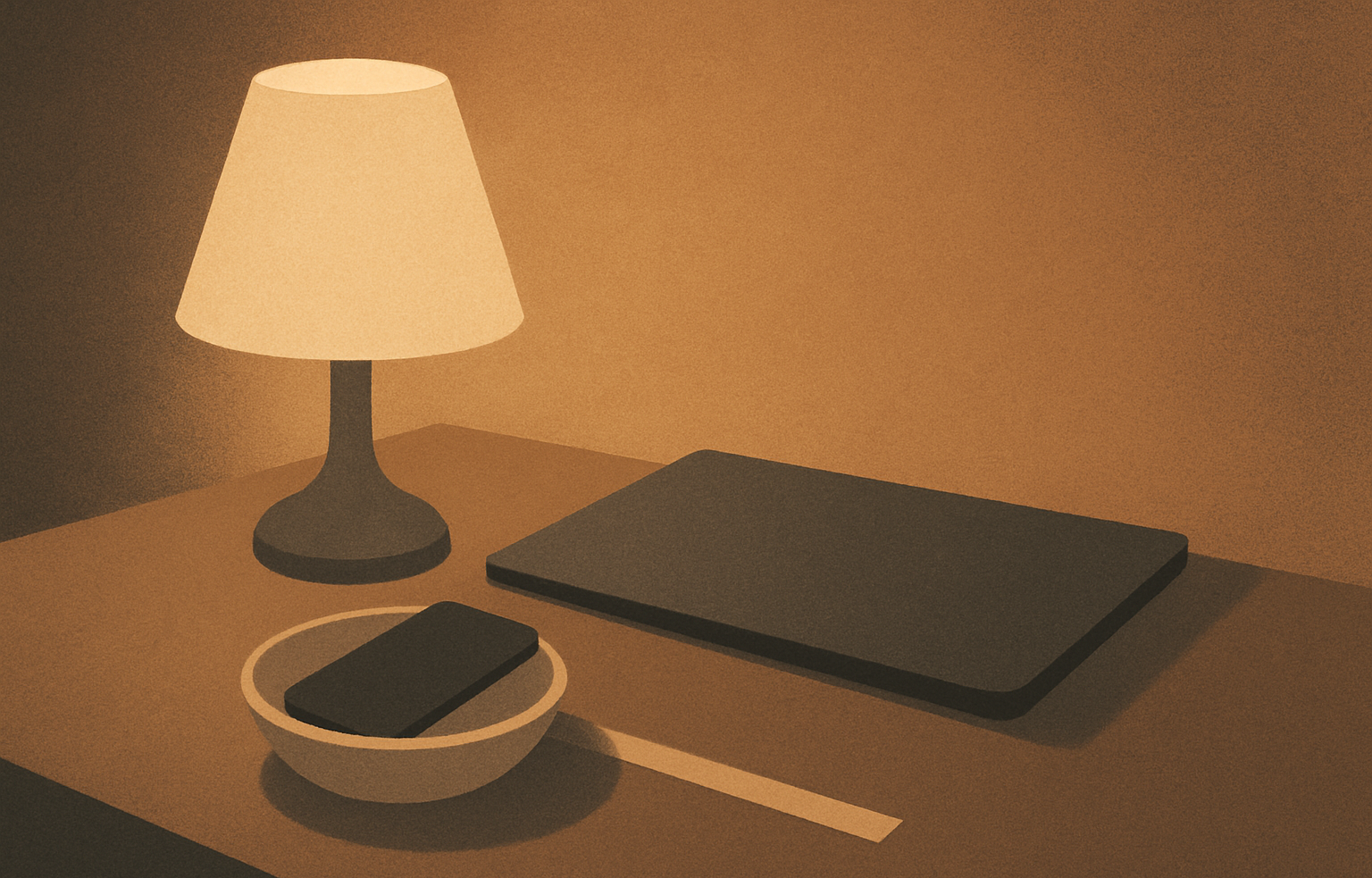
- “When the clock hits 6:30 p.m. on weekdays, I close my laptop, even if I am in the middle of something.”
Clarity removes the wiggle room where excuses like “just this once” tend to hide.
2. Start smaller than your ego wants
Your ambition will push for big, impressive lines: no sugar ever, three hours of deep work every day, 5 a.m. wakeups. Then life hits, you miss once, and the whole structure collapses.
Bring the target down to something slightly stretchy but very doable:
- Instead of “no social media during work”, start with “no social media before lunch.”
- Instead of “no work after 6 every day”, start with “no work after 6 on two nights this week.”
You are building trust, not auditioning for a discipline contest. Consistency at a modest level beats heroic effort that crashes.
Easing up can feel like going soft. In practice, ruthlessly shrinking your first boundary is often what produces the first real streak you have ever had.
3. Track one boundary publicly to yourself
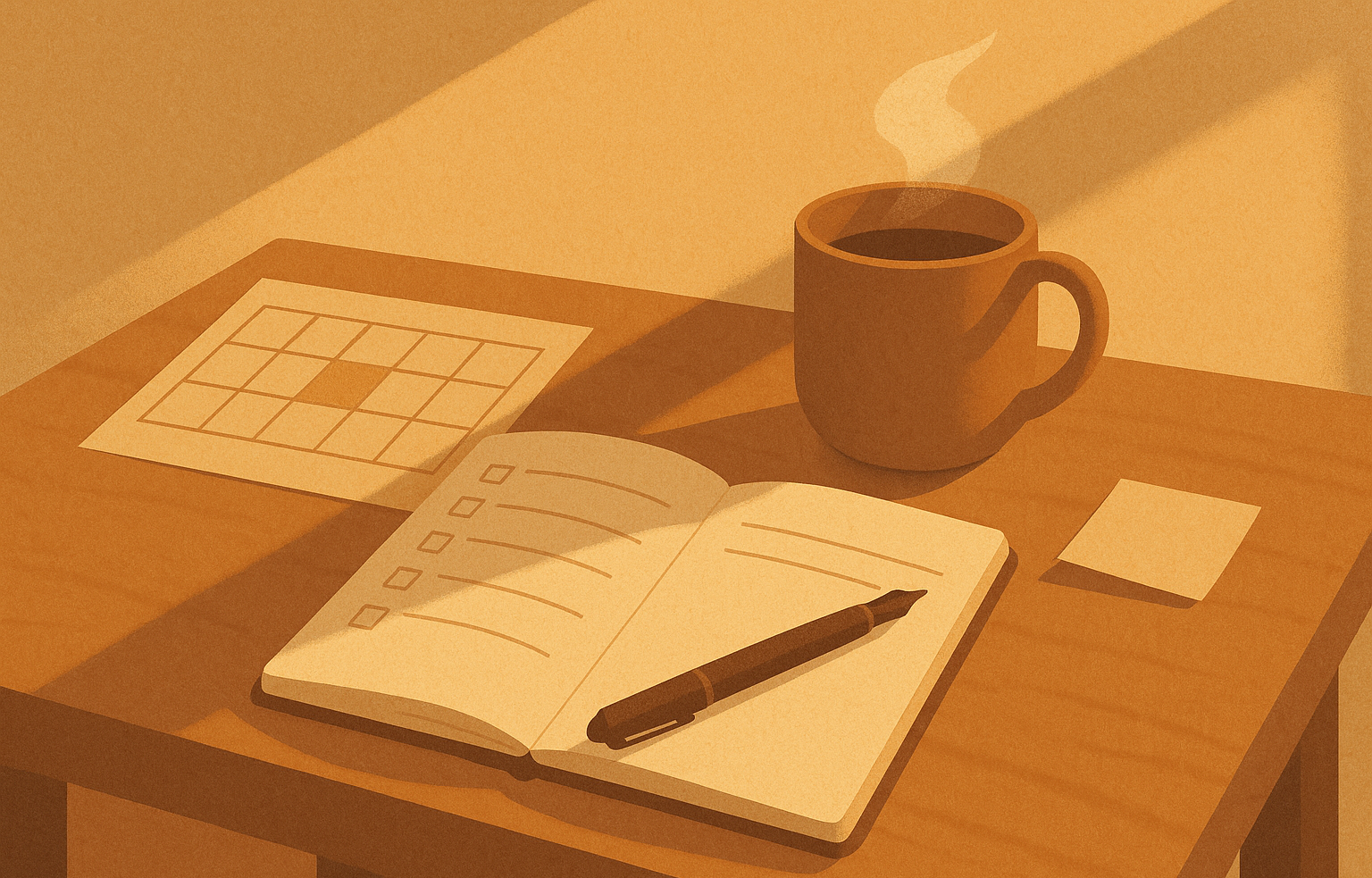
You need a simple way to see whether you are keeping a promise. A paper calendar or a notes app where you mark each day you kept a specific boundary works well.
For example, you draw a small dot on days you stopped work at your chosen time. After two weeks, you see a pattern instead of a vague feeling. That pattern gives you data: which days tend to slide, what triggered exceptions, whether the line is realistic.
This kind of self‑tracking connects with the compound effect of small habits. Tiny repeated choices add up, but only if you notice them.
4. Repair instead of erasing
You will break your own rules. You will check your phone in bed, say yes when you meant no, or stay up late finishing a task that could have waited.
The critical moment is what you do next.
One common reaction sounds like: “See, you never stick to anything. Why bother.” Then you drop the boundary entirely.
A more useful response is to treat the break as a repair job, not proof of your character. You might say to yourself: “I broke the rule tonight. Tomorrow, the rule is back. What made it hard this time, and what can I tweak?”
You might need to adjust the boundary, or you might need to change the environment around it, which is where the next section comes in.
Design Your Environment To Support Your Lines
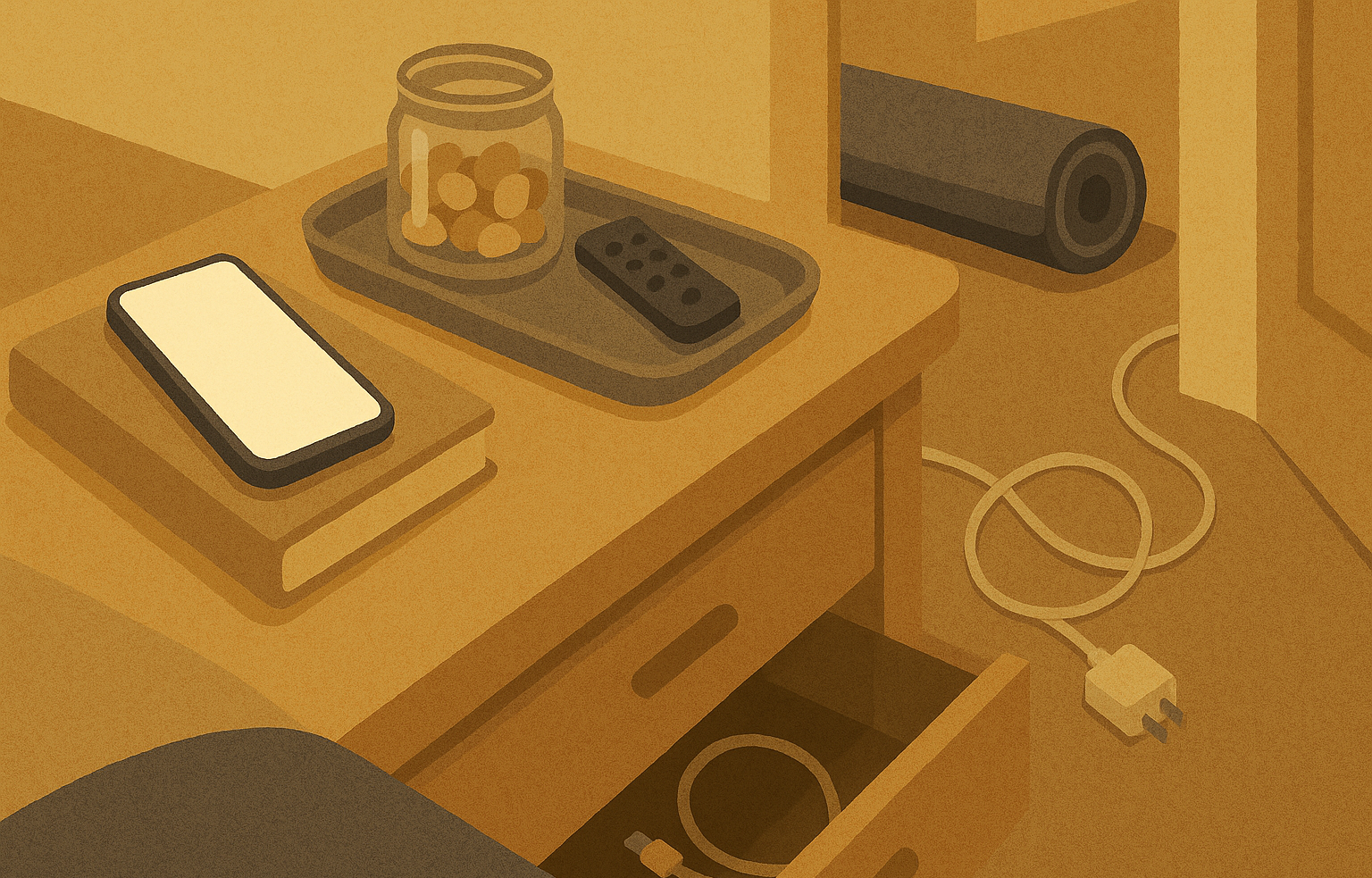
Internal boundaries live in your mind, but they survive in your surroundings. If your phone is on your pillow, no amount of “I will not scroll in bed” talk will stand up to half‑asleep muscle memory.
You make your rules easier to follow when you move some of the enforcement outside your head.
Practical shifts:
- Physical distance. Charge your phone in another room. Keep snacks in a cupboard instead of on your desk. Store work materials away from the dining table.
- Default settings. Turn off nonessential notifications. Set Do Not Disturb to activate automatically during deep work or after a certain hour.
- Visible cues. Put a sticky note on your laptop with your stop time. Keep a book on your nightstand instead of your tablet.
- Social signals. Tell a roommate, partner, or friend about one boundary, like your stop‑work time, so they expect it and do not unintentionally pull you across it.
This overlaps with environment design, which the piece on designing friction for better habits covers in depth. The idea stays simple: reduce friction for behaviors that honor your boundaries, and increase friction for behaviors that cross them.
When you arrange your space to support your rules, willpower stops being the only wall between you and every impulse. Your environment starts doing some of the quiet, boring work that discipline is usually asked to do alone.
The Smallest Move
Pick one boundary with yourself that would change your week if you kept it for five days.
Write it as a clear sentence on paper, starting with “When”. For example: “When it is 10:30 p.m., I plug my phone in the kitchen and go to bed.”
Stick that paper somewhere you will see tonight. Then follow that one rule every day this week, no negotiating. Treat it with the same seriousness you would give a promise to someone you deeply respect.
You can add more boundaries later. For now, prove to yourself that your own word counts.