The Body Keeps the Score
The Body Keeps the Score argues that trauma lives in the body as much as in the mind, so real healing demands somatic, relational, and cognitive work instead of talk therapy alone.
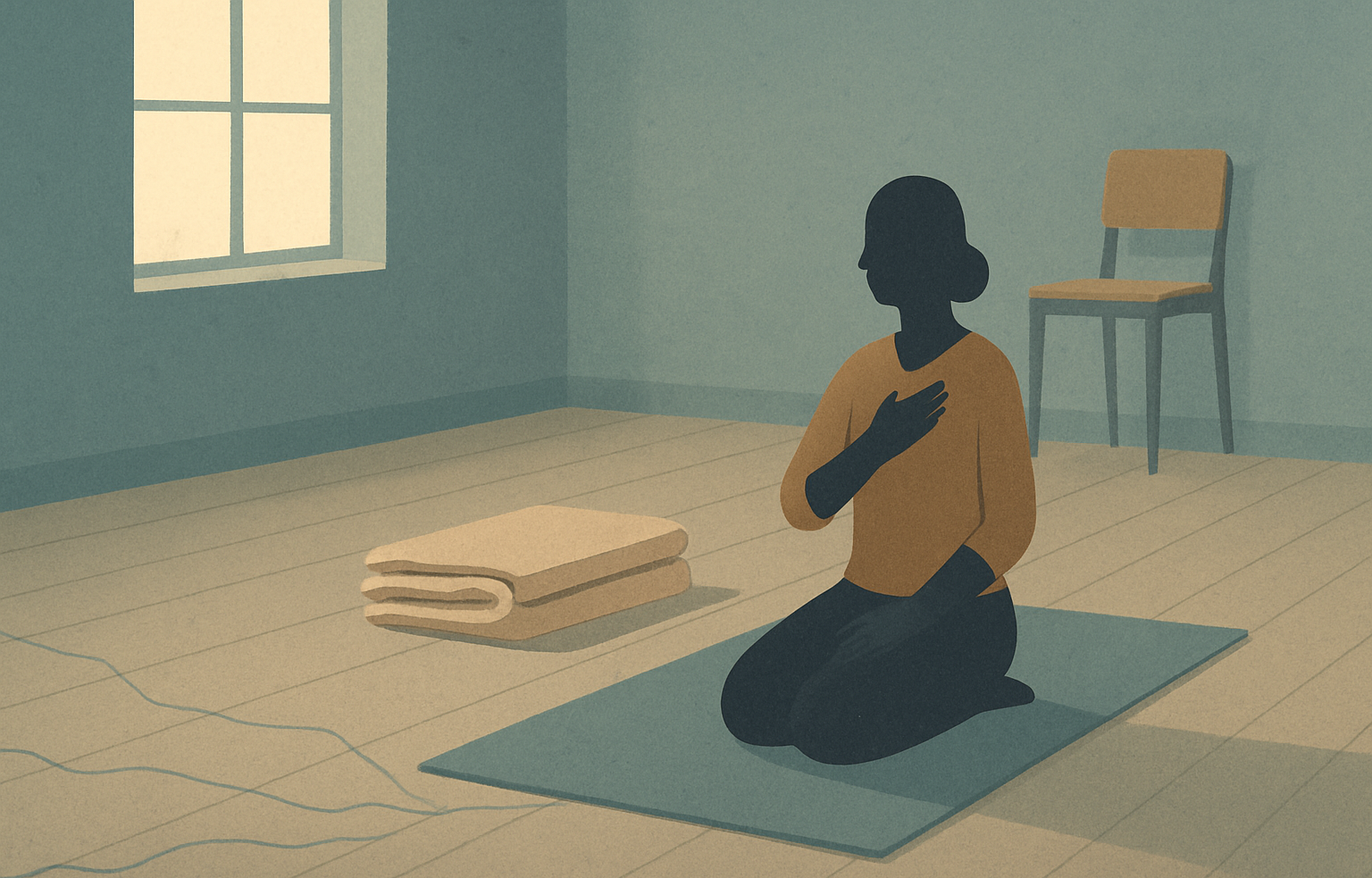
Trauma lives in the body, not just the mind, so healing requires somatic, relational, and cognitive approaches instead of talk therapy alone.
Who this book is for / who it is not for
This book is for anyone who suspects that sheer willpower and reframing thoughts are not touching the deepest layers of their anxiety, shutdown, rage, or chronic numbness. If you have a history of childhood adversity, violence, neglect, or medical trauma, The Body Keeps the Score offers a vocabulary for experiences that may have felt unspeakable. It is equally useful for coaches, therapists, teachers, and leaders who keep encountering “difficult” people and want to see what those behaviors look like through a trauma lens.
It is not for readers looking for a quick self-help checklist or a motivational push. The stories are heavy and at times graphic. Someone in acute crisis might find the detail overwhelming and need a steadier, more immediate resource. If you are firmly attached to a purely cognitive model of change and uninterested in the body, you may find the emphasis on somatic therapies unconvincing or frustrating.
How trauma reshapes the brain and nervous system
Bessel van der Kolk spends much of the book showing how trauma reorganizes the nervous system rather than simply creating “bad memories.” Using brain scans from combat veterans and abuse survivors, he shows that reminders of trauma can light up the amygdala, quiet the prefrontal cortex, and reduce activity in Broca’s area, which is tied to speech. The image is stark: when you are triggered, your alarm system blares, your rational brain goes offline, and your capacity to put the experience into words collapses.
One early case is a woman named Annie, who survived a horrific car accident. Years later, the smell of burning rubber still launched her into a state of sheer panic. She knew she was on a safe suburban street, but her body kept reacting as if the crash were happening again. Van der Kolk uses stories like hers to argue that trauma is not “in the past” if the nervous system keeps replaying it in the present.
He also describes children in his clinic whose behavior looked like oppositional defiance but tracked with a chronically activated stress response. These kids were always scanning for danger, always ready to fight or flee. In that context, classroom outbursts stop looking like moral failure and start looking like physiology.
For self development, the lesson is blunt: if your body is living in a state of chronic survival, no amount of goal setting or productivity tweaks will stick. You are trying to build a life on top of an alarm system that never stops ringing.
Why talking is not enough
Much of the book is a critique of treating trauma as a purely cognitive issue to be solved with insight, interpretation, or narrative. Van der Kolk respects talk therapy and has practiced it for decades, but he is direct about its limits when the body remains in survival mode.
He tells the story of a Vietnam veteran who had done years of psychotherapy and could eloquently describe the guilt and horror he felt about the war. Yet the nightmares, flashbacks, and hair trigger rage did not shift. Only when his treatment included body based work that taught him to notice and tolerate his physiological arousal did the symptoms ease.
Another example is a woman who had been sexually abused as a child. She could talk about what happened in detail. The problem came when she tried to be intimate with her partner. Her body would freeze, her heart would race, and she would suddenly feel as if she were watching herself from outside. Insight did not stop that response. Learning to feel her body safely, often starting in yoga sessions, did.
The argument is not that narrative is useless. Making sense of what happened is part of reclaiming agency. The point is that without changing the conditioned responses in muscles, breath, and heartbeat, the story alone cannot close the loop. If you have journaled endlessly, analyzed your childhood, and still find yourself blindsided by panic or shutdown, this lens can be clarifying rather than discouraging.
The body as a doorway to healing
Where the book is most distinctive is in its stubborn focus on the body as a primary site of both injury and repair. Van der Kolk writes about discovering yoga through a traumatized teenage girl who could not sit still or tolerate touch. Traditional therapy had gone nowhere. When she joined a yoga class at the clinic, she began to notice the feel of her feet on the mat and the rhythm of her breathing. Over time she moved from feeling hijacked by her body to feeling a basic ownership of it, which for her was a revolutionary shift.
The book highlights several modalities that teach people to inhabit their bodies safely again: yoga, breathwork, theater, martial arts, EMDR, neurofeedback. A thread that runs through all of them is interoception, the ability to sense internal states. Many trauma survivors have learned to disconnect from their bodies because sensations were once synonymous with terror, pain, or violation. Practices that gently rebuild awareness, without forcing exposure, slowly expand the window of what feels tolerable.
For someone doing self development work, this is a quiet but profound shift. Instead of treating the body as a vehicle to drag around while you chase goals, it becomes a source of information. Feeling your shoulders tense when you say yes to something you do not want can be as important as any cognitive insight about boundaries. Pairing this with an exploration of core values sharpens the contrast between what your life asks of you and what your body actually can sustain.
The role of safety, attachment, and community
Another central idea is that trauma is less about the event itself and more about the absence of safe connection during and after the event. Van der Kolk recounts work with children who had endured severe neglect. Their nervous systems were wired for abandonment. They would either cling desperately or push adults away with explosive behavior.
One striking section describes “reparenting” environments where staff were trained to respond to defiance with calm, curiosity, and consistent presence instead of punishment. Over time the kids began to expect that adults would come back, that anger would not always end in disconnection. Their capacity to regulate emotions improved not because they learned better coping skills in a workbook, but because their relationships taught their bodies that people could be safe.
He extends this logic to group settings for adults: theater programs where trauma survivors rehearse scenes, martial arts classes built around respect rather than dominance, support groups that emphasize shared regulation. The common denominator is a felt sense of safety with others.
For personal growth, the takeaway is that certain forms of isolation are not neutral. If your early life wired you to expect abandonment or betrayal, going it entirely alone can keep those expectations frozen in place. Curating relationships that are emotionally reliable can be as foundational as any habit system. It also reframes self regulation as co regulation first: we learn to calm ourselves because someone once helped us calm down.
Choice, agency, and reclaiming your own story
At its core, the book argues that trauma strips people of a sense of control. Their bodies react without permission, their memories intrude, their relationships feel governed by scripts they did not choose. Healing is framed as the slow return of agency rather than a dramatic catharsis.
Van der Kolk shares an example of theater work with women from a homeless shelter. When they first started, many could barely lift their voices on stage, even in a safe rehearsal room. As they practiced taking up space, saying lines, and improvising, they began to experiment with new ways of being. For some, being able to stand their ground in a scene translated into a new ability to set boundaries offstage.
Choice also shows up in more subtle forms. EMDR sessions give clients control over when to pause. Yoga teachers in trauma sensitive classes invite rather than command participants to try poses. These are small, deliberate acts aimed at countering the helplessness that defines traumatic experience.
For readers steeped in goal oriented self help, this emphasis on agency at the level of sensation and micro choice can be a useful complement to frameworks like building anti fragile habits. The work is not only about stacking behaviors toward big goals, but also about noticing where your nervous system still believes you have no choice and gently proving otherwise.
The honest caveat
The Body Keeps the Score has been widely praised, but it is not beyond critique. Some researchers argue that the book leans too heavily on brain scans and neurobiological explanations that can sound more definitive than the current science supports. The colorful imaging makes for compelling reading, yet the links between specific trauma symptoms and specific neural patterns are still a live area of debate.
There are also concerns about how practically accessible some of the recommended treatments are. Modalities like EMDR, neurofeedback, and specialized yoga are not evenly available and can be expensive. Readers might come away with a sense that without these methods they are stuck, which is not accurate. In addition, in recent years van der Kolk has faced workplace–related allegations that complicate how some readers relate to his authority. None of this erases the value of his clinical observations, but it does argue for treating the book as a strong, experience based perspective rather than a final word on trauma science.
Where to start
If you want a focused path through the book, start with the early chapters that lay out how trauma reshapes the brain and nervous system, including the sections on imaging studies and the distinction between remembering and reliving. Then skip ahead to the chapters on body based treatments and yoga, and the later material on attachment, children, and community programs. If you have lived experience of trauma, it can help to read in short segments and pause when your body feels stirred up, rather than pushing through in one sitting.
The most useful thing The Body Keeps the Score offers is not a set of techniques, but permission to trust what your body has been trying to say all along.
Being able to feel safe with other people is probably the single most important aspect of mental health. — Bessel van der Kolk