A Guide to the Good Life
A Guide to the Good Life argues that Stoicism can be rebuilt as a modern life strategy through negative visualization, the dichotomy of control, voluntary discomfort, and the cosmic view from above.
You’re on the train, scrolling absently through your phone, when a stray thought cuts through: if nothing about your circumstances changed, would you actually feel that your life is good? William Irvine’s project begins from this quiet, unsettling question. Instead of chasing more goals or better habits, he proposes a shift in how you relate to what you already have: your routines, your ambitions, your fears about losing control. Drawing on Stoic philosophy, he treats tranquility not as a vague mood but as a skill, built from a handful of deliberate mental practices you can test in ordinary days.
Who this book is for / who it is not for
If you like the idea of ancient wisdom but stall out after a few pages of Seneca’s letters, this is the Stoic handbook you probably wanted all along. William Irvine writes as a working academic who treats philosophy as a set of experiments for anxiety, frustration, and status obsession. He spends much of the book showing how to turn Stoic ideas into daily routines, from imagining loss before breakfast to rehearsing minor discomforts on purpose.
This book suits reflective readers who want a coherent philosophy of life, not just a motivational quote feed. If you are already deep into the original texts and modern commentaries, the arguments will feel familiar, though you may still appreciate Irvine’s clarity and structure. It is not a fit if you want productivity hacks, pure self-esteem boosts, or a worldview that treats unlimited ambition and constant emotional expression as unquestioned goods.
Negative visualization: rehearsing loss to deepen gratitude
The practice Irvine pushes hardest is negative visualization. The Stoic claim is uncomfortable and powerful: regularly imagining the loss of what you love is one of the few reliable paths to appreciating it while you still have it.
He starts with a simple exercise. While watching your child play, picture in detail that this is the last time you will see them. While driving, imagine that this is the final time you will be able to do so. The point is not to terrify yourself but to wake up the dull part of your brain that treats everything as permanent and guaranteed.
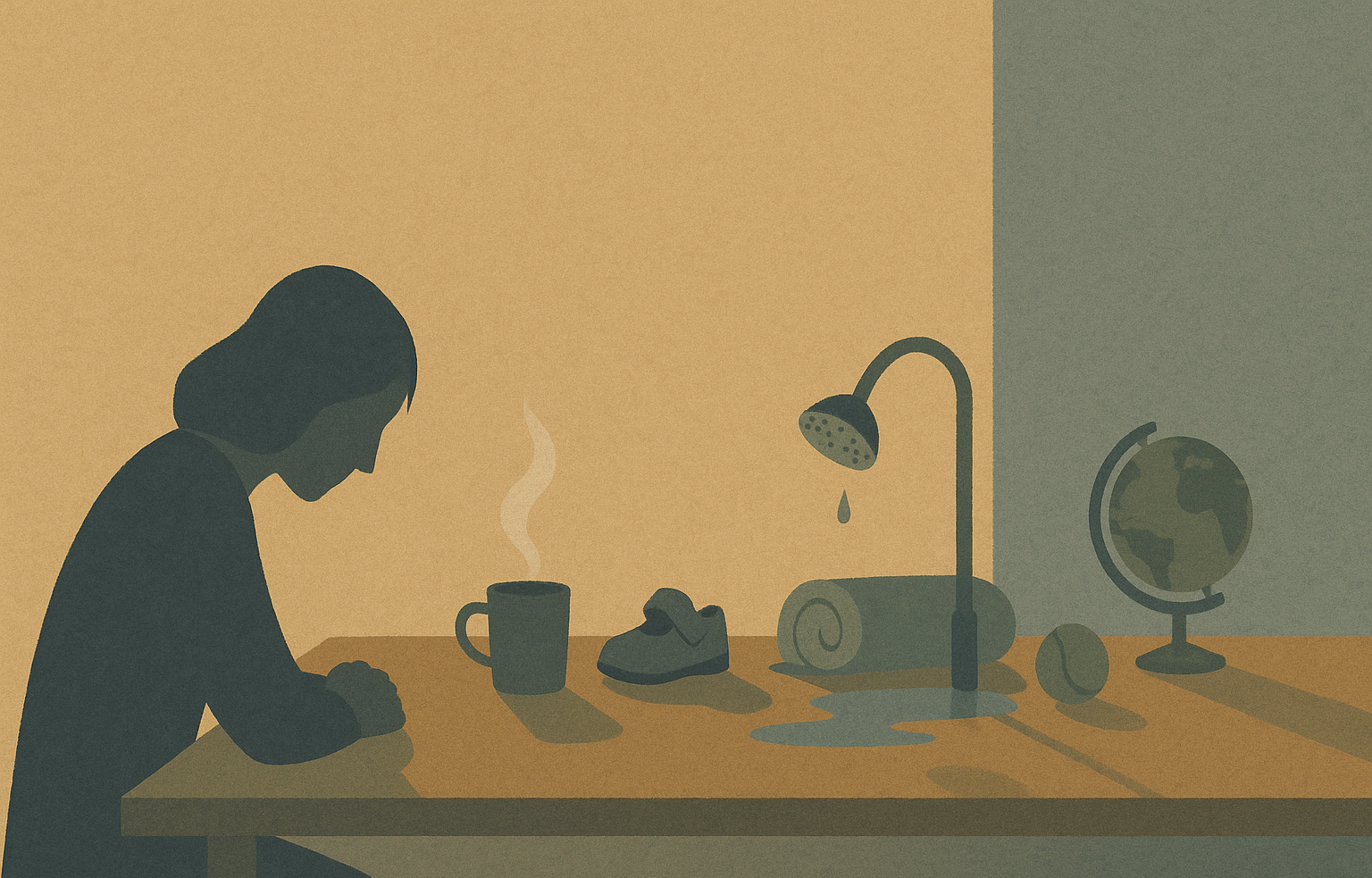
Irvine anchors this idea in Epictetus’s blunt reminder that when you kiss your child, you should remember they are mortal. For a modern audience, that sounds harsh, so he translates it into soft but concrete routines. When you sip your morning coffee, pause for a few seconds and imagine a future where financial trouble makes this ritual impossible. When you unlock your front door, imagine losing the home. The result is a small jolt of gratitude that cuts through autopilot.
The book is at its best when he admits the tradeoff. Negative visualization can feel morbid at first. To counter this, he recommends short, frequent, low-intensity sessions rather than rare, dramatic ones. Think thirty seconds to picture losing your job so that the job you actually have, with all its flaws, lands as a blessing rather than a curse. This practice ties closely to your values, so it pairs well with reflecting on your core priorities in life, something covered more broadly in our piece on understanding core values.
The dichotomy of control as a daily filter
Irvine builds his whole framework on the Stoic distinction between what is under your control and what is not. He refines it into a threefold split: things over which you have complete control, things over which you have no control, and a middle category where you have some influence but not total command.
He uses a tennis match as his main example. You control your preparation, your effort, and your attitude during the game. You do not control bad line calls, weather, or your opponent’s skill. The result of the match sits in the middle. You can influence it, but you can never guarantee it. So he suggests a mental reframe: set your goal as “play to the best of my ability” rather than “win the match.”
This tweak sounds small. It changes everything. You still care about results, but you refuse to stake your peace of mind on them. Irvine applies this structure to family life, work, and health. When stuck in traffic, he asks, do you rage at the cars or do you focus on keeping your own reactions within reason? When facing a job interview, can you judge success by whether you prepared and showed up well, knowing that the decision lies elsewhere?
He also notes that the middle category is where many people suffer most. They pretend they can fully control outcomes like promotions or relationships, then feel crushed when reality pushes back. His solution is to shift emotional investment to the controllable side and treat the rest as a welcome bonus.
Voluntary discomfort and training for adversity
Stoicism has a reputation for emotional toughness, and Irvine embraces that aspect through what he calls voluntary discomfort. The idea is to periodically choose minor hardships so that you are less startled by real ones and less dependent on constant comfort.
He gives several of his own experiments. Sleeping on the floor once in a while to remember that a bed is a luxury, not a necessity. Going a day with very simple food to loosen the grip of cravings. Taking a cool shower to experience that you can tolerate physical unease without panic.
These practices are not macho stunts. Irvine frames them as psychological inoculations. The first time you go without your morning coffee, you will likely feel grumpy and distracted. The fifth time, you discover the discomfort has limits and that your identity does not have to be tied to constant pleasant sensations.
He also highlights a social version of voluntary discomfort. You might, for instance, let someone else have the last word in an argument, even when you think you are right, and sit with the sting of not being seen as correct. You might endure a boring meeting without reaching for your phone. Each act stretches your tolerance for annoyance.
The benefit is twofold. Life’s inevitable hardships land as challenges you have trained for, not as unfair anomalies. And your baseline appreciation for ordinary comforts rises, since you have reminded yourself that they are optional, not owed.
The view from above and shrinking your ego
A quieter but distinctive part of Irvine’s version of Stoicism is the “view from above,” a visualization where you mentally zoom out from your immediate situation to see it in widening circles of context.
He invites the reader to picture themselves from the ceiling of the room, then from the sky above the building, then from high enough to see the city, then the country, then the entire planet. From that altitude, your inbox, your annoyance with a colleague, even your long term career plan looks very small.
This is not meant to belittle your life. It is meant to right-size it. By placing your concerns in a cosmic frame, you create space between stimuli and reaction. Irritation that felt urgent starts to feel temporary. Status comparisons lose some of their charge. The exercise also ties back to mortality, since from a long enough timeline, every drama fades.
Irvine connects this visualization to the Stoic preference for aligning your life with nature. For a modern reader, he translates “nature” into the large scale patterns of the universe that you did not create and cannot change. You gain calm by working with those patterns instead of wishing them away.
The honest caveat: a tidy Stoicism that can feel too clean
For all its clarity, A Guide to the Good Life presents a somewhat sanitized Stoicism that fits neatly into middle class modern life. Irvine downplays the harsher parts of the ancient texts, such as the more radical indifference to external achievements or the suspicion of strong attachments. Readers who go back to Epictetus or Marcus Aurelius may be surprised by how demanding the originals can be.
There is also the risk of weaponizing Stoic tools against legitimate emotion. Irvine warns against suppressing feelings, but the book’s emphasis on tranquility as the core goal can tempt some readers to pathologize grief, anger, or moral outrage. Critics of modern Stoicism have pointed out that a constant focus on internal control can drift into quietism, where systemic problems are met with personal coping strategies instead of collective action.
Finally, the research grounding is light. The book relies more on anecdote and philosophical argument than on empirical psychology. For many readers this is acceptable, yet it means that some practical claims, like the long term impact of frequent negative visualization, rest more on plausibility than on robust data.
Where to start in the book
If you want the heart of Irvine’s approach quickly, begin with Part II, especially Chapter 4, “Negative Visualization,” and Chapter 5, “The Dichotomy of Control,” where he lays out internalized goals. Then skip ahead to Part III for Chapter 9, “Stoicism and Anger,” and Chapter 10, “Stoicism and Grief,” which show the methods applied to emotional flashpoints. On a second pass, the chapters in Part II on voluntary discomfort and the view from above will feel richer, since you will see how they support the broader aim of crafting a personal philosophy of life, similar to the work of building a personal vision statement.
A Guide to the Good Life will not live your values for you, but it gives you a compact set of practices to test what really matters.
There is a danger that you will mislive, that despite all your activity, despite all the pleasant diversions you might have enjoyed while alive, you will end up living a bad life. — William B. Irvine, A Guide to the Good Life