Self-Compassion
Self-Compassion argues that self-kindness, common humanity, and mindful awareness form a sturdier foundation for resilience than self-esteem ever did.
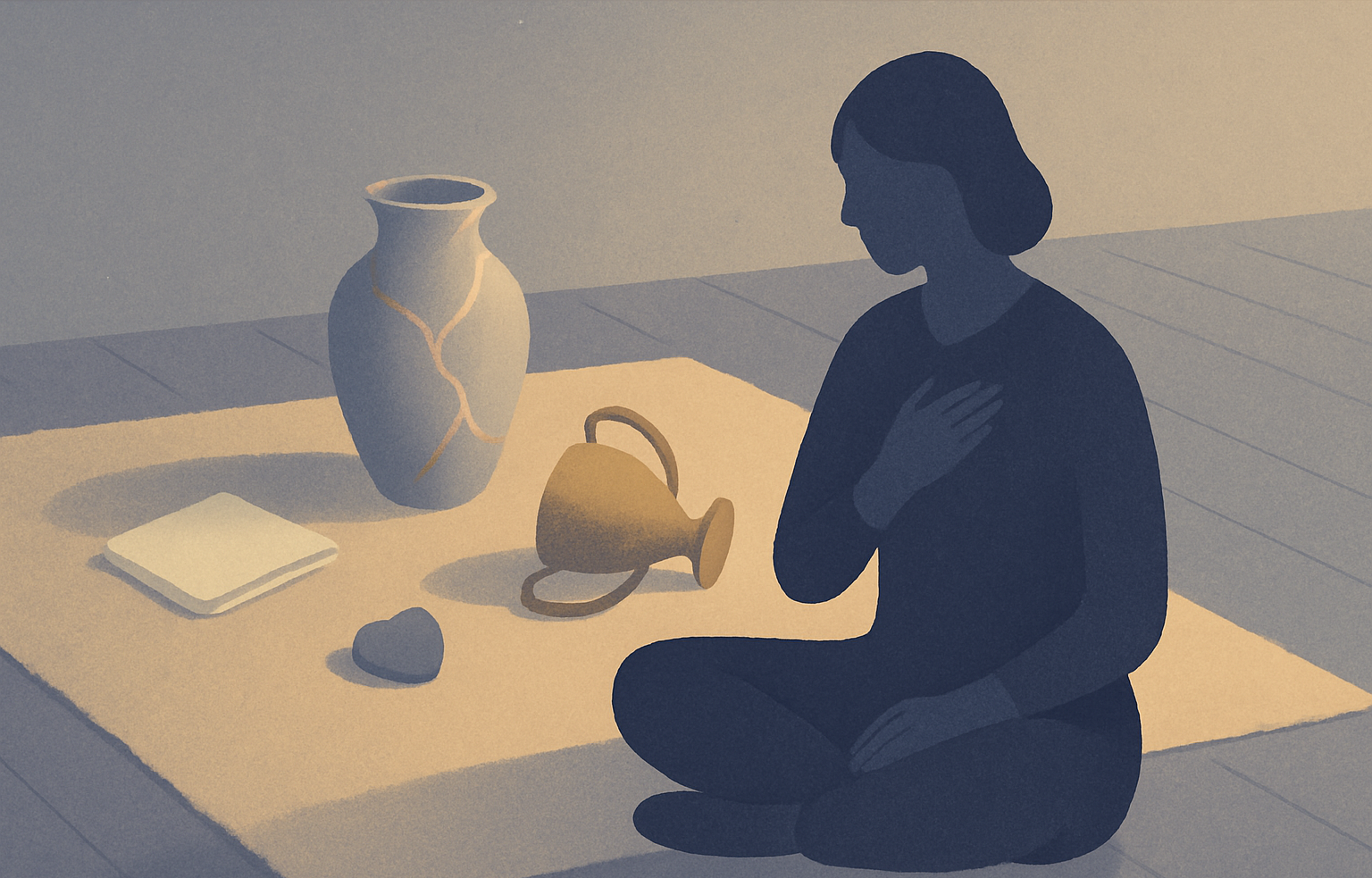
You forget a deadline, snap at someone you love, or watch a project fall apart, and the familiar soundtrack starts up: criticism, post-mortems, quiet vows to “do better next time.” It can feel responsible, even necessary, to be hard on yourself—like the price of competence. Kristin Neff suggests this reflex is less a moral stance than a habit, and one that quietly erodes resilience. Instead of asking how to feel better about yourself, she invites a different question: what would change if you treated your own missteps the way a decent person treats a struggling friend?
Who this book is for / who it is not for
This book is for high achievers who quietly believe that being hard on themselves is the only thing keeping them from sliding into mediocrity. If you carry a permanent sense of “not good enough” despite solid external success, Kristin Neff is speaking directly to you. It is also for people stuck in shame cycles after setbacks, who replay mistakes long after everyone else has moved on.
It will not land as well if you want quick hacks without self-examination, or if you are looking for a performance manual in the style of productivity books. Readers who already dismiss emotions as “soft” or “indulgent” may find the tone uncomfortably direct, because much of the book involves actually feeling what you feel. If you need tight behavioral tactics for goals and planning, a piece like The Power of Goal Setting: How to Set and Achieve Your Goals will serve you better than this.
Why self-compassion outperforms self-esteem (and still improves performance)
Neff’s first major move is to separate self-compassion from self-esteem, which the culture has largely treated as the psychological holy grail. Self-esteem hinges on evaluation: you are “good” because you are successful, special, above average. This works until it does not. The moment you fail, get rejected, or age out of your peak, the foundation cracks.
She details how the self-esteem movement led to predictable side effects: narcissism, constant comparison, and a terror of failure. Studies she cites show that people with high but fragile self-esteem often respond to threats with aggression or denial, because their worth depends on winning.
Self-compassion, by contrast, is not contingent. It says, “I am worthy of care because I am human, not because I am winning.” In one core experiment Neff describes, participants were given a difficult task and then sharply criticized. Those instructed to respond with phrases like “This is a painful moment” and “Many people struggle with this” showed less shame and more willingness to try again than those asked to boost their self-esteem.
This has direct implications for performance. Neff spends a good chunk of the book dismantling the idea that self-criticism drives excellence. Many high performers are convinced their inner drill sergeant is responsible for their success. Lose the harshness, they fear, and the standards will collapse.
To counter this, she distinguishes between constructive remorse and global self-condemnation. In one study, participants asked to respond kindly to themselves after academic failure were more likely to take responsibility and study harder the next time than those told to “just think about your positive qualities.” The self-compassionate group did not excuse their mistakes; they simply did not equate the mistakes with their entire worth.
Neff uses the metaphor of a good coach. A competent coach is clear about errors and pushes you to grow, but the relationship is infused with belief and support. A cruel coach might get a short-term performance bump through fear, yet over time that environment burns people out or makes them risk averse. Our inner coach works the same way. When your worth does not ride on every outcome, you can take smarter risks, seek feedback, and repair relationships instead of hiding.
Self-kindness: talking to yourself like someone you actually care about
The first pillar of self-compassion is surprisingly concrete: notice how you speak to yourself and change the tone. Neff invites readers to compare their inner monologue after a mistake with what they would say to a close friend in the same situation. The gap is usually stark.
One of the book’s recurring examples comes from Neff’s own divorce. She recounts lying on the floor of her living room, overwhelmed by shame and fear about being a single mother. Her training did not erase the pain, but it did give her language: “This is so hard right now. I am here with you.” Instead of spinning into self-blame for the marriage ending, she deliberately placed a hand on her heart and spoke gently to herself, which softened the edges enough to make the next decision.
Neff suggests simple, almost embarrassingly small practices: writing yourself a supportive letter after a difficult event; experimenting with a soothing gesture like putting a hand on your chest; or changing “What is wrong with me?” to “What do I need right now?” She backs these up with research linking self-kindness to reduced cortisol and increased heart rate variability, both markers of better stress regulation.
The book is blunt that this is not about self-pity. Self-pity isolates and dramatizes: “No one has it as bad as I do.” Self-kindness, as Neff frames it, sounds more like, “This is tough, and I can still care for myself while I figure it out.” The behavior that follows tends to be more responsible, not less.
Common humanity: you are not uniquely broken
The second component, common humanity, challenges the quiet belief that our flaws and struggles are uniquely shameful. Neff argues that much suffering is amplified by isolation: we think we are the only ones anxious about parenting, ashamed of our bodies, or humiliated at work.
To make this real, she shares stories from her workshops. In one exercise, participants anonymously write down something they are most ashamed of on an index card. The cards are shuffled and read aloud. Shameful secrets turn out to be mundane: affairs, job failures, addictions, harsh words to children. The room often fills with tears of relief, not disgust. People recognize their own lives in others’ confessions.
This shift from “me versus everyone else” to “us, all muddling through” changes how setbacks feel. Failing a test, getting dumped, missing a promotion no longer seem like evidence of personal defectiveness, but as part of the shared terrain of being human. Neff connects this explicitly to resilience: when pain is normalized, we are less likely to collapse into global self-judgments like “I always ruin everything” and more likely to ask, “What can I learn from this that countless others have also had to learn?”
The book suggests practical ways to build this muscle: reading first-person accounts of struggle, talking openly with trusted friends, or even silently reminding yourself in a painful moment, “Others feel this too.” It sounds simple, yet repeated consistently it can erode the isolation that keeps shame in place.
Mindful awareness: feeling the pain without becoming the pain
The third pillar, mindful awareness, is what keeps self-compassion from turning into either indulgence or spiritual bypassing. Neff defines it as holding your experience in balanced awareness rather than being swept away by it or ignoring it.
She draws on classic mindfulness instructions: notice the present moment, name what is happening, and allow it to be there without immediate judgment. In one example, she describes a woman whose teenage son is in legal trouble. The mother’s first impulse is to numb out and pretend everything is fine. Using mindful awareness, she practices sitting quietly, naming the cascade of fear, anger, and disappointment in her body, and allowing tears to come without spinning off into catastrophizing about the future.
Neff emphasizes that mindfulness is the gateway to the other two components. You cannot offer kindness to yourself if you do not first acknowledge that you are hurting. You cannot remember common humanity if you are lost in the story that your pain should not exist.
She offers guided exercises and short meditations to cultivate this awareness, many of which resemble the kind of attentional training explored in pieces like The Art of Mindfulness: Cultivating a Present and Peaceful Life. The goal is not to become a detached observer who never feels anything, but someone who can hold pain gently enough that it does not dictate every action.
Where the thesis stretches too far
Neff’s advocacy can occasionally sound as if self-compassion is the answer to almost every form of suffering. Critics have noted that some of the research she cites, while promising, relies on self-report scales and short-term interventions, which makes it harder to know how durable the effects are over years or in more severe mental health conditions. The book sometimes downplays structural realities such as poverty, discrimination, or abusive environments, where changing one’s internal stance is necessary but not sufficient.
There is also a cultural question. Much of Neff’s work is grounded in Western, individualistic contexts. For readers from backgrounds where communal duty or honor carry more weight, the framing of caring for oneself first may require significant translation. Finally, while she insists self-compassion does not slip into self-indulgence, the boundary can be fuzzy in practice, and the book offers fewer clear decision rules for those gray zones than some readers might like.
Where to start
If you read selectively, begin with Chapter 1, “What Is Self-Compassion?” and Chapter 2, “The Power of Self-Compassion,” which define the three components and tackle common misgivings about being kind to yourself. Then move to Chapter 6, “Caring for the Caregiver,” and Chapter 7, “Self-Compassion and Parenting,” where the ideas become concrete through stories and exercises on relationships and difficult emotions. If you only have time for one pass, read slowly, then revisit a handful of exercises a month later once you have tried them in real situations.
Cultivating self-compassion is less about adding another technique and more about changing the default way you relate to yourself when things go wrong.
With self-compassion, we give ourselves the same kindness and care we’d give to a good friend. — Kristin Neff