Discourses and Enchiridion
Discourses and Enchiridion argues that our judgments, intentions, and desires are the only things truly in our power, and that freedom comes from training this distinction relentlessly.

You miss a flight after a long day, standing at the gate with a useless boarding pass in your hand. Your stomach tightens, the story starts writing itself: the airline is incompetent, the universe unfair, your plans ruined. In that small, airless moment there is a quiet fork in the road: rage at what will not change, or turn attention to the only levers you actually hold. Epictetus builds an entire way of living out of that fork, insisting that the difference between bondage and freedom lies exactly there, in what you decide is truly yours to govern.
Who this book is for / who it is not for
If you feel tossed around by events, other people’s moods, or the news cycle, this is one of the clearest manuals ever written on how not to be. The short Enchiridion distills Epictetus’ teaching into blunt, memorable lines that you can almost use as scripts for daily life: what to say to yourself when insulted, sick, or anxious about the future. It is especially useful if you already care about values and character, since Stoicism treats virtue, not comfort, as the real metric of a good day.
It is not a fit if you want productivity hacks or therapeutic warmth. The tone is severe and sometimes scolding. Readers who need nuanced discussion of trauma or mental illness will find the “just change your judgments” approach too sharp. If you think external success is the point of self-development, the Stoic willingness to lose status, money, and reputation for the sake of inner freedom may feel alien, even offensive.
The brutal clarity of the dichotomy of control
The opening line of the Enchiridion is the whole book in miniature: some things are up to us, and some are not. Up to us are opinion, impulse, desire, aversion — in short, whatever is our own doing. Not up to us are body, property, reputation, office, and anything not entirely our own action.
Epictetus works this distinction through concrete situations. He tells his students that when you kiss your child, silently remember the child is mortal. The point is not morbid detachment. It is training the mind to see that the child’s life is not in your control, but the tenderness and presence you bring to the moment are. When a friend fails to meet you, he suggests, do not rush to “he disrespected me.” First remind yourself there are many possible causes you cannot see, then examine your own expectation.
Again and again he links distress to a category error. You suffer, he says, not because of events, but because you demand that things outside your power obey your will. Lose a job? That sits in the “not up to you” bucket. Acting justly during the layoff, responding with dignity, looking for the next role with steadiness: fully in your power.
This sounds simple, yet in practice it is a lifelong discipline. It maps closely to modern discussions of locus of control, and to ideas like The Power of Saying No, where the focus is on choosing your response rather than trying to manage the entire environment.
Rehearsed misfortune as spiritual strength training
One of Epictetus’s most striking moves is to treat hardship as training. He imagines life as a contest for which the gods have equipped you with reason and character, then sends you specific trials so you can discover what you are capable of.
In the Discourses, he praises a student who returns after being flogged by a magistrate, not in self-pity, but eager to discuss how he handled it. The physical pain is secondary. The real issue is whether the student kept his ruling principle steady. Did he remember that insult and injury are different things? Did he choose his response, or simply react?
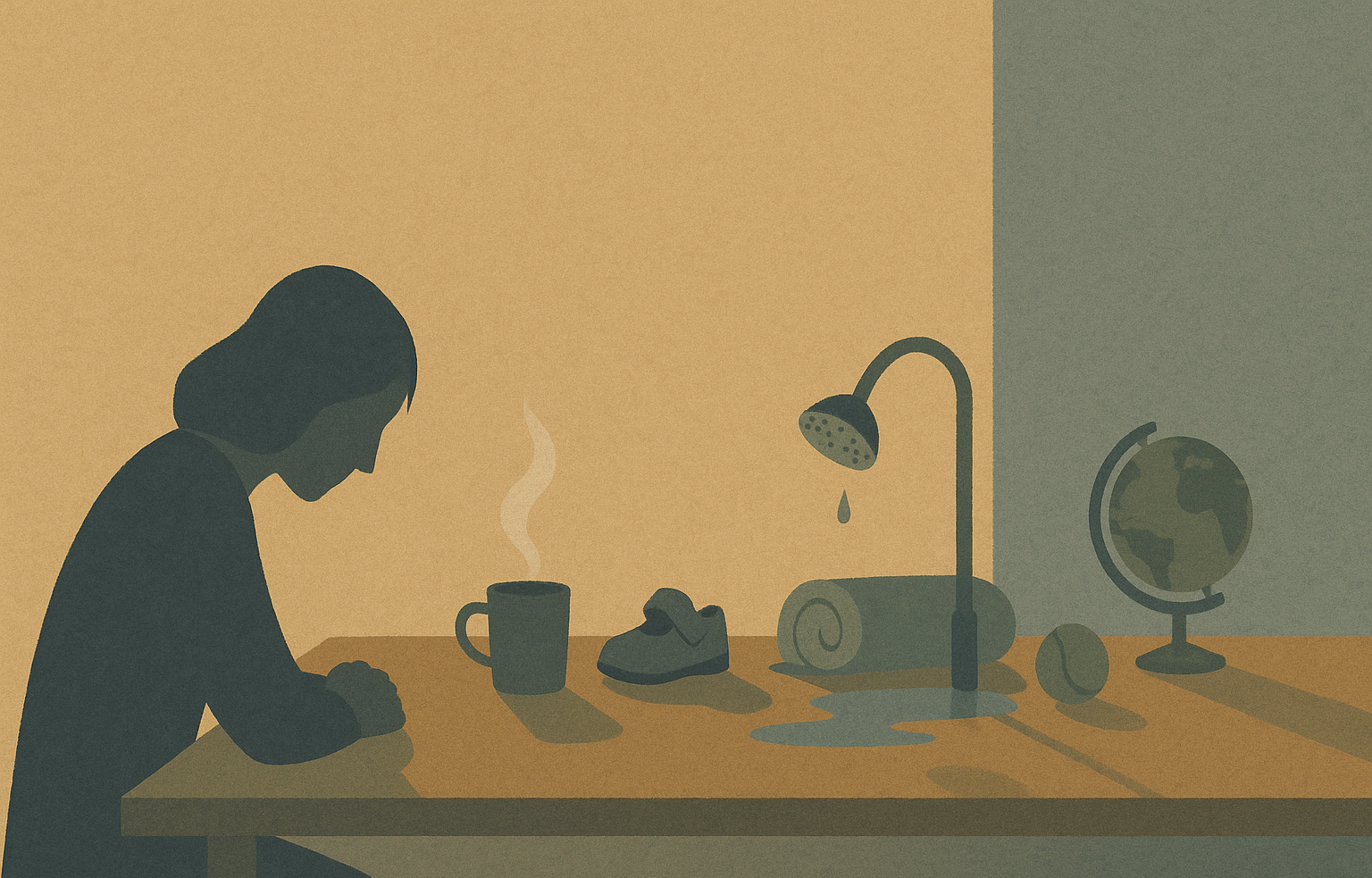
The Enchiridion recommends a kind of mental rehearsal. When you are going to bathe, tell yourself in advance that you may encounter splashing, jostling, insults. Then if they occur, you can say to yourself that you expected something like this. That small shift turns irritation into an anticipated drill, like a boxer absorbing blows during sparring.
This anticipatory stance is not negativity; it is inoculation. By imagining loss, illness, or inconvenience beforehand, you reduce the shock and reclaim room to act in line with your values once they arrive. It is an ancient version of “stress testing” your habits, and it pairs well with modern practices of building resilience and anti-fragile habits. Where many self-help books promise a smoother path, Epictetus promises that the path will be rough and insists that this roughness is exactly where your character is forged.
Freedom as inner discipline, not outer permission
For Epictetus, freedom has almost nothing to do with circumstances. He was born enslaved, later freed, and he never lets his students forget that you can be physically constrained yet inwardly unconquered.
He imagines an enemy threatening to chain him and answers that they can restrict his body but not his choice of attitude and action. In another passage, he points to his lame leg and says he thanks the gods that they left his use of judgment intact. Bodily health, wealth, political status: all of these he lists under “externals,” things that can be preferred but never depended on.
The practical instruction is demanding. If you cling to a particular outcome, you make yourself a slave to whatever can grant or withhold it. If you attach your peace to your salary, you belong to your employer. If your self-worth depends on approval, you belong to whoever might criticize you. The way out is to narrow what you treat as necessary to your own good will: acting justly, keeping promises, telling the truth, doing your current role as well as you can.
He illustrates this with social roles. You are a parent, a citizen, a friend. Each role comes with actions that are “appropriate.” You may not control whether your child loves you back, your city prospers, or your friend stays loyal. You do control whether you act as a good parent, citizen, or friend today. Freedom is the stable ability to do what your role and values require, even when externals are hostile or indifferent.
Desire, aversion, and the subtle art of wanting less
Underneath the dichotomy of control sits a more granular project: retraining what you want. Epictetus divides our inner movements into desire (reaching toward what we see as good) and aversion (shrinking from what we see as bad). If you direct either at things outside your power, he says, you guarantee misery.
His first move is radical. He advises beginners to suspend desire entirely and focus aversion only on their own unjust or cowardly actions. Do not desire health, wealth, or reputation. Prefer them, if fate grants them, but do not stake your happiness on them. Do not fear poverty, sickness, or death. Fear instead betraying your values in the face of them.
He gives small-scale examples. A student fears being laughed at for his simple cloak. Epictetus points out that the real danger is not ridicule, but the student’s own urge to betray his principles just to avoid being mocked. Or he reminds a grieving parent that the sharpest pain comes not from death itself, which was never fully in human control, but from the belief that a good life required that particular child to live indefinitely.
This is not an argument for apathy. It is a push to build a value system where the good is primarily inner excellence. That maps neatly to work on understanding core values. If you can say, with some honesty, that a day of integrity and courage is a good day even when things go badly, you are aligning with Epictetus’s program.
The honest caveat: severity, simplification, and missing pieces
The power of Discourses and Enchiridion lies in their sharp edges, and those edges can cut in unhelpful ways. Epictetus tends to treat almost all emotional disturbance as a failure of judgment. Grief, anxiety, and anger become evidence that you have forgotten what is in your control. Modern psychology suggests a more complicated picture, where biology, trauma, and social context contribute significantly to how we feel and react.
His advice can read as if anyone can choose serenity by sheer rational effort. For readers dealing with depression, PTSD, or oppressive circumstances, that can sound like blame. The emphasis on accepting externals also risks being used to justify passivity toward injustice, even though Epictetus himself praises courageous action in public life. Finally, some of his examples, like downplaying affection for one’s child to avoid attachment, may strike contemporary readers as emotionally stunted or even cruel.
In practice, the book works best as a high standard for inner freedom, not as a complete psychology. It offers a demanding ideal of responsibility for one’s attitudes, which needs to be paired with realistic care for the body, relationships, and structural forces that also shape a life.
Where to start
If you are new to Stoicism, start with the Enchiridion itself. Sections 1 through 15 give the cleanest statement of the dichotomy of control, the reordering of desire, and the handling of insults and setbacks. Read them slowly, one or two at a time, and test them against small daily annoyances.
Then dip into the Discourses, especially Book I, chapters 1 and 2, where Epictetus lays out what a philosopher should aim at and why externals do not guarantee happiness. Treat the Discourses less like a narrative and more like conversations you return to when a particular problem is live for you.
To live by these pages is to practice, every day, the discipline of owning your judgments more fiercely than your circumstances.
It is not things themselves that disturb men, but their judgments about these things. — Epictetus