The Obstacle Is the Way
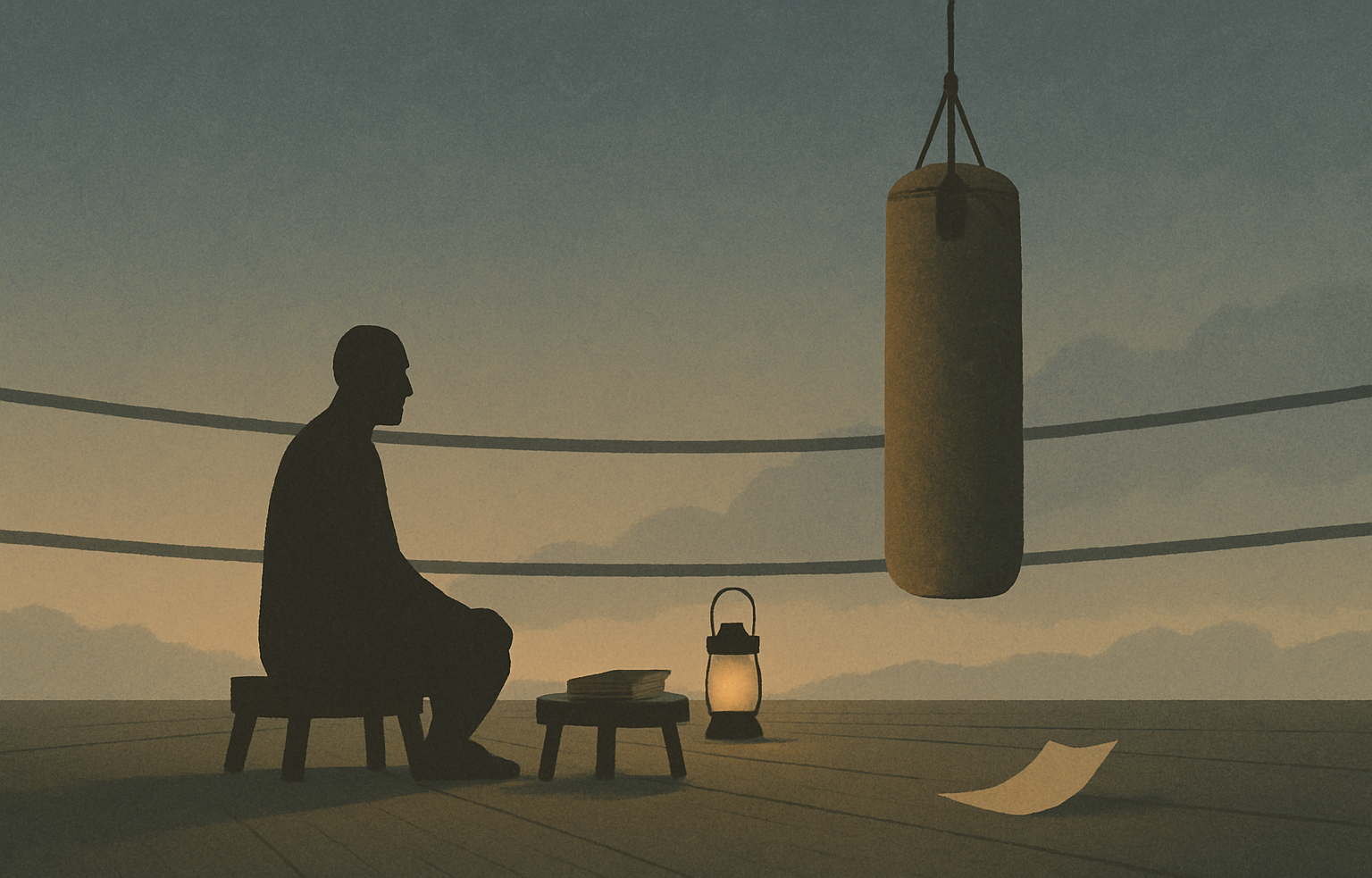
The Obstacle Is the Way argues that three Stoic moves – perception, action, and will – can turn any impediment into the path of progress and growth.

Imagine staring at an email that quietly wipes out months of work: a deal falls through, a project collapses, a plan unravels overnight. Most of us tense around the loss and start mentally writing the story of failure. Ryan Holiday’s project is to pause that reflex and examine what actually happens in that moment. He treats setbacks less as verdicts and more as raw material, asking what changes if you look at the same facts with a slightly different lens, take a different next step, or simply refuse to be broken by what you cannot change.
Who this book is for / who it is not for
This is a book for readers who like ideas that travel well from ancient philosophy to email-filled Mondays. If you are curious about Stoicism but find Marcus Aurelius dense on the page, Ryan Holiday has essentially done the work of curating, translating, and arranging those insights into short, pointed chapters. Entrepreneurs, athletes, and anyone navigating a career setback will find the stories and tone familiar and usable. If you respond well to aphorisms and concrete historical examples, you will probably read this in a weekend and keep it within reach.
It is not for someone looking for original scholarship on Stoic thought or a meticulous walk through the primary texts. The sources are there, but lightly footnoted. If you want a detailed manual on therapy, trauma, or clinical resilience, this will feel more like a motivational field guide than a method. And if you already live inside the world of Aurelius, Seneca, and Epictetus, much of it will feel like a well-edited remix rather than new terrain.
Training perception so obstacles stop owning the story
The first move in the book is perception: the claim that what matters most about a problem is not the event, but the story you tell about it. Holiday opens with John D. Rockefeller as a young clerk during the Panic of 1857. While others panicked, Rockefeller watched, took notes, and treated the crash as a classroom. The point is not that the downturn was good, but that he refused to glue his identity to the crisis. He asked, almost clinically, what could be learned from the chaos.
Holiday leans heavily on this kind of framing. He quotes Marcus Aurelius observing that events are not harmful by nature, only our judgments about them. In practical terms, the book keeps asking a simple question: what else could this mean? A botched product launch could be proof that you are not cut out for business. It could also be expensive feedback that arrives early instead of later when the stakes are higher.
Perception, here, is not blind optimism. He spends time on Ulysses S. Grant visiting a battlefield in the rain, covered in blood and mud, smoking a cigar calmly while others recoil. Grant sees what is in front of him clearly, including how bad it is, but without adding layers of catastrophe. Holiday calls this “seeing things as they are, not as you fear them to be.” That calm realism is the first step in turning an obstacle into a decision point instead of a verdict.
This is where the book overlaps with modern advice on focus: you can decide where your mental spotlight goes. The same event can either feed rumination or sharpen your priorities, which connects directly to the idea that where focus goes, energy flows.
Turning philosophy into movement: disciplined, strategic action
Once perception is cleaned up, Holiday moves to the second Stoic move: action. The idea is simple enough to fit on a coffee mug but hard to live: do what you can, with what you have, where you are. He emphasizes disciplined, methodical effort rather than bursts of heroic inspiration.
One of his clearest examples is Thomas Edison during the 1914 factory fire that destroyed much of his work. There is the famous scene where Edison supposedly tells his son to call their friends because they will never see a fire like this again, but Holiday does not stop at the quote. He tracks what Edison did next: secured loans, rebuilt the plant, and turned the disaster into an opportunity to redesign and modernize operations. The obstacle forced a kind of involuntary innovation sprint.
The chapters under this theme focus on small, controllable moves. He talks about focusing on the next step, not the whole staircase, and highlights civil rights activists who methodically tested unjust laws in court rather than indulging pure outrage. The Stoic flavor here is humility about control: you do not control outcomes, only your efforts and strategy.
Holiday is at his best when he points out that action is often unglamorous. That might mean drafting the letter instead of arguing in your head, making the phone call you are dreading, or learning the boring skill that removes a recurring bottleneck. The book insists that progress is less about inspiration and more about a willingness to keep showing up, often in ways that nobody else sees.
The quiet muscle of will: enduring what you cannot change
The third move, will, is about what you do when perception and action still do not “solve” the problem. This is not willpower in the pop-psych sense of gritting your teeth to force an outcome. It is more like the inner stance you bring to things you cannot fix.
Holiday draws from Epictetus, who had been enslaved and crippled, yet taught students to distinguish sharply between what is in our control and what is not. He also spends time on James Stockdale, the U.S. Navy pilot who survived years of torture as a prisoner of war in Vietnam. Stockdale credited Epictetus with giving him a framework: he could not control his captors, but he could control how he responded, how he led other prisoners, and what he chose to believe about the meaning of his suffering.
These stories support Holiday’s claim that endurance is an active discipline, not passive resignation. He talks about “loving” fate in the Stoic sense of accepting that reality is what it is, then asking how to use it. Sometimes that means choosing to see your hardship as training, or as an opportunity to develop virtues like patience, courage, or compassion.
The will chapters are also where he touches on practices: negative visualization, expecting setbacks, and mentally rehearsing worst cases so they do not shatter you when they arrive. The message is blunt. You will not avoid every obstacle. You can decide in advance not to be broken by them.
Choosing a philosophy that can be used on a Tuesday morning
One thread running through the book is that philosophy is only as good as its use. Holiday makes clear that the Stoics he cites were soldiers, emperors, slaves, and merchants, not armchair theorists. He keeps returning to Marcus Aurelius writing his Meditations in the barracks while leading a war on the frontier, which he uses to underline that these ideas were survival tools, not pastimes.
This emphasis matters because it shields the book from becoming wall decor. Holiday often strips quotes down to a single line, then immediately pairs them with a modern story: a coach dealing with a losing season, an investor handling a crash, a politician outmaneuvering a scandal. The structure is repetitive on purpose. Experience a setback, apply the lens of perception, choose a small concrete action, lean on will.
He also makes a quiet but important claim about identity. You are not just using Stoic tactics to get what you want. You are slowly becoming a person who expects obstacles and treats them as raw material. That overlaps with work on personal values and direction; you can read this book alongside thinking about your core values and a long-term vision and they will reinforce each other. The obstacle then becomes a test of who you are, not just a threat to what you have.
The honest caveat: selective stories and simplified Stoicism
The book’s power comes from its simplicity, and that is also where it overreaches. Holiday selects vivid stories in which people turn adversity into advantage, but by definition those are survivor stories. For every entrepreneur who turned a failed venture into a better one, there are many who never recovered. The narrative can tilt toward “if you just adjust your mindset, you will win,” which is not always how life works.
Scholars of Stoicism might bristle at how lightly the philosophy is treated. Concepts like fate, virtue, and cosmology are largely trimmed away in favor of grit and reframing. That makes the book readable, but also flattens important nuances. Stoic calm, in its original context, was tied to a demanding ethical framework, not just resilience techniques. Some readers may also find the relentless emphasis on personal responsibility grating when faced with structural injustice, illness, or loss that no mindset can fully redeem. The ideas are still useful, but they need to be held alongside an honest view of limits.
Where to start in the book
If you read selectively, begin with the three core sections: “Perception,” then “Action,” then “Will.” Within “Perception,” the early chapters on objectivity and controlling your emotions set up the whole argument. In “Action,” the chapters on starting where you are and persistent effort give you the most usable material. In “Will,” prioritize the parts that discuss building inner citadels and loving fate, which contain the deepest Stoic spine. The book is short and modular, so a full read followed by occasional dips back into those three sections is a realistic pattern.
Resilience is less about avoiding hard things and more about deciding what hard things will mean for you, and this book is a direct manual for that decision.
The impediment to action advances action. What stands in the way becomes the way. – Ryan Holiday