Getting Things Done
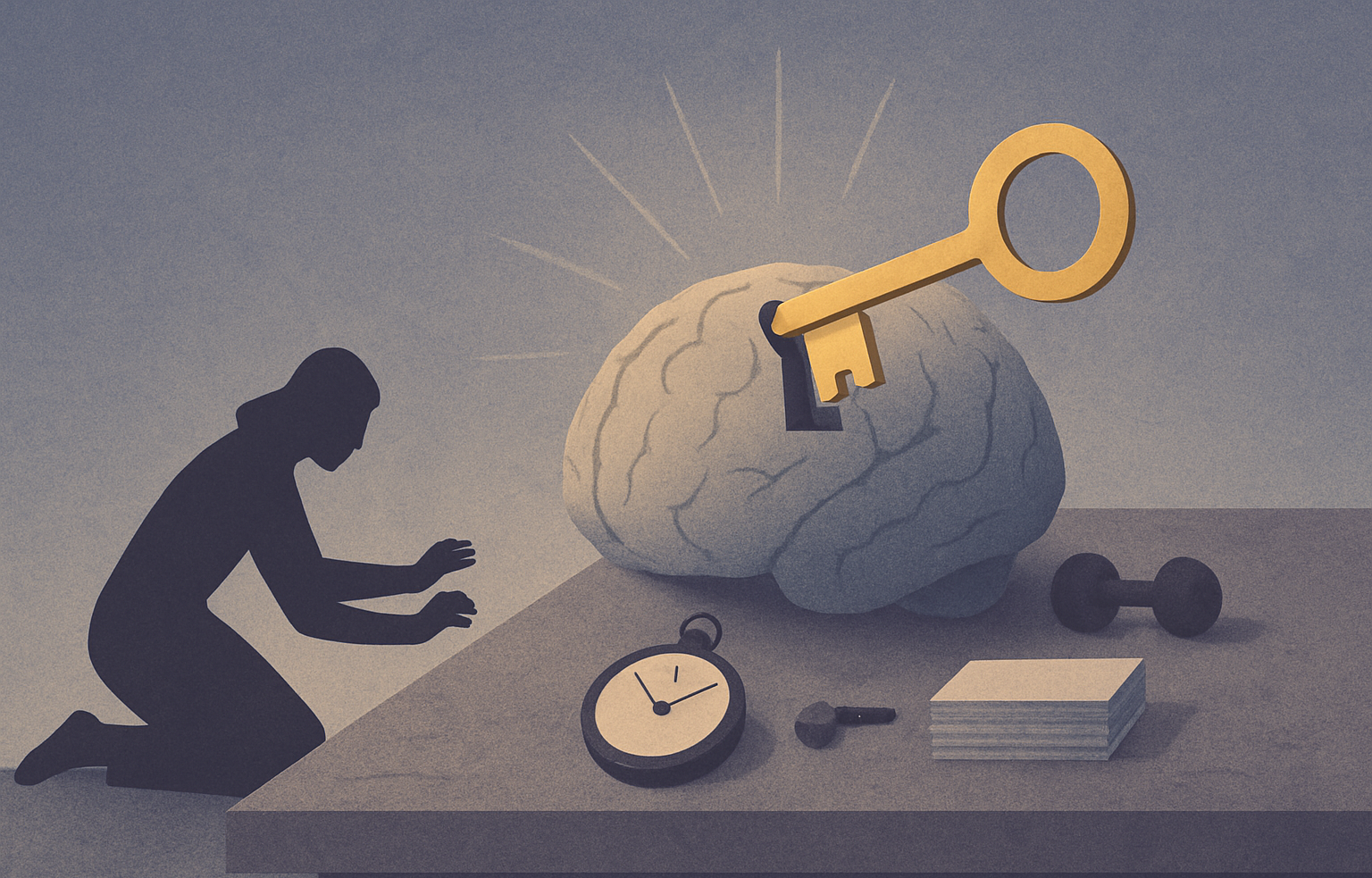
Getting Things Done argues that only a trusted external system for capturing, clarifying, and organizing your commitments frees your mind to focus on the work itself.
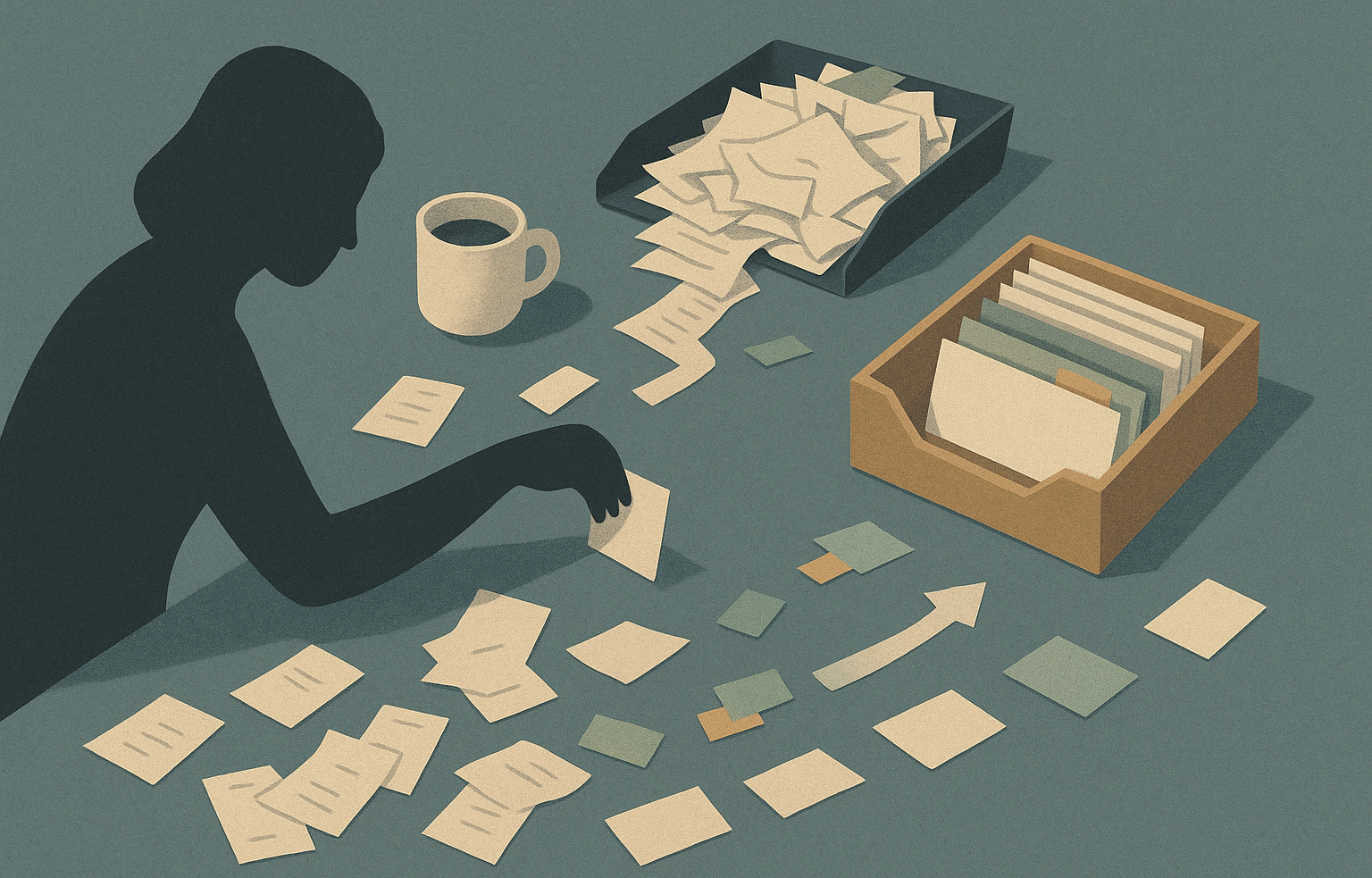
There’s a particular kind of evening where your desk is relatively tidy, your calendar looks full but manageable, and yet your mind keeps circling the same half-remembered obligations: an email you meant to send, a form you might have misplaced, a conversation you should probably schedule. Nothing is exploding, but there’s a low-level hum of unease that rarely turns into clear action. David Allen’s system is aimed at that hum. Rather than promising more discipline or motivation, he asks what would happen if you could see the full inventory of your commitments, outside your head, and trust that nothing will quietly disappear.
Who this book is for / who it is not for
Getting Things Done is for people whose brains feel like overstuffed inboxes: knowledge workers, founders, managers, and anyone juggling dozens of open loops who lies awake mentally rehearsing tasks. If your day is driven by email, meetings, and interrupts, David Allen gives you a way to empty your head without dropping responsibilities.
It will not suit readers looking for motivational fire or high-level life philosophy. The tone is procedural and occasionally dry. If you already run a tight, low-stress system and resist lists and checklists, much of this will feel like overkill. And if your work is mostly reactive frontline labor with little control over tasks or schedule, the full GTD stack may be more infrastructure than you can realistically maintain.
The discipline of capturing everything that has your attention
Allen’s starting move is radical in its simplicity: anything that has your attention but sits only in your head is an “open loop” that bleeds psychic energy. The first step is to capture every one of these, without evaluating, into an external bucket.
He describes sitting executives down with a stack of paper and having them jot everything that feels undone: “Call Sam about budget,” “Fix leaky faucet,” “Plan Q4 offsite,” “Update resume.” It often takes hours and fills several pages. The reaction is usually the same: surprise at how much was being tracked subconsciously, then relief as it lands on paper.
The same goes for physical capture. Allen has clients sweep their offices into in-trays: unread reports, business cards, handwritten notes, random cables. The goal is not to tidy, but to gather inputs where they can be processed.
The power in this is psychological. Your brain is a poor reminder system. It rehearses tasks at unhelpful times, such as worrying about a tax form at 11 p.m. in bed. Once a task is in a trusted capture location, the mind can stop pinging you about it. This is the first hint of what he calls “mind like water”: a mental state that responds proportionally to demands instead of flailing.
If you already experiment with practices like mindfulness, capture becomes the structural counterpart. Mindfulness notices thoughts, GTD gives those thoughts somewhere reliable to land.
Clarifying outcomes and next actions instead of vague intentions
A pile of captured stuff is not yet a system. The second core idea is the insistence on converting vague intentions into concrete outcomes and “next actions.”
Allen’s famous examples are mundane but sharp. A note reading “Mom” is meaningless as a task. Does it mean “Call Mom about birthday dinner,” “Research assisted living options,” or “Buy plane tickets to visit”? During processing, you ask, “What is the successful outcome?” and “What is the very next visible action?”
He walks through an email that says, “We should think about redoing the website.” That is not actionable. Outcome: “Relaunch marketing site with updated product pages.” Next action: “Email Karen to ask for two design firms she trusts.” If that email can be written in two minutes, you do it immediately. If not, it goes onto the appropriate list.
This distinction between project and next action is one of the book’s lasting contributions. Many to-do lists are stacked with projects disguised as tasks: “Taxes,” “Garage,” “Fitness.” They never move because the next physical action is undefined. Allen argues that procrastination is often a thinking problem, not a character defect. Clarifying the next visible behavior removes a layer of friction.
He codifies this thinking in his workflow diagrams: every item that represents more than one step becomes a project. Every project gets at least one explicitly named next action. It sounds bureaucratic until you try it on a nagging item that has sat for months. Often the true next action is embarrassingly small, which is exactly why it finally gets done.
Organizing by context so you can trust your lists
Once you define outcomes and actions, GTD’s third big move is organizing them not by priority labels or due dates, but by where and how you can actually do them.
Allen’s original system relies on context lists like “Calls,” “At Computer,” “Errands,” and “At Office.” When you are at your desk with a phone and ten spare minutes, you go to “Calls” and work down the list. When you are out driving, you check “Errands” and batch your stops.
He gives tightly drawn examples: a “Waiting For” list that tracks things you are expecting from others, such as “Waiting for: Jen to send revised contract.” A “Someday / Maybe” list that safely holds ideas like “Take Italian class” that are not active commitments but you do not want to forget.
The effect is twofold. First, it reduces decision fatigue because you only see tasks you could reasonably complete in your current context. You are no longer scanning a generic master list and feeling inadequate. Second, it builds trust. If your lists are clean, current, and context-specific, you stop re-thinking what you are not doing right now.
Many digital tools have copied this structure, from tags to location-based reminders. The principle underneath is what matters: structure your world so you see only the options that fit your current constraints. That same logic shows up in ideas like single-tasking, where you match task and environment instead of trying to brute-force focus.
The weekly review as the keystone habit
The glamorous parts of GTD are the inbox-clearing and the tidy lists. The unglamorous part, which Allen insists is non-negotiable, is the weekly review.
He walks readers through what this looks like: clear your physical and digital inboxes, update project lists, scan your calendar backward and forward, review “Waiting For” items, and revisit Someday / Maybe ideas. It is a structured audit of your commitments.
Allen notes that clients who skip the weekly review inevitably stop trusting their system. Lists get stale, projects fall off, and the mind reactivates its background worry. The review is what upgrades a collection of lists into a living map of your life.
In the book, he gives the example of a manager who uses Friday afternoons for this ritual. She sweeps her in-tray, checks that every project has a next action, and glances at the coming two weeks of calendar entries to pre-decide any preparations. That one block of time turns Monday into execution instead of firefighting.
There is a deeper idea here about control and perspective. The weekly review pulls you out of “what is screaming loudest” and back into “what have I actually committed to?” It is where larger goals and values, which you might articulate in a personal vision, can reconnect with the granular world of phone calls and forms.
Working the system: engage with confidence, not urgency
The final step in GTD’s loop is “engage,” which is Allen’s term for actually doing work from your system. The surprising thing is how unromantic his advice is. He does not recommend chasing passion or always “eating the frog” first. Instead he offers a decision model based on four filters: context, time available, energy available, and priority.
If you have 15 minutes before a meeting and low energy, there is no point pretending you will tackle deep strategy. In that window, your system should present a handful of simple actions that fit. Conversely, when you have a two-hour block and high energy, that is when you engage with demanding work tied to larger outcomes.
This model depends on having done the earlier thinking. A vague list cannot support smart engagement decisions. A well-maintained GTD system, though, turns the question from “What should I be doing?” into “Given my current constraints, which of these pre-vetted options makes the most sense?”
Allen tells stories of clients who, after installing GTD, experience a drop in ambient anxiety more than a spike in raw output. They still work long hours, but the flavor of their effort changes. They trust that what is not being done has at least been seen and parked, which removes the constant dread of hidden obligations.
Where the system strains and shows its age
GTD has been widely adopted and widely critiqued. The most obvious friction point is its complexity. Allen’s full implementation, with dozens of lists, physical in-trays, and a precise workflow, can become a project in itself. Many readers enthusiastically build intricate systems, then abandon them because maintenance is too heavy.
The book also reflects an early-2000s office environment. Email and paper are central; Slack, smartphones, and social feeds barely exist. Translating strict context lists into a world where you can theoretically do almost anything on a laptop anywhere takes judgment GTD does not fully map out.
There is also the question of priorities. GTD is values-neutral about what you put into the system. If your capture is full of low-impact obligations or other people’s agendas, the system will help you execute them with great efficiency. Critics argue that without a strong layer of reflective goal setting, you risk optimizing the wrong life.
Finally, some research on decision fatigue and willpower conservation suggests that micro-choosing among long context lists can itself be draining. GTD assumes that pre-processing tasks keeps the doing phase light, but for some personalities, even a clean list of thirty options can feel like pressure.
Where to start in Getting Things Done
If you read only a portion of the book, start with the chapters that walk through the basic workflow: collection, processing, organizing, reviewing, and doing. The early sections on “Stuff” and “Next Actions” give you the conceptual shift you need. Then skip ahead to the chapter on the weekly review, which often gets overlooked but anchors the whole method. Once you understand those pieces, you can dip into the later implementation chapters to customize tools and contexts that fit your work.
GTD remains worth reading because it makes a strong, testable claim: your mind does its best work when it stops trying to be a filing cabinet and becomes a clear decision engine supported by a reliable system.
Your mind is for having ideas, not holding them.” ― David Allen